Science news
The latest science stories from 35 international outlets, updated every five minutes. · 6,360 stories

Science
Researcher finds that cats lie around for a ridiculous amount of time
Feedback digs into important work done in New Zealand into the movements of cats, which found – to no one's great surprise – that their favo

Science
Tom Gauld: ‘Trust me, it’s safe’
Tom Gauld's weekly cartoon

Science
Why can’t we cool water as quickly as we can heat it? part 2
This question was posed as part of New Scientist’s Last Word series, in which readers give scientific answers to each other’s questions. Her

Science
Twisteddoodles on how to make a cell look its very best
This week's cartoon from Twisteddoodles

Science
New mining map highlights damage caused by extracting metals for your smartphone
The most sustainable smartphone is the one you currently own. An estimated 80% of your phone's negative impact on the environment happens be

Science
Bizarre new dinosaur with giant claws discovered in China
It walked on two legs and may have looked like a feathered bear with giant claws. Meet Kayrasaurus changliensis—well, its almost complete sk

Science
When and how to see the Harvest Moon in 2026
September's full Moon will rise across on Saturday 26 September. The best viewing conditions currently look to be across southern and easter

Science
Spin waves inside a nano-oscillator imaged for the first time
For the first time, researchers have directly imaged the magnetization dynamics inside a spin Hall nano-oscillator—a nanoscale device that c

Science
SKA may detect magnetic fields on distant exoplanets
Studying exoplanets has given astronomers insights into the characteristics that could help them find life beyond Earth. For years, astronom

Science
How diffractive solar sails could stop a killer asteroid at 100 km/s
Asteroids don't come with a warning label that they might one day hit Earth. While we don't know of any currently on course to do so, we are

Science
DIY filter systems improve air quality in classrooms
As students return to school and cold and flu season begins, researchers are studying ways to improve indoor air quality and reduce the risk

Science
Report calls for government to introduce a charge on disposable cups
Around 2.5 billion single-use cups are used in the U.K. every year, yet fewer than 1% are recycled. They contribute to litter, contaminate r

Science
Why a healthy seafloor matters for the Earth system
The seafloor is more than just the ground beneath the sea. Two-thirds of Earth's surface is covered by oceans, which have an average depth o

Science
Hunting broadly not responsible for birds declining across Europe, study finds
Hunting is not the main reason bird populations are declining across Europe, according to new research from University College Dublin in col

Science
Hairy feet, red eyes: Salish Sea reveals two sea spider species new to science
If you're swimming in the Salish Sea late at night and feel a skittering along your calves, tiny hairy feet tip-tapping their way higher and
Science
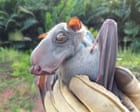
Bats originated in Europe, rewriting mammals’ family tree, study reveals
Biggest study of its kind provides insights into bats’ evolution – a potential gamechanger for research into treating viruses and cancer in

Science
Governments across Australia know how to stop violence against Indigenous women, they just don't do it
Indigenous women and children experience disproportionate levels of family violence. Aboriginal and Torres Strait Islander women are killed

Science
Adding limestone to Mississippi River Basin farmlands acts as a major carbon sink, study finds
In a discovery as broad and far-reaching as the Big Muddy itself, a new Yale–led study says farmers in the Mississippi River Basin are stori

Science
How evolution shaped the human skeleton: Clues from cartilage
Human and chimpanzee genomes are more than 98% identical, and the genes themselves barely differ. The changes that make us human are thought

Science
Bat genomes and fossils point to a European origin 65 million years ago
New research from the University of St Andrews has created the largest combined study of bat genomes and fossils ever undertaken, finding th

Science
How social brains allow animal groups to escape danger
Social behavior is found across the tree of life, with animals of all types benefiting from living in a group environment. Large bird flocks

Science
Do we live in a simulation? If so, it could be a giant consciousness experiment
Philosophers have pondered whether we live in a simulation for centuries. Now, Astronomer Royal for Scotland Catherine Heymans suggests a co

Science
Earth may have gained optimal conditions for life's chemistry 4.33 billion years ago
Conditions on early Earth may have become stable enough to sustain the chemistry associated with the origins of life around 4.33 billion yea

Science
The dingo debate is heating up. How we manage these animals will determine their future
What should we do about dingoes?
Page 62 / 265