822 drones: the new price of war
Ukraine sent 822 drones this week. A Shahed costs about $35,000; the Patriot that stops it costs $3 million. That ratio decides more about who wins than the weapons do.
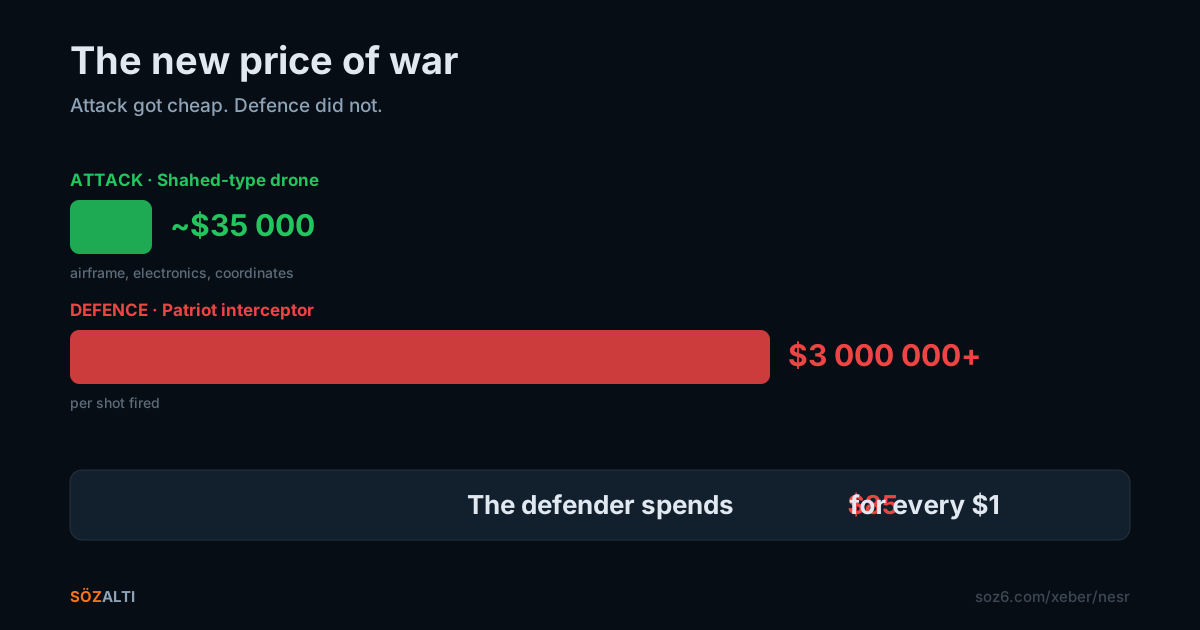
This week Ukraine launched one of the largest aerial attacks on Russia of the war so far. Moscow put the number at 822 drones. The figure is striking, but the real story sits underneath it: putting that many drones in the air has become cheap, and shooting them down has not.
The numbers run like this. A Shahed-type drone of the kind Russia and Iran field is estimated to cost somewhere between $20,000 and $50,000 to build. A Patriot interceptor fired to stop one costs over $3 million. A NASAMS round, a little over $1 million.
Which means the defender spends roughly $85 to stop $1 of attack.
That is not a military defeat. It is an economic one. You do not have to lose on the battlefield to lose a war; you only have to run out of money before the other side does. Spend at 85-to-1 for long enough and what runs out is not your arsenal but your budget.
This logic belongs to arithmetic rather than to armies. And it inverts a rule that has held for centuries: the richer side usually won. Now the cheaper side does.
Ukraine's answer was not a weapon. It was a price. They built interceptor drones costing about $3,000 to $5,000 each, with a success rate above 60 percent. That flips the ratio: the defender now spends $5,000 to stop $35,000 of attack.
The Pentagon has been watching closely. The same interceptors have been used to protect US troops from Iranian-made Shaheds — not with American stockpiles, but with thousand-dollar machines proven in Ukraine.
There is an uncomfortable edge to this. Cheap attack always spreads faster than cheap defence. Building a Shahed-type drone requires no air force, no pilot and no airfield — a workshop, some electronics and a coordinate will do. In business terms, the barrier to entry has almost vanished.
Which means a capability once available only to states is now within reach of far smaller actors. War being expensive was one of the things that kept it rare. That constraint is disappearing.
So this week's figure of 822 is not only about Ukraine. It says that every airport, every refinery, every power substation now has to be valued differently, because attacking one costs tens of thousands rather than millions.
When the economics of war change, war changes. This time the change is that destroying has become cheaper than protecting.
And historically, whichever side of that ratio you are on has tended to decide who wins in the long run.