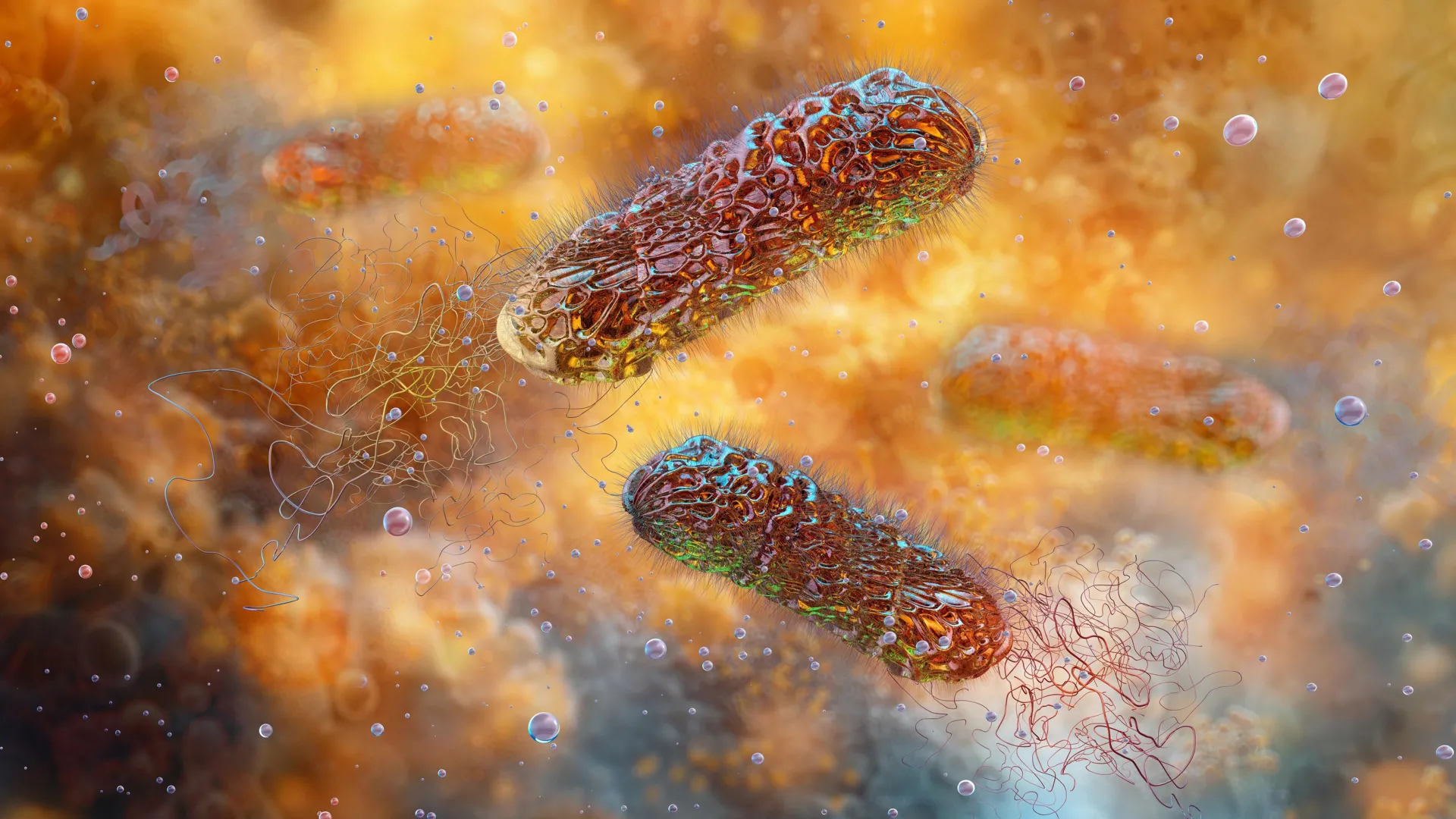
University of Oregon biologists have brought prehistoric proteins back to life, reconstructing molecules that date back as far as 160 million years and naturally attack microbes. The revived proteins could provide scientists with new ideas for treating antibiotic resistant infections, which have become a major global health challenge. The work, described in a paper published in PLOS Biology on Aug. 25, traced the evolutionary history of peptides, short fragments of proteins, back to the earliest placental mammals.
This broad group includes humans and nearly all mammals living today. Laboratory experiments showed that some reconstructed peptides from extinct ancestors were more effective against drug resistant bacteria than some versions found in modern species. These long lost biological defenses could give researchers useful starting points for developing treatments that complement or replace antibiotics that no longer work, according to Matt Barber, senior author of the study and an evolutionary biologist at the UO College of Arts and Sciences.
"For anybody who studies pathogenic bacteria, it's always in the back of our minds that antibiotics are one of the most important breakthroughs in medicine in the 20th century," Barber said. "But bacteria are, and have been for a long time, evolving resistance to them." He continued: "We're definitely interested in whether by resurrecting or engineering some enhanced antimicrobial peptides, we could use these as therapeutics down the road." Tracing an Ancient Antimicrobial Defense About 160 million years ago, near the end of the Jurassic Period, the common ancestor of all placental mammals, whose young develop in the womb, appeared. Around that same time, lactoferrin, the protein at the center of Barber's research, also emerged.
Lactoferrin is an immune protein present in almost every body fluid except blood, including breast milk, tears, saliva, snot, and intestinal mucus. One of its primary jobs is to keep iron away from pathogens. Bacteria inside the body depend on iron, but lactoferrin binds tightly to the element, making it much harder for microbes to access.
Lactoferrin also carries its own direct defense against pathogens. It contains an antimicrobial peptide capable of damaging bacterial membranes, creating holes that can rupture the cells. "Antimicrobial peptides are a key part of the body's first line of defense," said Titas Sil, lead author of the paper and a doctoral student in Barber's lab.
"They can target a broad range of pathogens, and due to their potency, scientists have been trying to synthesize a variety for therapeutic uses." Close relatives of lactoferrin do not share this bacteria killing ability. That suggests the trait appeared sometime after lactoferrin emerged during mammalian evolution. To determine when the ability developed and how it changed over time, the team retraced lactoferrin's evolutionary history and reconstructed versions belonging to its extinct ancestors.
Extract — continue reading at the source.


