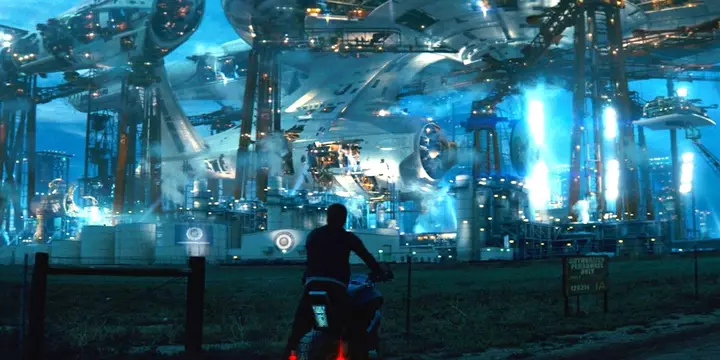
The Star Trek franchise got a much-needed jolt of life in 2009 when J.J. Abrams rebooted it for the silver screen. The "Kelvin-verse," named after a starship that encountered a time-traveling group of Romulans bent on vengeance, was a major success in many ways.
It helped lead to the rebirth of Star Trek on TV, thanks to co-writer and producer Alex Kurtzman. It propelled its cast, including Chris Pine and Zoe Saldaña, to superstardom. Now, a decade after Star Trek Beyond hit theaters, the Kelvin-verse is officially coming to an end.
Recently, Jonathan Goldstein and John Francis Daley (Dungeons & Dragons: Honor Among Thieves) were tapped to develop a new Star Trek movie. Details about that movie were scarce until Goldstein and Daley expanded on their vision for Trek during an interview with Empire. In that interview, they said that the movie would draw inspiration from Crimson Tide and Training Day and that it's telling an entirely new story: "No legacy characters, nobody that you’ve met before.
A different time, not a different timeline per se, but it’s a little further in the future . . . It’s not the J.J. [Abrams] timeline." While it makes sense for Goldstein and Daley to take their own approach with their Star Trek movie, it still stings that the Kelvin-verse is effectively being put out to pasture. This series of movies reignited interest in Star Trek and sparked a multimedia push that brought the franchise back to life.
The biggest push came from IDW Publishing, which launched a series of Star Trek comics that expanded on the Kelvin-verse. Those comics' success led to more Trek comics exploring every corner of the final frontier. A fourth Kelvin-verse movie was also in the works for years, with one plot even featuring Chris Pine's Kirk reuniting with his late father, George (played by Chris Hemsworth), through the magic of time travel.
But it never came to pass, and Paramount tried to launch a new Trek movie, cycling through several directors before landing on Goldstein and Daley. Though the Kelvin-verse may be at an end, its influence lingers in current shows like Star Trek: Discovery and Strange New Worlds, especially as those series' visuals hew fairly close to the sleeker look J.J. Abrams brought to the Enterprise.
Extract — continue reading at the source.