Africa boasts up to 25% of Earth’s animal and plant species. This diversity is driven by diverse habitats: harsh deserts, vast grasslands, dense forests, towering mountains, lush coastlines and teeming seas. It is also due to deep evolutionary roots, as many animal and plant groups originated here in the distant past.
Paleontologists have been excavating this material for nearly two centuries. Africa is most famous for spectacular hominid fossils that reveal our own ancestry. However, the continent boasts many fabulous fossil finds, including those of the most familiar extinct animals – dinosaurs.
The first African dinosaur fossils to be noted scientifically hailed from the Eastern Cape, South Africa and were described in the 1850s. Since then, the African dinosaur map has expanded, with rich fossil beds in South Africa, Lesotho, Tanzania, Egypt, Niger, Malawi, Madagascar and Morocco. Zimbabwe is an important part of the African dinosaur puzzle, with dinosaur bones reported since 1916.
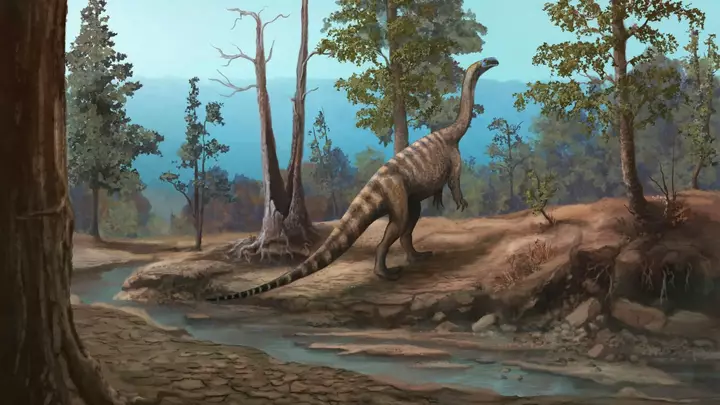
As a specialist on early dinosaurs who has worked on similar material from China, the UK and Africa, I’ve been drawn to these Zimbabwean fossils to see what they reveal about the first stages of their evolution. Our latest addition to the Triassic zoo, Musango matusadonaensis, is a sauropodomorph dinosaur. (That’s the dinosaur subgroup that eventually gave rise to four-legged, long-necked giants like Diplodocus.) Its incomplete skeleton was found in the bank of the Nyamasango River close to Musango Island, as captured in the animal’s scientific name. Musango’s anatomy shows us that it was bipedal (walking on its hind legs only), reached about 4.5 meters in length, and weighed 220kg.
Growth marks in its bones reveal that it was a subadult when it died. Sadly, the skull wasn’t preserved, so its diet is unknown, but its close relatives were largely herbivorous (plant-eating). Our new work reveals something unexpected about Zimbabwean dinosaurs.
They’re not simply an extension of better-known South African faunas but include an array of species unique to the region. We’re now trying to work out why these differences exist. We suspect that environmental conditions might be the key.
Extract — continue reading at the source.