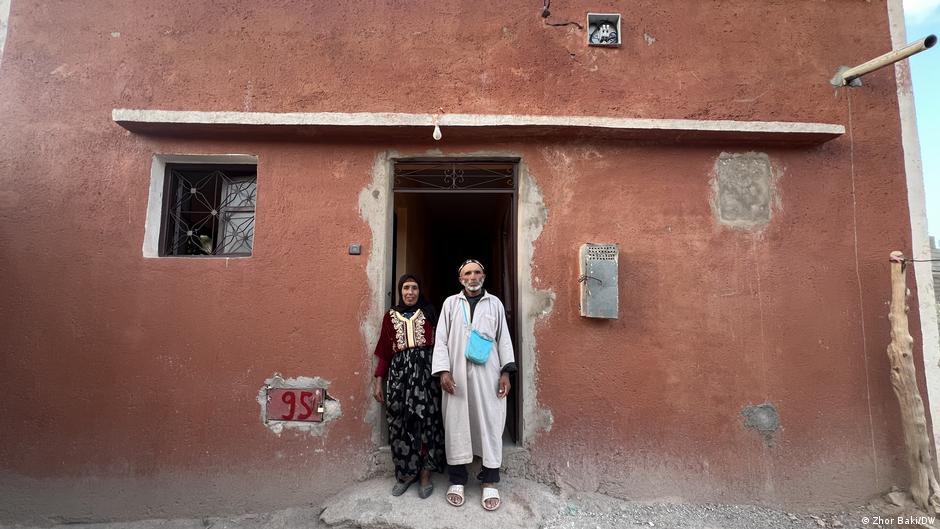
On September 8, 2023, a devastating earthquake struck the Al Haouz region in Morocco, killing over 2,900 people, injuring more than 5,500 and causing widespread destruction. In the village of Ighermane in the High Atlas Mountains, about 50 kilometers (30 miles) southwest of Marrakech, Mohamed Ait Belaid, 72, feels like things are actually going pretty well for him three years later. He had been living in a tent after the earthquake but now resides in a newly built house, even though it's smaller than the one destroyed in the earthquake.
"I benefited from partial [state] support and received 80,000 dirhams [around €7,300] for rebuilding," he told DW. "I added about 100,000 [€9,110] dirhams from my own pocket. And thanks to God, I like my new house and I'm comfortable in it.
I'm at peace because my wife, my children and I are all healthy and I haven't lost any of them." Around 40 kilometers away, in the town of Azgour, it's a different story. Larbi Ait Jelloulat, also 72, is sitting in front of a pile of rubble that was once his house. "I want to know where my rights have gone," he said angrily.
"Who took what's rightfully mine? For three years, I've been going from one department to another, from one complaint to another, from one petition to another, just looking for an answer. Why have I been excluded?
Am I not a Moroccan citizen?" Ait Jelloulat was formerly a council employee and saved for years in order to build the large home that was destroyed in the 2023 earthquake. As far as he can tell, bureaucratic issues mean he must prove he was a resident in the area. "My only dream was to spend the rest of my life in my own home, a rest after years of service," he explained.
"Now they say I'm not a resident … Where's the logic in that?" Reconstruction seems to be happening faster in Ighermane, the village where Ait Belaid lives. About 90% of the village is rebuilt and most residents' lives are back to normal, said Omar Saeed from the Ighermane Association for Development and Solidarity. Of the village's around 150 families, 114 received state support of some kind, although most also had to contribute some of their own money to rebuild.
Extract — continue reading at the source.