On November 4, 1956, tens of thousands of Soviet soldiers and tanks swept into Hungary, brutally suppressing the country's anti-Communist uprising. Decades of dictatorship followed, relying on Hungary's brutal secret police to keep the system in place. Events on Nov. 4 this year represent something of a reckoning with this dark chapter of Hungarian history.
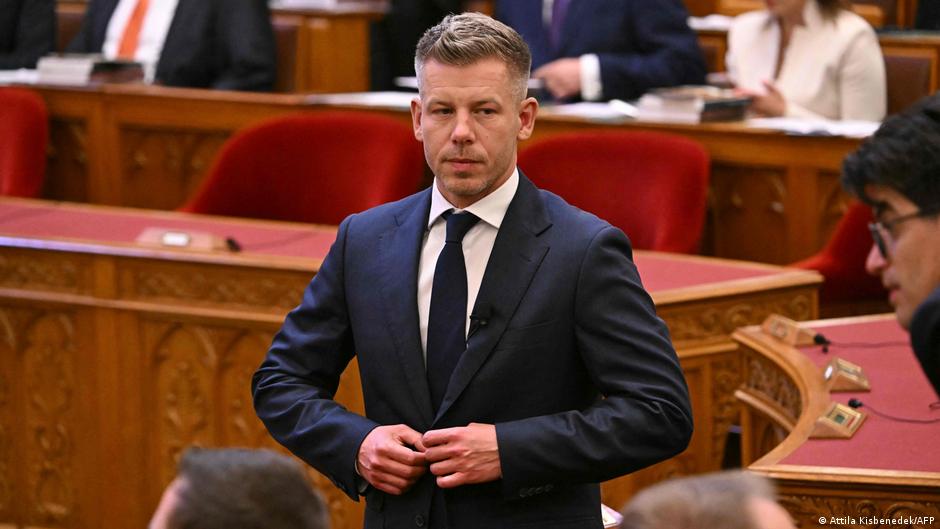
Prime Minister Peter Magyar's government is ordering the full release of the country's secret police "agent files," which contain the names of Hungarian state security informants, some of whom cooperated out of their own volition even as others passed on information unwittingly. Magyar and his Tisza party had previously promised to make the "agent files" public if elected. Their release is an historic event, as it comes after over three decades of heated debate over how to handle such sensitive files.
The decision to publish is also sure to spark further debate on Communist-era guilt and responsibility. Hungarians have been calling for the release of the files for years. After the fall of the Berlin Wall in 1989 and the end of Soviet rule, civil rights activists and smaller Hungarian political parties said the files should be released.
Demands for their publication were expressed repeatedly over following decades. Yet Hungary's first post-Communist prime minister Jozsef Antall, a conservative, rejected the idea as did Viktor Orban's long-ruling Fidesz party. The latter blocked efforts to open the files, voting more than 30 times against such plans since 2010, according to Hungarian news platform Telex.
A partial release of state security files did occur in the 1990s, when the Hungarian parliament passed the so-called "agents law" in 1994. This required members of the government, members of parliament and certain public servants to undergo background checks to determine whether they had ever worked for the former state security services. From 1997, Hungarian citizens have been able to view their own files and in 2003, permissions were expanded.
But they have never been able to find out the names of informants. The law relevant to the files contained provisions that were open to broad interpretation, which allowed government agencies such as the Ministry of Interior to prevent the transfer of files from the secret police to the Historical Archives of the Hungarian State Security, or ABTL, if they believed it would compromise national security. Such a selective release of files not only prevented Hungarian society from learning the truth about its state security service, it also made it possible for files to be exploited in political power struggles, for example, by leaking compromising information about politicians to the public.
Extract — continue reading at the source.