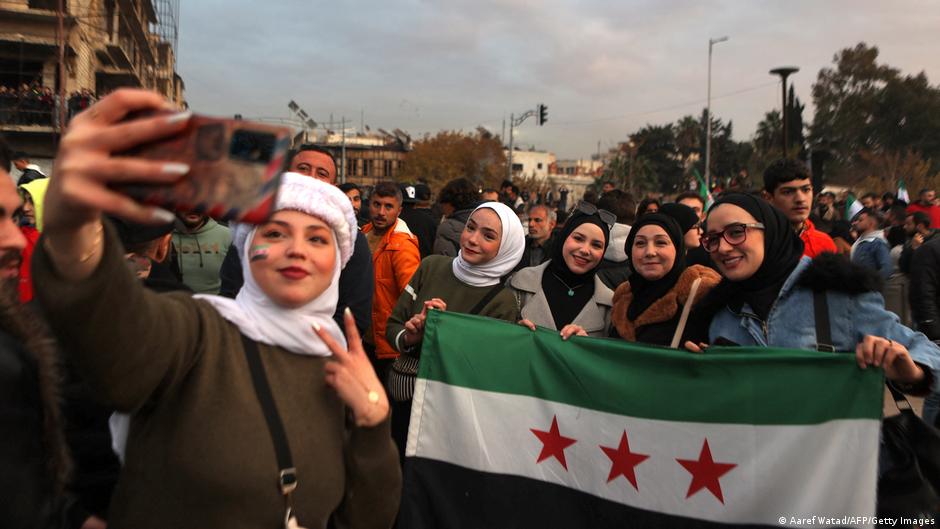
Recent changes to university admissions rules in Syria have put a dent in Lin Najab's plans. The 23-year-old from Damascus is one of the few women at her college studying mechatronics engineering. "My original plan was to pursue a master's degree," Najab told DW.
But earlier in October, new rules were announced by Syria's education ministry regarding two newly created colleges, the National University of Defense Sciences and the Syrian University for Security Sciences. The former now restricts certain courses exclusively to male students, and the latter almost all of them. These new policies could derail Najab's plans.
"Now I have to start thinking about other options," she explained. "For example, I might have to move to another province to study." It is still possible for Syrian women to study the subjects offered by the two new security institutes, but only at other more generalist universities or colleges. Moving to another province, away from family, brings other difficulties, Najab continued.
Student accommodation in dormitories is uncomfortable, but a woman living alone is still frowned upon by conservative Syrians. "Even if a girl decides she won't give up and wants to go study outside her province, her parents will be opposed to the idea, either for security reasons or because we simply don't want our daughters to go study somewhere else," said Najab. The decision to ban women from courses at the new defense and security-related colleges has caused controversy both inside and outside the country.
"Gender doesn't define ability. It should be about high academic standards, the ones I'm trying to meet," Najab argued. "In Syria, we need better education and good graduates, so let's see where the best people are, regardless of gender." Fatoun Kharbatli, an activist from Aleppo, is also opposed to the idea of limiting certain subjects to one gender.
"A person should choose the field in which they see their abilities as lying," she told DW. "We were oppressed for 60 years, so now let's be a nation that keeps pace with global civilization, but without straying from respect and from the basics of our religion. Qamar al-Yaser, a mother of three in rural Damascus, believes the ban is justified.
Extract — continue reading at the source.