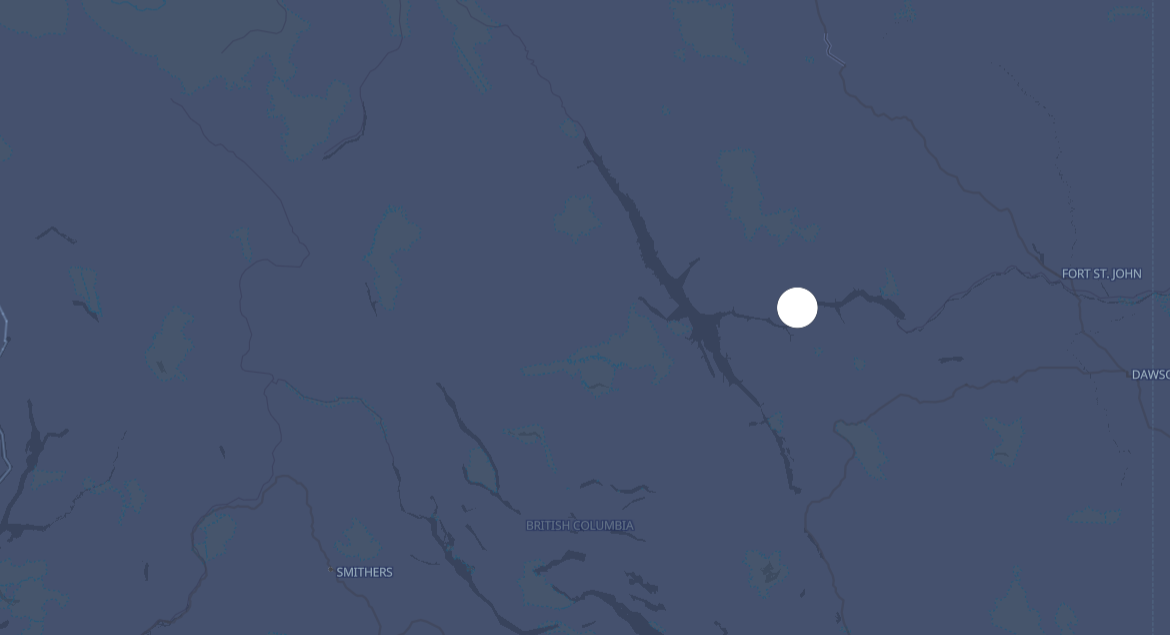
A massive, forested island roughly the size of two NFL football fields broke loose in northern British Columbia and drifted into open water before seemingly disappearing from satellite view, utility officials said. The sudden movement of the roughly 9,800-square-meter landmass on the Williston Reservoir, impounded behind the W.A.C. Bennett Dam in 1968, has created new hazards for boaters and heightened scrutiny of how B.C.
Hydro monitors debris on one of the world's largest man-made lakes, which reached its highest water level in 14 years this summer. Satellite imagery confirmed the island's presence on July 21, measuring about 70 by 140 meters, according to B.C. Hydro spokesperson Bob Gammer told CBC, adding it may have slipped into a sheltered inlet.
Newsweek has reached out to the W.A.C. Bennett Dam team for comment. The Williston Reservoir, the seventh-largest reservoir in the world, experienced its first full-capacity year in more than a decade following heavy winter snowpacks and steady summer rains.
Hydro to open spillways in June and July. Hydro officials said the island likely accumulated over years as shoreline driftwood decomposed, establishing a sturdy enough platform for vegetation to take root. When water levels surged, that platform finally detached.
Gammer noted that rising water and strong winds can easily push such a mass into open water—and just as easily conceal it in a remote cove. This phenomenon isn’t unique to Canada. Around the world, islands are breaking apart, eroding, or vanishing entirely as climate‑driven extremes intensify.
In the tiny island nation of Tuvalu, sea levels have risen nearly six inches over 30 years, and by 2050 much of the country’s land will sit below high tide. Palau’s ambassador warns that many of its 500 islands — especially low‑lying atolls—will be underwater within 50 years. The Williston Reservoir event is a local version of a global pattern: landmasses becoming unstable as water levels rise, storms intensify, and coastlines erode.
Extract — continue reading at the source.