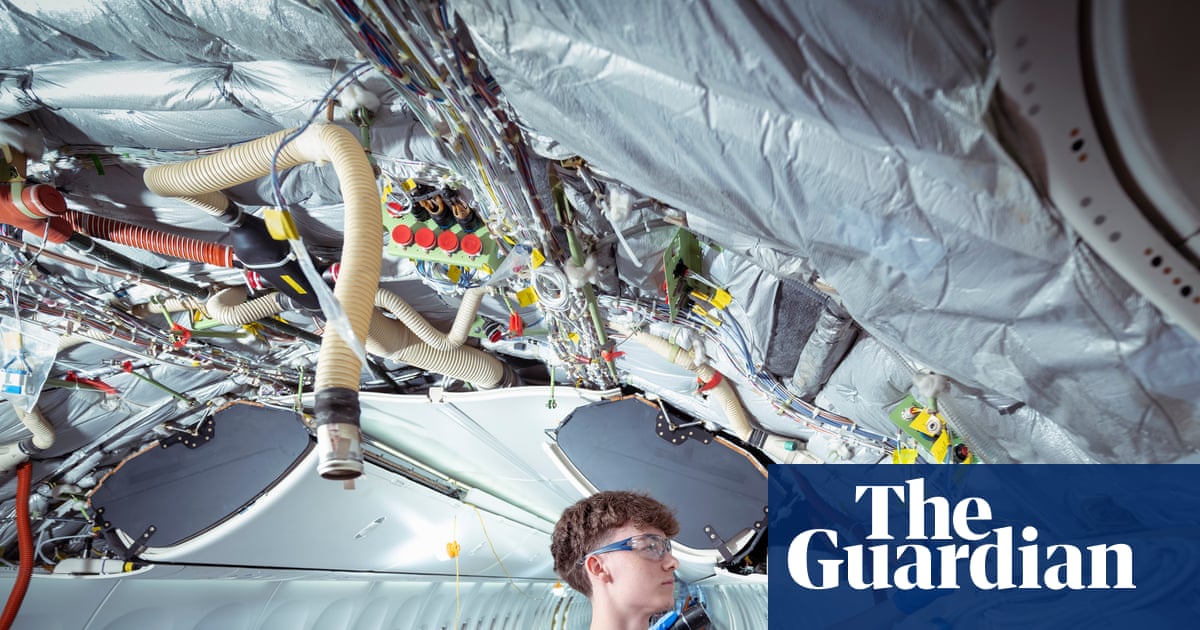
The crisis in the youth employment market, with almost a million young people not in education, employment or training (Neet) across the UK, has placed fresh emphasis on ways of getting employees into the workforce. The government hopes to increase focus on technical and vocational learning in England from the age of 14. In parallel, there is an ambition to create thousands more apprenticeships.
The work and pensions secretary, Pat McFadden, has also announced a new bursary aimed at ensuring families will not be left financially worse off if their teenager starts an apprenticeship. Research from the National Foundation for Educational Research (NFER) found that black and mixed-ethnicity learners from poorer backgrounds and those for whom English is an additional language are less likely to complete their apprenticeships. The Guardian asked people to share their experiences of apprenticeships.
Ellen*, 24, from Worcester, decided an apprenticeship would work better for her than university, although it was “never suggested” as an option at school. Her three-year apprenticeship was four days a week with a day at college for her higher national certificate (HNC) studies. Her HNC course was two years, but the apprenticeship requirement of submitting evidence added an additional year.
Ellen passed, gaining a BTec level 4 HNC as well as a CIBSE (Chartered Institute of Building Services Engineers) Licentiate, and EngTech certification through CIBSE as an end-point assessment organisation and the UK regulatory body, the Engineering Council. All my friends chose to go to university and were all over the country, and there was no one around my age at work so having any social life was very difficult.” Ellen says a “lack of female role models” within her industry and office was also “a difficulty”. Harry, 26, a machinist, says he feels “gratitude” that he has a job, as he sees friends who went to university now questioning that decision.
Harry, from Billingshurst, West Sussex, says that, after achieving three A-levels, he briefly flirted with the idea of studying business at university. I just didn’t think I had the mental strength for full-time education while balancing a part-time job and watching my money.” Instead, he worked two ski seasons as a chaperone in France and was planning a third when the Covid pandemic closed down tourism. He got a four-year level 3 engineering machine technician work placement, involving a day a week of study.
He started his apprenticeship in 2020, but delays due to Covid meant he finished it in 2025. Harry threw himself into his studies. At the end of his apprenticeship, he gained an engineering technician (machinist – advanced manufacturing engineering) level 3 qualification.
Extract — continue reading at the source.