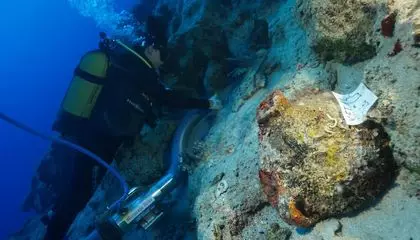
Archaeologists have discovered remnants of what could be the world’s oldest known shipwreck, located off the coast of modern-day Turkey. Though the boat itself decomposed long ago, its well-preserved cargo of ceramic amphorae suggests that the ship sank in the early Bronze Age, up to 4,700 years ago, around the same time Egypt’s first pyramids were being built. Located off Turkey’s southern Mediterranean coast, the site contained more than 30 ceramic pots and three stone anchors, per Euronews.
The archaeologists dated the finds by “comparing the decoration techniques” on the amphorae to other examples unearthed in the Egypt and the Middle East that were known to be between 4,400 and 4,700 years old, Öniz tells the BBC’s Alison Francis, Rebecca Morelle and Kevin Church. This is 100 percent.” The researchers brought the finds back to a laboratory, where Sowada examined them. Some of the amphorae were still intact and, remarkably, appeared to be coated with dregs of the liquids they once transported.
Researchers believe these ones were made in the Jordan Valley, along the modern-day border between Jordan, Israel and the West Bank, according to a social media post from Mehmet Ersoy, Turkey’s culture and tourism minister. Though the body of the wrecked ship is long gone, researchers have some ideas about how it looked. They believe it was a sail-powered cargo ship about 33 feet long.
According to Ersoy, its sailors may have produced their own cheese or butter while on long maritime journeys. People would have emptied these jars on arrival and potentially used them for many, many, many years.” The Mediterranean’s long history of crisscrossing trade routes have made it into a hotbed for modern marine archaeology. The Kekova Island wreck “represents a ‘missing piece’ of the story about ancient trade relations in the eastern Mediterranean,” Sowada tells People.
Extract — continue reading at the source.