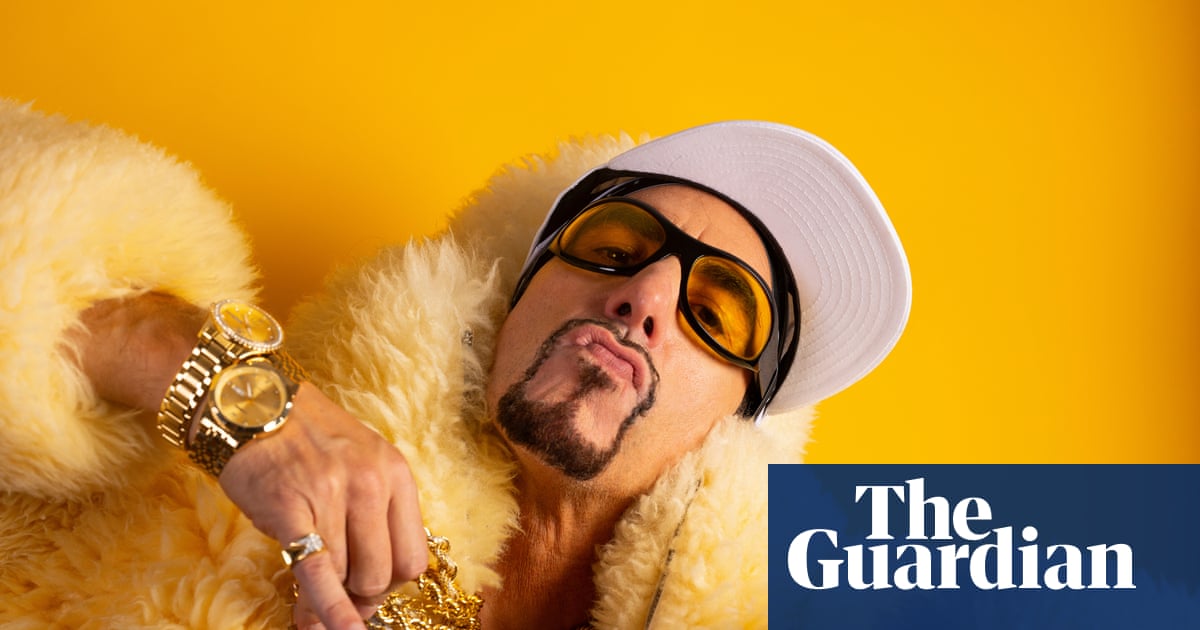
Sacha Baron Cohen has launched an impassioned defence of satire, the right to offend, and his Ali G character on in a lengthy article for Time magazine. On the eve of the release of his new film, Ali G: Who Iz I?, Baron Cohen described satire as “more important than ever”, adding that “along the way, some people, instead of laughing, wince or worse, take offence.” Comparing modern satirists to the traditional figure of the “bouffon”, Baron Cohen described satire as “the humour of the dispossessed … using biting and at times cruel humour to undermine systemic injustice”. Having previously released films containing controversial characters including Kazakh journalist Borat Sagdiyev, Austrian fashion show presenter Brüno Gehard, and a thinly disguised Colonel Gaddafi parody called Admiral General Aladeen, Baron Cohen directly took on critics of the Ali G character, who has been criticised in the past for laughing at black street culture and described as a “black caricature”.
Baron Cohen writes: “I made this latest film for the same reason I’ve always done this work. Not only to make people laugh, but also to bring them face-to-face with the danger of fanaticism and conspiracy theories.” He added: “I’ve always designed my characters and comedy as vehicles to expose prejudice, bias and stupidity, though I realise not everyone sees them that way. Ali G is a white imbecile – a delusional cultural appropriator – who steals the fashion and lyrics from his favourite gangsta rap and dancehall idols, from Compton to Kingston.
The joke is on him, and on the predominantly white male establishment who take him seriously.” “The fact that Ali G is outdated and problematic is the very reason I resurrected him. The world he’s returned to is, in many ways, worse than the one he left 20 years ago. All the prejudices my characters are designed to expose haven’t just lingered – they’ve metastasised ... 20 years ago, Ali G would sit next to world experts spouting absurdities.
Today – fed a steady diet of disinformation and conspiracy theories by social media influencers and TikTok news – we have created an entire world where ignorance reigns and truth is inverted.” Saying that “each of my characters has a specific mechanism to encourage people to drop their guards and show what they really believe, prejudices and all”, Baron Cohen suggests that “yes, satire can offend people other than the intended targets.” Aware that the release of his new film is likely to attract protests, he said that his university dissertation was a study of Jewish and black cooperation during the 1960s struggle for civil rights in the US, and added: “As someone who has opposed bigotry and injustice throughout my life and partnered with civil rights groups, I don’t recognise myself in the warped portrayals of me that I sometimes see on social media, lumped in with the bigots I lampoon.” Pointing to Volodymyr Zelenskyy’s path from TV comic to president of Ukraine, Baron Cohen suggested that “satire doesn’t just needle politicians or regimes – it occasionally helps bring them down”, and that the Trump administration’s actions against Stephen Colbert and Jimmy Kimmel showed that “ridicule is [far from] irrelevant”. Quoting George Orwell’s observation in his 1945 essay Funny But Not Vulgar that “every joke is a tiny revolution”, Baron Cohen concluded: “Maybe [satire] can even help shame more of our governments into finally making our Silicon Valley overlords – unelected billionaires who decide what billions of people see and believe – liable for the lies, conspiracies, and hate on their platforms that have already gotten people killed and will likely kill many more.” “We are once again entering an age of ‘virtuous’ violence, where any atrocity – by racists, Jew-haters, or Islamophobes, the right or the left – can be somehow justified. It is not a place any of us should want to live.”
Extract — continue reading at the source.