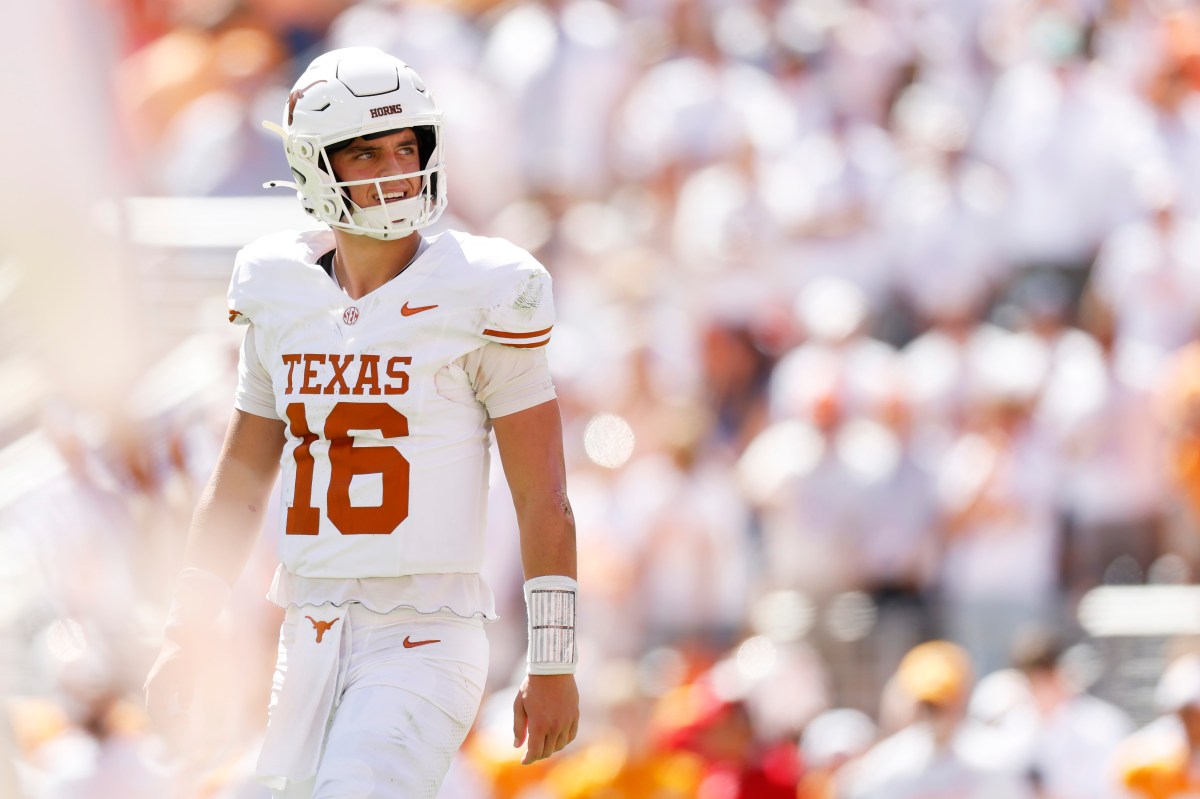
With President Donald Trump attending Saturday's college football game between Texas and Tennessee in Knoxville, where Neyland Stadium seats more than 101,000 fans, security concerns were obvious. A less obvious concern: the security of audio communications among players and coaches with the Secret Service in the house. On the ABC broadcast of the game, sideline reporter Laura Rutledge did her best to explain the specifics of the situation.
"Some of the communication could be affected when President Trump moves in this stadium but I have confirmation from both teams, Texas and Tennessee, that they've worked with the Secret Service to make sure their radio frequencies are cleared with the Secret Service. "They think that the comms should be perfectly OK coach to coach. The one concern they have is coach to player, but they have worked on all kinds of signaling if that does go down, communication-wise." More news: The first player from Texas’ 1969 championship team inducted into the College Football Hall of Fame died Rutledge went on to explain that "spectrum deconfliction" — coordinating radio frequency use to avoid possible conflicts between wireless headsets — is not new to the Secret Service.
Usually, the task doesn't involve a college football game airing on a live national broadcast. More news: A standout WR at the University of Georgia who went on to play parts of five seasons in the NFL died at 57 What Rutledge failed to mention during her sideline report was possible interference with the ABC audio feed. Ironically, as soon as Rutledge finished speaking, a loud crackling noise overwhelmed Chris Fowler and Kirk Herbstreit's call of the game.
The issue did not resolve immediately. More news: A 5-star Oklahoma tight end commit went viral for viciously body slamming an opponent “I apologize for the audio problems,” Fowler said. Texas is the No. 1 team in the country in the latest AP Poll.
Tennessee is ranked No. 14. For more football news, visit Newsweek Sports
Extract — continue reading at the source.