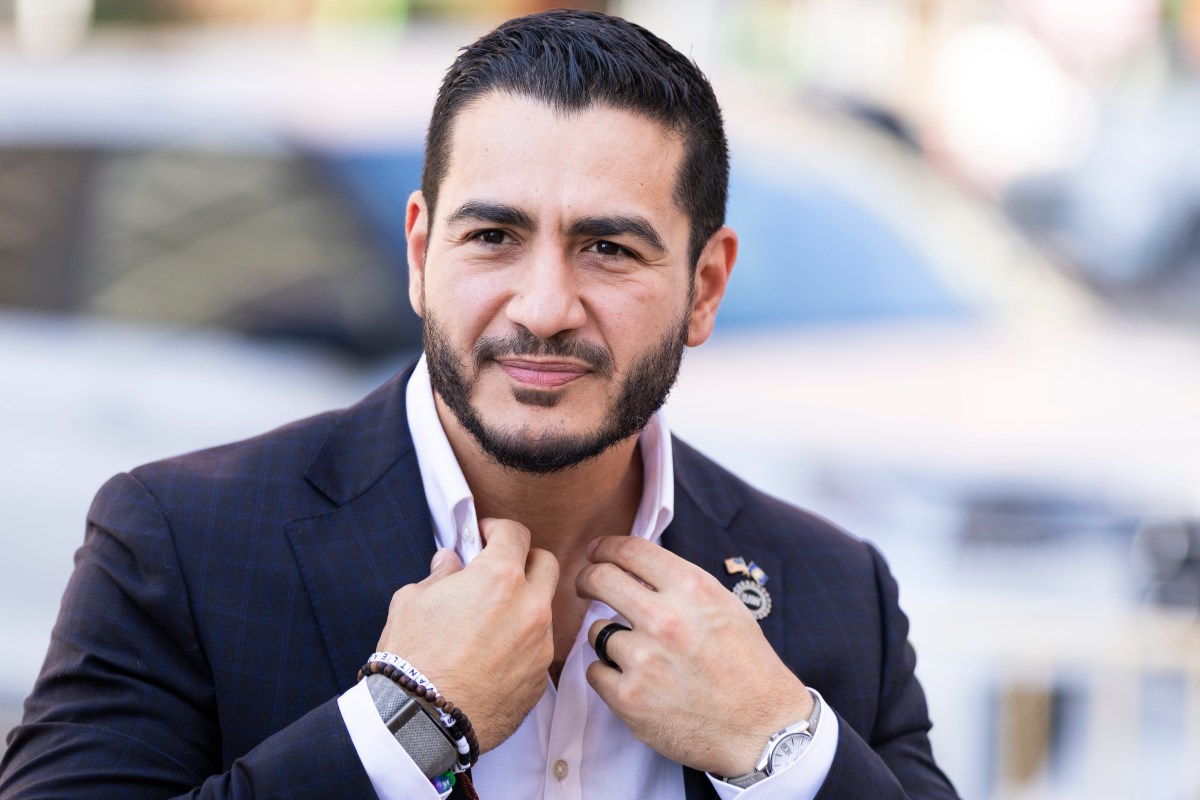
Michigan Democratic Senate candidate Abdul El-Sayed clashed with a voter who asked him to disavow the Muslim Brotherhood, prompting an extended exchange in which the progressive contender accused the man of questioning his loyalty to the U.S. because of his religion. The confrontation happened at a town hall in Caro, Michigan, on Saturday as El-Sayed faced questions over allegations about possible connections between members of his family and the Muslim Brotherhood. El-Sayed has denied that he or his family has ties to the organization.
The Democratic nominee is facing off against Republican Mike Rogers in the November 3 election for the seat being vacated by Senator Gary Peters. Newsweek has contacted El-Sayed's campaign for comment via email. The voter, who identified himself as Tommy, asked El-Sayed whether he would disavow the Muslim Brotherhood.
El-Sayed responded, "Sure. Yeah, absolutely," before questioning why the man believed he needed to be asked. "Because they’re a terrorist group," the man replied.
The two went back and forth, with Tommy saying he had not previously heard El-Sayed disavow the organization. El-Sayed argued that the question suggested the voter believed his Muslim faith could give him loyalties that conflicted with his responsibilities as a U.S. senator. "You assume, Tommy, that because I am Muslim, that somehow I would have some allegiance to something that is not our Constitution," El-Sayed said.
That's implicit in the question." El-Sayed went on to compare the scrutiny to questions John F. Kennedy faced over his Catholic faith during his 1960 presidential campaign. He said the Constitution would guide him as a senator and protect the right of Americans to practice a religion or no religion.
"For me, that Constitution is the guiding light," El-Sayed said. He then turned the discussion toward the voter's Christian faith and religious freedom, ultimately asking whether the man disavowed attempts to introduce religious doctrine into U.S. law. The voter said he did not.
Extract — continue reading at the source.