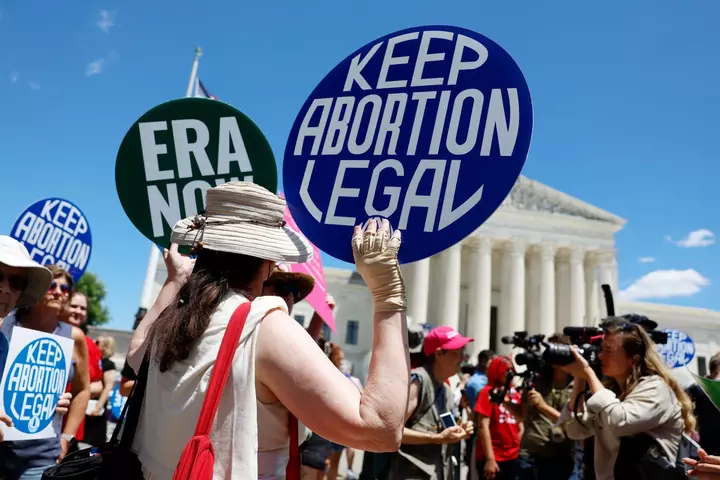
Supporters of reproductive care and abortion rights secured victories in three states during Tuesday's midterm elections, as voters approved constitutional protections in Nevada and Virginia and rejected an attempt to reinstate abortion restrictions in Missouri. However, voters in Idaho rejected a proposal to loosen the state's near-total abortion ban, marking a setback for advocates who have worked to expand access to the procedure after the Supreme Court overturned Roe v. Wade in its 2022 Dobbs decision.
The ruling ended the federal constitutional right to abortion, leaving it up to states to determine their own restrictions and protections. Since then, Americans' access to abortion care has become dependent on the jurisdiction in which they live. According to an October analysis by the health policy research organization KFF, 13 states currently enforce near total bans on abortion, while six states restrict abortions after six to 12 weeks of pregnancy.
Other states allow abortion up to fetal viability—the point in a pregnancy when a fetus has the capacity to survive outside the uterus—which is generally considered to be around 23 to 24 weeks of pregnancy. Differing restrictions at the state level have made ballot initiatives a key part of the national debate over reproductive rights. Wade was overturned, abortion-related measures have appeared on ballots in 17 states.
Tuesday's elections offered another test of those protections, including in Missouri and Nevada, where voters were asked to revisit decisions made two years earlier. The votes took place alongside midterm elections in which Democrats not only won control of both chambers of Congress but also made gains in gubernatorial and state legislature races. Voters in Missouri rejected Amendment 3, a Republican-backed proposal that would have repealed abortion protections approved by voters two years earlier.
With 99 percent of votes counted, 55.5 percent voted against the amendment, compared with 45.5 percent for. In 2024, Missouri became the first state to overturn an existing abortion ban through a statewide ballot initiative. The measure established Missourians' right to an abortion until fetal viability.
The state also allows abortions later than this if the procedure is necessary to protect the life and health of the mother. However, the Republican-controlled state legislature subsequently approved another constitutional amendment to be considered by voters on November 3. It would have restored restrictions on most abortions, with exceptions for medical emergencies, fetal abnormalities and cases of rape and incest up to 12 weeks of pregnancy.
Extract — continue reading at the source.