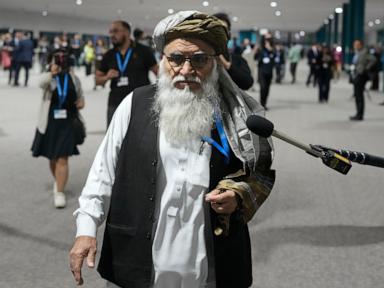
Afghanistan's Taliban officials have been invited and will attend the upcoming U.N. climate summit as observers ISLAMABAD -- Afghanistan's Taliban officials have been invited as observers and are planning to attend an upcoming U.N. climate summit for the second time, a Kabul official said Tuesday. The summit starts next week in the Mediterranean city of Antalya in Turkey. Two years ago, they attended a previous summit in Baku, Azerbaijan, for the first time since the Taliban returned to power in 2021.
Rohullah Amin, head of climate change at Afghanistan’s environment protection agency, confirmed to The that Kabul plans to attend the summit, officially known as the Conference of the Parties, or COP31. A Turkish official, who spoke on condition of anonymity in line with government regulations, also said the Afghan Taliban would attend COP31 as observers. The United Nations has not allowed the Taliban to take up Afghanistan’s seat at the U.N.
General Assembly, and the Afghan Taliban government is not formally recognized by U.N. member states, in part because of its severe restrictions on women’s education and freedom of movement. And since Baku, leadership groups of the U.N. climate conferences have deferred a decision on who represents Afghanistan, thereby largely freezing Kabul out of the talks. An observer can attend meetings and discussions at a climate summit but does not have a formal role in negotiations about policies or goals.
Afghanistan is one of the countries most vulnerable to climate change, facing a compounding crisis of drought, water scarcity, extreme heat and unpredictable flooding that is devastating lives and driving displacement, the U.N. Office for the Coordination of Humanitarian Affairs says. Afghans largely depend on agriculture, and recurring droughts have severely weakened food production.
Between April and December last year, more than 1.6 million people left their homes across the country due to climate impacts on their lives, according to a report by the International Organization for Migration. Kabul has argued that it's important for the Afghan people to have representation and access to climate finance while its critics say the international community should not recognize the Taliban government. It is not the government that is facing the consequences,” said Sayedmuhammad Sulimankhil, executive director of the Kabul-based nongovernmental Samsoor Watan organization.
Fawzia Koofi, a former Afghan lawmaker and a women’s rights activist, has publicly criticized the Afghan Taliban attendance in Baku. She left Afghanistan following the Taliban return to power. Since seizing power in 2021 as the U.S.-led forces were pulling out of Afghanistan, the Taliban have imposed rules based on their strict interpretation of Islamic, or Shariah, law.
Extract — continue reading at the source.