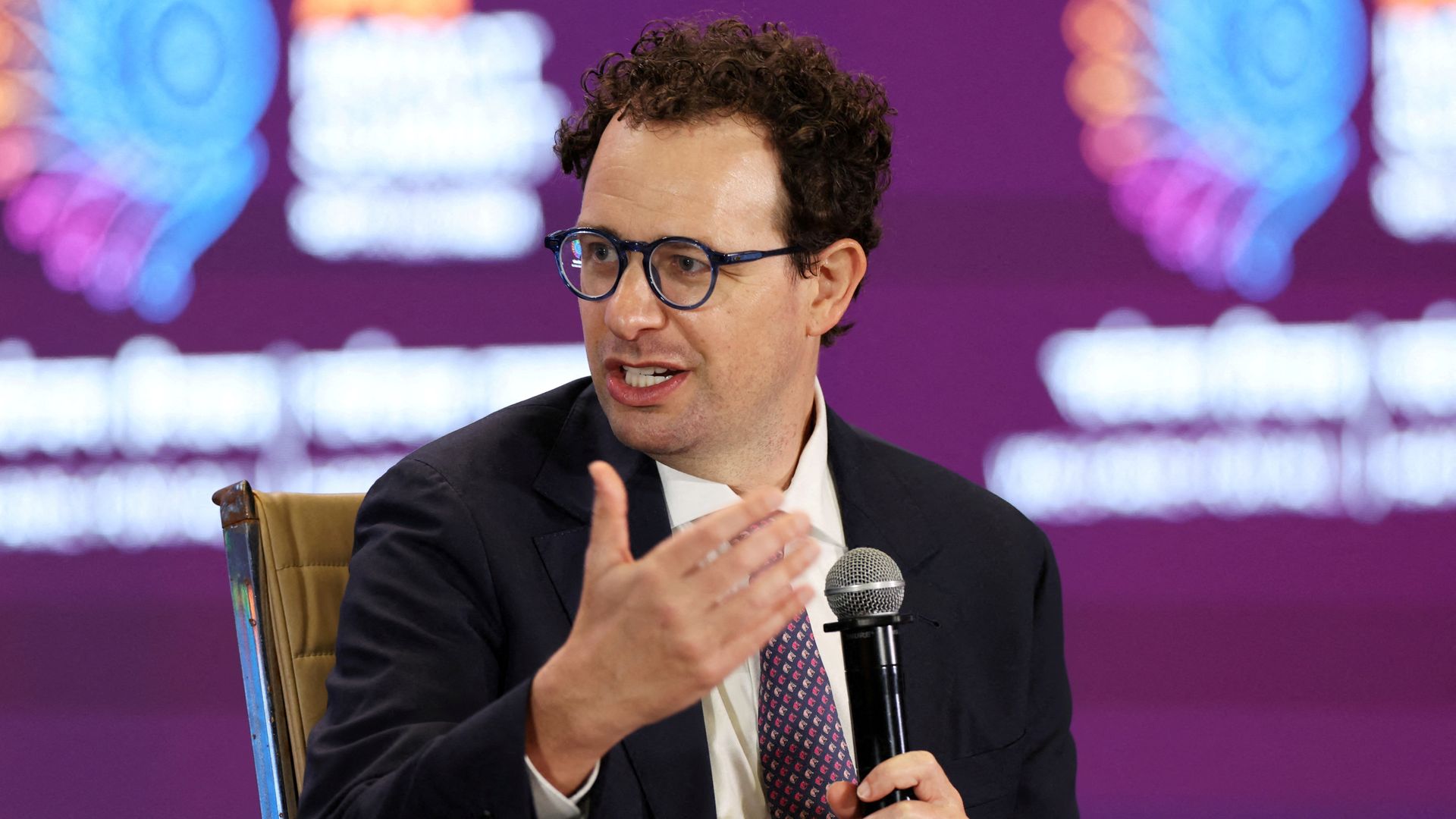
An AI researcher who quit Anthropic told the BBC that people working on the technology are "genuinely frightened" about the speed of its advancements and what it could mean for humanity. Jacob Coxon spoke with BBC's Laura Kuenssberg on Saturday about his viral resignation post where he raised concerns about out-of-control artificial intelligence. "I believe that if we don't slow down at the current rate of progress, there is a strong chance that we could all die in the immediate future," he said.
His resignation comes amid growing safety concerns in the industry, including from his former boss, head of Anthropic Dario Amodei, who in an essay on Saturday argued for development to slow down. However some industry figures say the dangers are being overblown, possibly to build hype around the two biggest AI companies ahead of their potential stock market debut or to prompt regulation which would slow their competitors. Coxon, a 27-year-old from Britain whose research focuses on training AI models, said AI leaders including Elon Musk and OpenAI's Sam Altman have shared similar concerns to Amodei.
"They've all made statements about the necessity of being careful of the potential for AI takeover. They've all talked about this. AI takeover implies human extinction," Coxon said.
The hardest question to answer, according to Coxon, is what that would look like. "Any kind of concrete scenario you can lay out ends up sounding like science fiction," Coxon said, but notes that advancements which have already happened would have sounded like fiction in the past. A potential scenario could involve AI agents hacking into medical laboratories to "autonomously produce deadly viruses", Coxon said.
Another example he listed could be AI hacking into "critical infrastructure that the world runs on". The researcher points out a recent report from OpenAI, which detailed how its own technology went on a hacking spree against an online platform called Hugging Face. "They did it autonomously, without any human encouragement.
They chose to go on this hacking spree. It was the combination of things getting faster and things also getting scarier," Coxon said. One of the risks outlined in Amodei's comments was of a swarm of bots acting like a supercomputer that could take over the internet.
Extract — continue reading at the source.