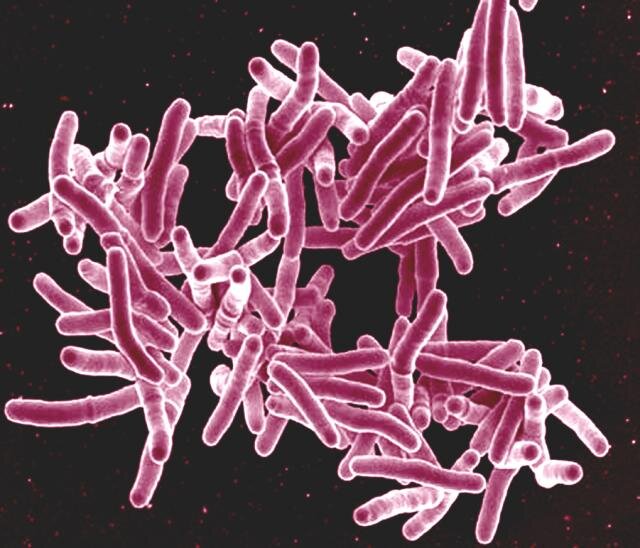
This article has been reviewed according to Science X's editorial process and policies. Editors have highlighted the following attributes while ensuring the content's credibility: Tuberculosis bacteria released into the air from infected individuals dry out to form infectious particles that are second only to measles in contagiousness. Weill Cornell Medicine investigators have discovered specific mechanisms that enable the bacteria not only to survive drying but also to generate mutations linked to antibiotic resistance.
This suggests that transmission involves more than the passive movement of bacteria between people and may be a period during which the pathogen evolves. Tuberculosis, a lung infection caused by Mycobacterium tuberculosis (MTb), affects nearly 11 million people and causes roughly 1.2 million deaths globally each year. The study, published in Nature Microbiology, demonstrated that desiccation specifically elicited a DNA repair response that both promoted Mtb's survival and increased the appearance of mutations that made the bacteria resistant to the antibiotic rifampin.
The researchers also identified a promising new drug target—by reducing the activity of a DNA repair gene called Mfd, they could impair the survival of drug-resistant tuberculosis bacteria. "Tuberculosis has evolved the ability to spread efficiently from person to person," said senior author Dr. Kyu Rhee, professor of medicine in the Division of Infectious Diseases and professor of microbiology and immunology at Weill Cornell.
"Our findings shed light on this understudied stage of the tuberculosis life cycle and lay the groundwork for new strategies to interrupt transmission and combat drug resistance." Tuberculosis spreads when an infected individual coughs, speaks or breathes, sending microscopic droplets containing bacteria into the air. As these droplets evaporate, they shrink into tiny particles known as droplet nuclei that can remain suspended in the air long enough to be inhaled by someone else. By mimicking the conditions that lead to the drying and rehydration of MTb in the laboratory, the team showed that desiccation causes oxidative stress in the bacteria, leading to DNA damage.
The bacteria responded by activating a DNA repair program that helped them survive and recover once moisture became available again. The results suggest that tuberculosis has evolved specific mechanisms to withstand the stresses of airborne transmission. "Mutations are a critical component of bacterial evolution," said study lead author Dr.
Christopher Brown, the William Randolph Hearst Foundation Clinical Scholar in Microbiology and Infectious Diseases at Weill Cornell and a physician at NewYork-Presbyterian/Weill Cornell Medical Center. "DNA damage incurred during transmission could contribute to the genetic diversity that allows tuberculosis to adapt and, in some cases, acquire drug resistance." Rifampin is a cornerstone of tuberculosis treatment and helps shorten therapy to about four to six months. However, rifampin resistance is a growing problem worldwide, primarily driven by genetic mutations in bacteria that render the drug ineffective.
Extract — continue reading at the source.