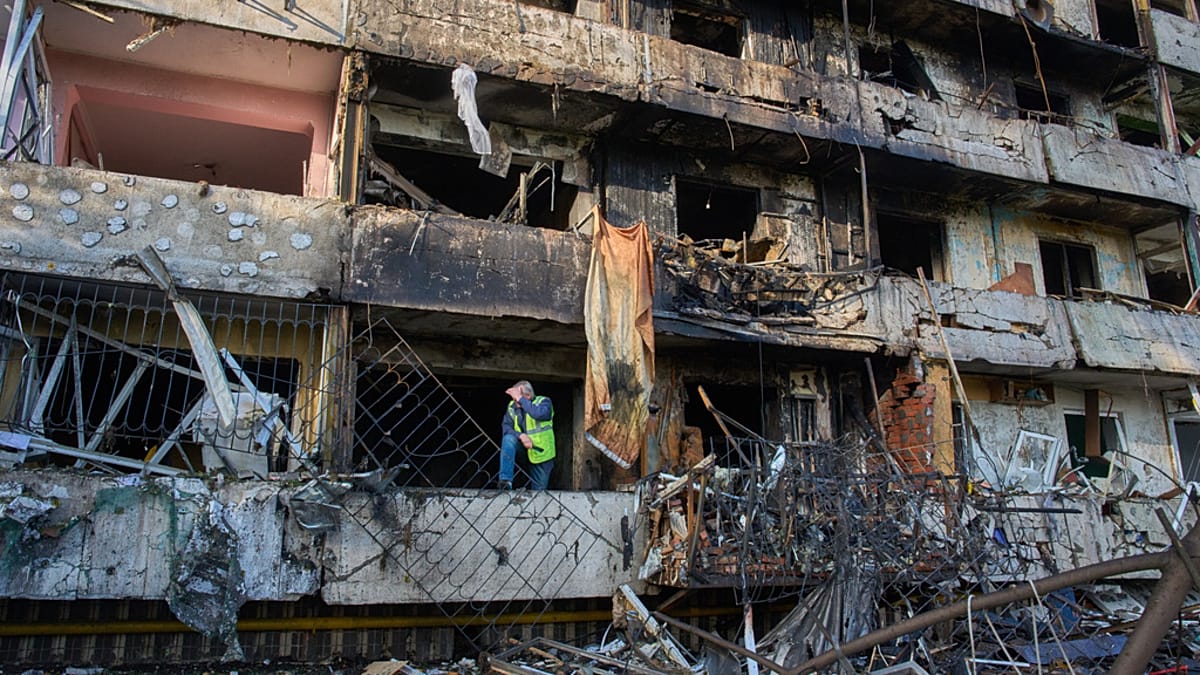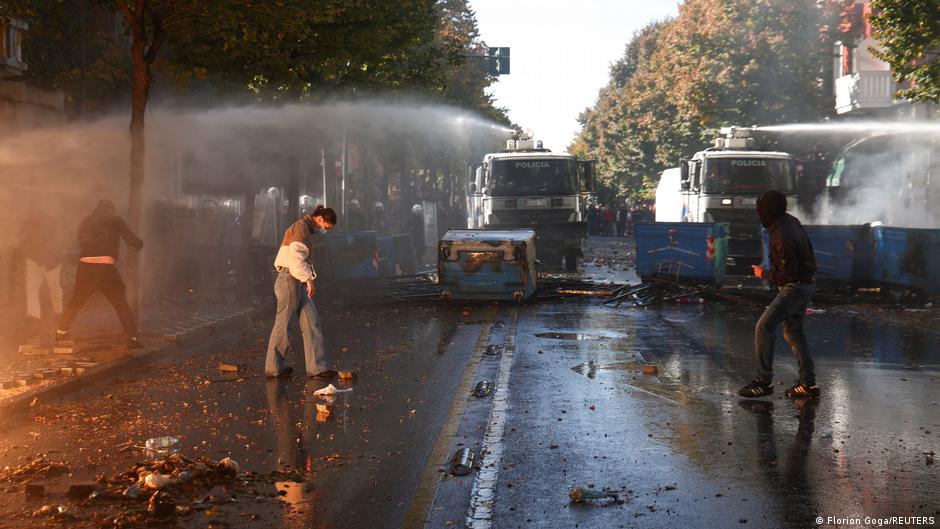
Albania's Education Ministry caught fire on Wednesday in a second day of student protests over corruption and education. The scenes were at least somewhat reminiscent of the protracted student demonstrations in France in recent weeks. They are probably the most violent outburst of low-level anti-corruption protests against Prime Minister Edi Rama's government and the main opposition led by Sali Barisha that started in May this year.
Police deployed riot police and used tear gas and water cannons to disperse crowds in the capital Tirana. Thousands of protesters gathered in front of the Education Ministry on Wednesday, many obscuring their faces. Some threw bricks at the building, damaged barriers on the sidewalks and overturned trash cans.
A bank near the Education Ministry also caught fire, according to the news agency citing a witness. The demonstration started on Tuesday with a peaceful gathering of several hundred people outside the Education Ministry but quickly escalated and turned violent in places. Police early on Wednesday reported around 40 detentions and 13 people injured, including six police officers.
Unrest continued long after these figures were issued. Deputy Prime Minster Albana Kociu posted a video of demonstrations on Facebook saying it was "disheartening to see the culture of protest degenerate into orchestrated violence." She said that the attacks on institutions and police and the "senseless destruction of public property" were "not the language through which the youth should express themselves." Instead, she said they were reminiscent of the "old habits of those who use young people to mask their own political incompetence." In another post, Kociu called on students who believe in the right to protest to "distance" themselves from "violence and vandalism." Student organizers say the protests revolve around conditions at universities, higher education costs, financial support and employment prospects after graduation. More generally, Albania has faced a series of demonstrations this year sometimes referred to as the "Flamingo Revolution." These were at least partly prompted by a controversial construction project on the Adriatic Coast in a protected area where flamingos live.
But these partly environmental protests have also had a more general theme of dissatisfaction with Albania's dominant political forces. PM Edi Rama's Socialists and Sali Barisha's right-wing Democrats have alternated in government for more than 30 years, ever since the post-Cold War democratic transition in the former communist country. To view this video please enable JavaScript, and consider upgrading to a web browser that supports HTML5 video The timing is also conspicuous, with the demonstrations starting amid prominent international coverage of widespread school and student protests in France in recent weeks leading to similarly restless scenes.
If you rely on our team for trusted reporting, please take a moment to select us as your Preferred Source on Google, so you'll always see our verified news first.
Extract — continue reading at the source.