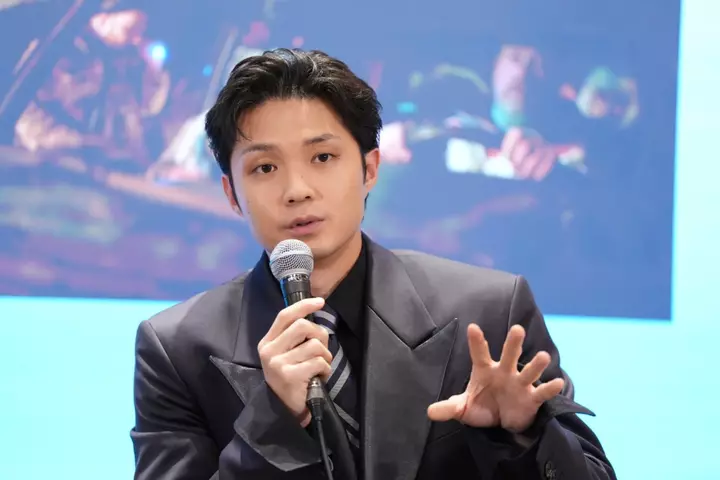
When Isomura Hayato was considering a part in “The Moon,” Ishii Yuya’s drama drawn from a real incident at a facility for people with disabilities, the people around him tried to talk him out of it. The events were still fresh, and they worried the role could damage his career. The performance won him the Japan Academy Film Prize for best supporting actor.
So I thought I wanted to challenge that role, and that’s why I took this role in that movie, ‘Moon.’” That pull toward difficult material runs through a career that moves between Netflix’s global hit “Alice in Borderland,” the “Tokyo Revengers” franchise and independent dramas such as Hayakawa Chie’s “Plan 75” and Kishi Yoshiyuki’s “(Ab)normal Desire.” This year it landed him on the jury of the Ethical Film Award at the Tokyo International Film Festival, which runs through Nov. 4, where he judged alongside three students from the festival. The jury did not pick the nominees. It inherited three very different films – an animation, a documentary and a realistic fiction feature – and had to choose one.
Every film carries some ethical theme, Isomura says, but because this was the Ethical Film Award, “I was thinking which film was, which film was sincerely facing these people or the environment or the society, and how they are putting those messages into form.” The prize went to “I Rarely Wake Up Dreaming,” German director Isabelle Stever’s drama about gender set against Russia’s war in Ukraine. Plenty of films tackle gender, Isomura notes. Pairing it with war was new to him.
Of course, in the history there was war and we were always fighting in the war, but nowadays, the war is kind of far away for me,” he says. The two titles stayed in contention until the very end. Isomura was struck by how the student jurors weighed the films.
Their question was often whether a film left room for hope, and whether viewers would walk out feeling lighter – a lens he says differs from his own. Social themes, political ones included, are an important consideration for Isomura when weighing a film role. That approach hasn’t shifted as his career has grown.
Television is a different calculation. Japanese TV drama can’t go as deep into ethical territory as cinema, he says, so when choosing series he weighs how entertaining they will be. Blockbusters and smaller films both allow for creative expression, Isomura says, calling that the peaceful answer.
Extract — continue reading at the source.