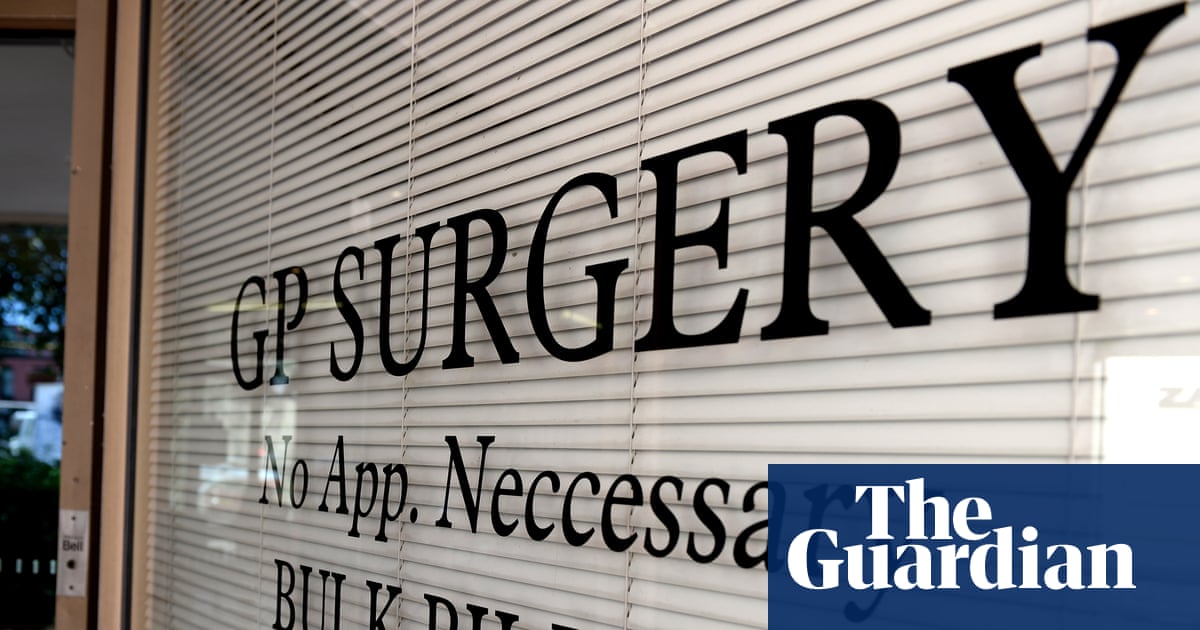
The proportion of general practitioners bulk-billing all of their patients has more than doubled in a year, a report has found, after the government introduced financial incentives for doctors and practices. And almost two-thirds (63%) of Australians are now bulk-billed for all their GP care, up from 56% in both 2024 and 2025, which the report says is “likely a reflection of the federal government’s recent investment in Medicare bulk billing incentives”. The findings come from the Royal Australian College of General Practitioners (RACGP) annual health of the nation report, to be published on Wednesday, which includes a survey of 2,766 GPs.
Of the respondents, 26% of GPs reported bulk-billing all of their patients, up from 12% in 2025. In November, extra financial bonuses were introduced to practices that bulk-bill all eligible services for all Medicare patients, with those clinics receiving an additional 12.5% top-up payment split between the practice and the doctor. But the proportion of people bulk-billed for all GP care remains short of 2019 figures, when the report found it to be 70% of patients.
The report, which also draws on Australian Bureau of Statistics data, found the proportion of Australians delaying GP care due to cost fell from 8.8% in 2023-24 to 7.7% in 2024–25. The RACGP president, Dr Michael Wright, said the findings indicate “greater affordability across the healthcare system”. Funding gets results.” Dr Luke Slawomirski, a health economist with the Australia Institute, said while the bulk-billing findings were “certainly good news”, it was important to remember the survey represents about 7% of the GP workforce.
Slawomirski said a strong health system depends on more than just affordability and bulk-billing rates, with access, quality of care and patient outcomes also important. Wright agreed, saying “we can’t measure success solely by bulk-billing rates”. The RACGP is calling for increases to patient Medicare rebates for longer consultations, and for the government to establish an independent primary care pricing authority to ensure Medicare funding reflects the true cost of delivering care.
Slawomirski said reforms needed to “go further” than this. An independent pricing authority could help, but the aim should be to pay for the value of care rather than simply reimburse the cost of providing it.” The Australian Institute of Health and Welfare estimated that potentially preventable hospitalisations cost the economy $7.7bn in 2023–24. One solution could be to pay GPs more relative to other medical specialists, he said.
Extract — continue reading at the source.