At a recent midweek lunch with a group of friends, we did what women have presumably done over lunch for centuries: admire one another’s clothes. What struck me was not that any of us looked particularly fancy or conspicuously branded. We looked polished but, oddly enough, every outfit at the table belonged to a category that not long ago would have been reserved for the gym, the couch, cooking dinner or the sort of errand you hoped no one would see you running.
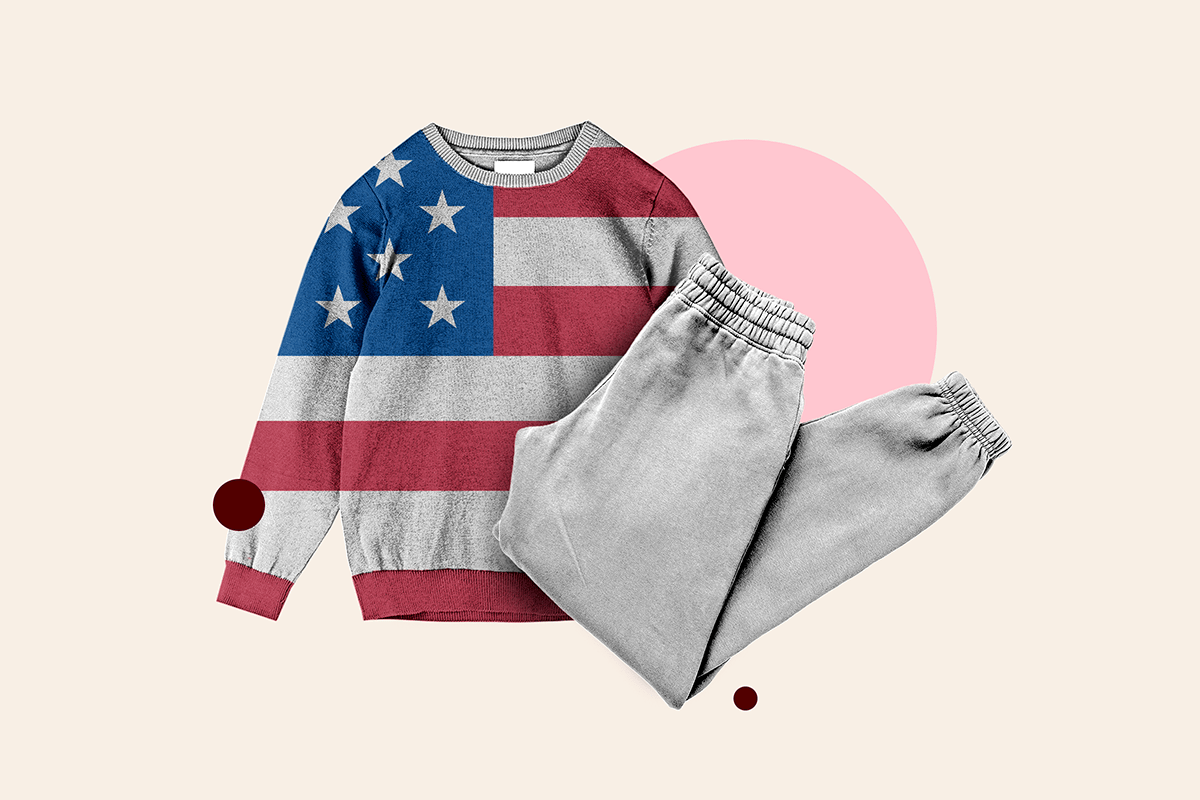
I was wearing Gap, two friends were in Alo, and another was in Lululemon. The fabrics were different, as were maybe the price points, but the silhouettes and the proposition were the same: elastic-waist pants paired with a top in the exact same color or print, accompanied by a collective understanding that these combinations constituted being properly dressed. Ladies and gentlemen, bow down to athleisure, a genre of clothes that has pulled off one of the more successful acts of cultural laundering in recent American life.
These clothes—soft, comfortable and, above all, always elastic—did not merely become acceptable but aspirational. They moved from the margins of the wardrobe to its center and, in doing so, quietly changed the threshold for what Americans consider proper for public life. Ten years ago, the default uniform of ordinary American casual life was probably jeans and a T-shirt.
Hardly formal, certainly not elegant, but still recognizably an outfit, athleisure existed, of course. Leggings had already escaped the yoga studio, and sneakers weren't just being worn to Zumba. Perhaps most notably, Lululemon's success in the early to mid 2000s showed Americans were willing to spend serious money on clothes ostensibly designed for exercise.
But athleisure had not yet swallowed the wardrobe whole, and jeans and T-shirts still reigned supreme...until COVID arrived. For months, millions of Americans lived at home, where getting properly dressed to move from the bedroom to the kitchen and then back to the bedroom seemed absurd, but remaining in pajamas until late afternoon seemed psychologically damaging. Athleisure solved the problem perfectly: it allowed us to perform the ritual of getting dressed without accepting most of the physical inconveniences traditionally associated with clothing.
And what had been one category of the American wardrobe suddenly had a chance to become its organizing principle. The fashion industry understood the assignment. Ashlie Garcia, who spent years working in recruiting and human resources at Amazon and Fresno Unified, remembers the pandemic uniform as the “Zoom mullet." “Nice top, sweatpants, slippers if nobody asked you to stand up.
Extract — continue reading at the source.