As jobs have become more technological, job markets have become more competitive, and the costs of tuition have risen, college students are increasingly considering the ROI of their education, or how efficiently it can be used to acquire a high-paying job post-grad. Methodology: How TIME and Statista Determined America’s Best Colleges of 2026-2027 The search for high ROI education has led many U.S. college students to pursue STEM careers. According to a 2026 report from the National Science Foundation, the STEM workforce grew by 26% between 2013 and 2023 compared to the non-STEM workforce, which grew 9%—and STEM jobs are projected to continue growing at a faster rate than non-STEM jobs for the next decade or so.
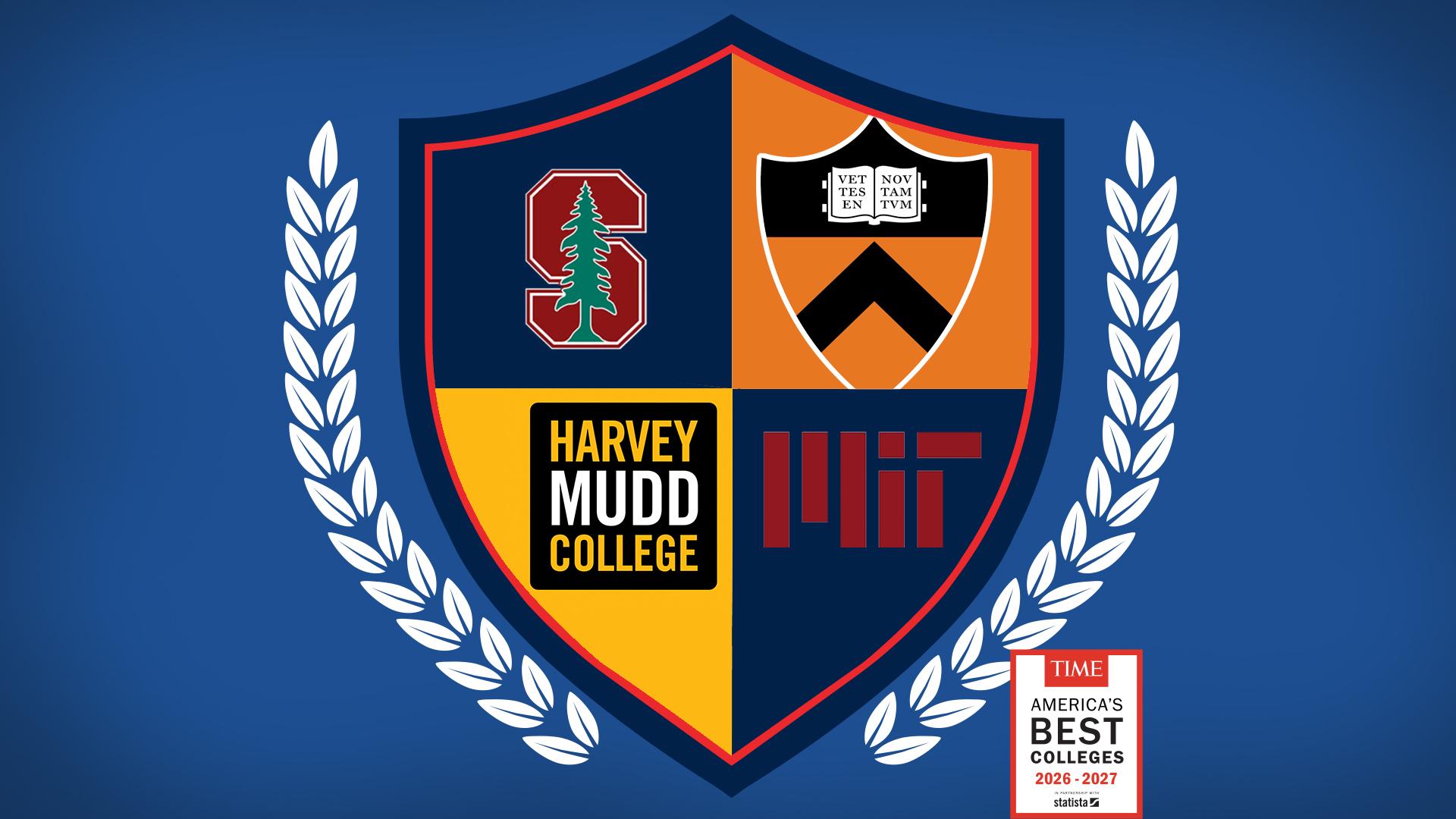
From 2021 to 2023, higher-education degrees awarded particularly in science and engineering reached record highs, and the U.S. was the most popular post-secondary STEM education destination for international students. Schools with historically strong STEM programs—and pipelines into high-paying tech jobs—rank high on the list, like research universities Stanford (no. 1), known for its startup culture and connection to Silicon Valley, and MIT (no. 2), a patent powerhouse. At no. 3 is Harvey Mudd, a small liberal arts college with a student population of around 900.
It offers only majors in STEM—appealing to Gen-Z students who are increasingly turning to trade schools to learn technical skills—but competes with the big schools by encouraging students to be engaged in humanities, social sciences, and arts so they can understand the ethical impact of their work on society. Very often, these projects can lead directly to jobs, Briggs says. Of course, studying science and engineering is not the only option for students to get the most out of their post-secondary education.
For example, Claremont McKenna (no. 9), part of the same liberal arts college consortium as Harvey Mudd, offers a wider range of non-STEM majors. Its career center provides career resources for “interest clusters” to help students think about potential post-grad pathways and give them relevant organizations to explore. In a post last year, Claremont reported that over 96% of the recent graduating class had defined plans and a median salary of $80,000.
For students who want certainty of outcome, sector-specific workforce training programs have been found to be most successful in increasing people’s earnings because they train people for a particular job at a company. Some colleges are catching on to the need to link the skills learned during class to what jobs require. For example, Fashion Institute of Technology (no. 51) is partnering with Lightcast to display data about career outlooks, job availability, salary potential, and hard and soft skills required for the niche majors they offer like technical design, spatial experience design, packaging design and toy design.
See the full list of America’s Best Colleges of 2026-2027 below
Extract — continue reading at the source.