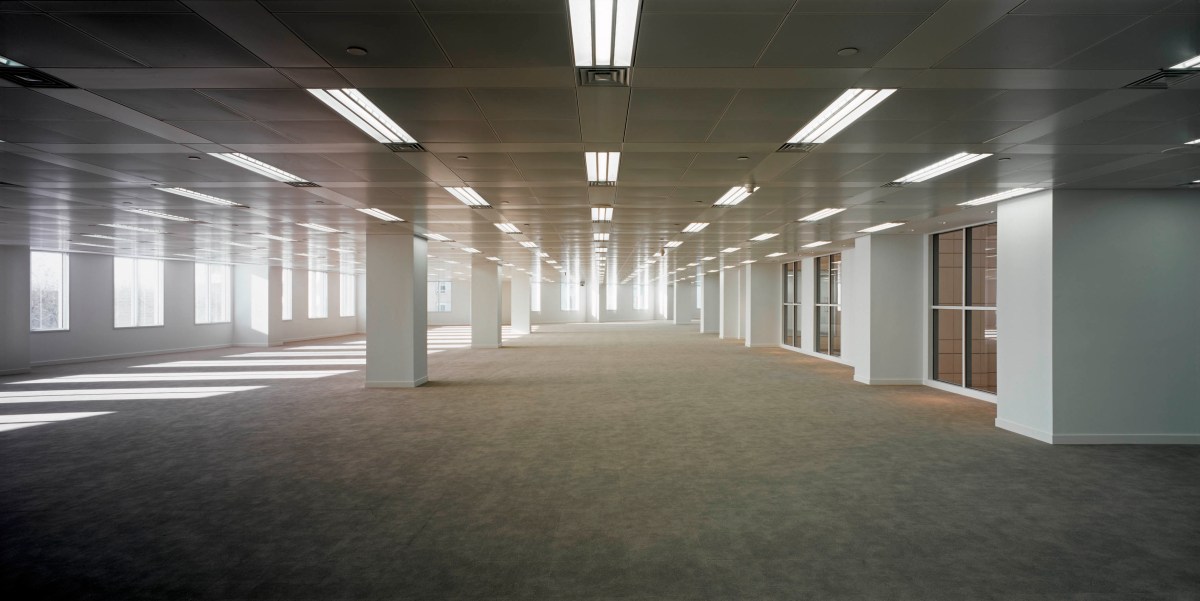
America has a housing shortage measured in millions of homes at the same time that nearly one in five square feet of office space sits vacant. Freddie Mac estimated the U.S. housing shortage at 3.7 million units as of the third quarter of 2024, while CBRE reported a national office vacancy rate of around 19 percent in 2025. That is not a coincidence we should ignore.
It is a potential housing pipeline hiding in plain sight, but turning empty offices into homes is not as simple as putting apartments inside an existing building. Only the properties whose geometry, location and economics actually work deserve a second life. The obvious conclusion is that we should convert offices into housing.
The more important conclusion is that we need to become much better at identifying which offices can actually become housing. CBRE found that 23.3 million square feet of U.S. office space was slated for conversion or demolition in 2025, compared with 12.7 million square feet of new office construction. Another 81 million square feet was in the conversion pipeline, and 76 percent of active office-conversion projects were planned for multifamily use.
The numbers show that adaptive reuse is already becoming part of the response to changing demand, even if it will not solve the housing shortage on its own. Those numbers are encouraging, but they can also create a misleading impression. An empty office building is not an apartment building waiting for someone to renovate it.
The geometry of the building matters. So do the windows, floor-plate depth, structural system, plumbing, elevators, parking, zoning, acquisition price and the cost of bringing the property up to residential standards. A building can be perfectly positioned in a community with significant housing demand and still make no sense as a residential conversion.
I have learned to look at that question from both sides of the table. My work spans architecture and real estate development, giving me experience with both the design constraints of existing buildings and the financial considerations that determine whether a project can move forward. That perspective has made one principle particularly clear to me: the first question should not be whether an office building is empty.
Extract — continue reading at the source.