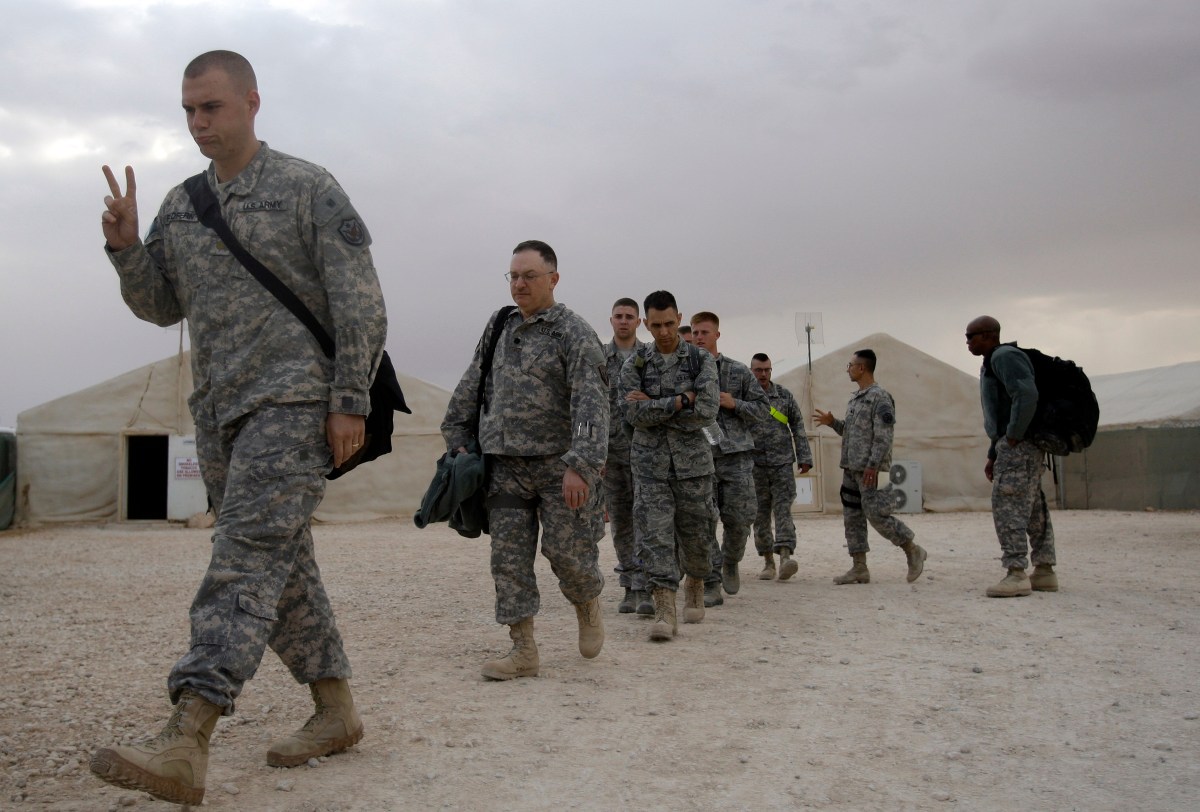
Wednesday will witness the last American troops withdraw from Iraq, officially ending a two-decade-long military presence that began with an invasion in 2003 and resumed again in 2014 when U.S. forces returned to aid Baghdad in its fight against the Islamic State group. Taken together with the somewhat abrupt pullout from Afghanistan five years ago, this closes a messy and complicated chapter in American history. A pair of so-called "forever wars,” waged at a great cost to the citizens of all countries—one that taught a lesson on the limits of what U.S. military power alone can achieve.
As the last plane out of Iraq takes off, two U.S. carrier strike groups are operating in the Arabian Sea in support of military operations against Iran, some seven months after Operation Epic Fury embroiled Washington in yet another highly complex foreign conflict. Operation Iraqi Freedom began in March 2003. By April 9, American forces had taken Baghdad and overturned Saddam Hussein’s government.
Saddam himself was captured before the year was out. Granted, the troops didn’t find those WMDs—no one can be expected to achieve the impossible!—but it looked as if America’s military might was to prevail once again. By the time American combat troops finally left the shattered nation in 2011, 4,492 American soldiers lay dead, and almost 32,000 service members had been wounded in action.
It’s a bleak toll, but one dwarfed by that of the Iraqis. Conservative estimates of civilian deaths due to direct violence between 2003 and 2011 sit between 180,000 and 210,000, with hundreds of thousands more believed to have died indirectly as healthcare, vital infrastructure, and water sanitation collapsed. Operation Inherent Resolve, the later campaign against ISIS in Iraq and Syria, saw another 123 U.S. military deaths, while Iraq said more than 26,000 of its soldiers and military personnel were killed during the four-year fight against the extremists.
Yet, with ISIS’ presence in the region mostly reduced to scattered sleeper cells, the current political and social climate looks far better in Iraq now than one would’ve expected during the darkest years of America’s occupation. Prime Minister Ali al-Zaidi told U.S. lawmakers in July that America is Baghdad’s "most important strategic partner." He also said, "After September 30, there will be no need for any armed factions,” assuring that Iraq’s federal forces could protect the country. His second claim is already under strain.
Removing Saddam also removed a regime that had fought Iran through the brutal eight-year Iran-Iraq War. After 2003, Iraqi Shiite political movements with longstanding links to Tehran gained access to the new political system, while Iran armed, trained, and supported military groups based across the border. The collapse of Iraqi forces before ISIS in 2014 created another opening, as Iran-backed armed groups became central components of the Popular Mobilization Forces (PMF) that helped fight the extremists.
Extract — continue reading at the source.