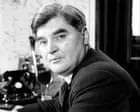
Aneurin “Nye” Bevan, the Welsh Labour firebrand who spearheaded the creation of the NHS, was monitored by security services for more than two decades, though his personal file was “remarkably tame”, according to official files released to the public. Bevan came to MI5’s attention in the 1930s over concerns about his links with known communists, papers released to the National Archives show. Monitoring continued even after he became a minister in the postwar Labour government that created the NHS.
At one point, his links to a known Russian spy led to the then director general of MI5 approaching prime minister Clement Attlee to warn him. However, the papers show, some in the security services questioned why Bevan was of interest. Although there is nothing in the files to indicate that MI5 ever tapped his phone or intercepted his mail, one officer wrote in 1943: “I do not think that Bevan’s activities are a matter in which we, the Security Service, should be involved.
He was described in one entry to have “inherited the evangelical fervour of his Welsh forebears and knows how to use it in the communist cause.” He was also noted to have been “in close touch” with Harry Pollitt, general secretary of the Communist party of Great Britain, and others in the party who backed his plan to organise “workers’ freedom groups” to defend against “capitalists”. Bevan fell out with his communist allies who had complained he was not interested in workers’ unity and was intent on building “a movement of his own”. But by 1936 they had reconciled, with Bevan supporting an application by the Communist party to affiliate with the Labour party.
In 1949, MI5 became concerned about Bevan’s friendship with Wilfred Macartney, who had been convicted of spying for Russia in 1928. Recordings of Macartney’s conversations suggested he was passing on information obtained by Bevan to Pollitt. It led the director general Sir Percy Sillitoe to approach Attlee, who dismissed Macartney’s claims as a “tissue of lies” but agreed to “warn” Bevan about Macartney.
The file was finally closed in 1975, 15 years after Bevan died. Other newly released papers show MI5 feared communists could attempt to disrupt the coronation of King George VI, with Communist party activists closely watched before the Westminster Abbey ceremony in 1937. While the party prepared a propaganda drive and printed a million anti-monarchist leaflets to be distributed during coronation week, members were warned to avoid antagonising a largely pro-royalist public.
One MI5 report from April 1937 noted that a “comrade” in Manchester had been “severely censured” for proposing a series of demonstrations as it would be “playing into the hands of the fascists and police”. MI5 believed he joined first the Communist party and then the Trotskyists in the 1930s, and remained an active supporter until the end of the second world war. The files suggest, however, he was unconvincing as a revolutionary.
Extract — continue reading at the source.