Microorganisms developed biodegradable plastics long before humans began making them. Many bacteria and archaea naturally produce compounds known as polyhydroxyalkanoates (PHAs), which they store inside their cells as reserves of carbon and energy. Scientists had long assumed that only microorganisms could break down these natural plastics.
New research from the Max Planck Institute for Marine Microbiology in Bremen, Germany, now challenges that idea. In a study published in Nature Ecology & Evolution, researchers found that a wide range of animals, including marine worms, starfish, earthworms, and other terrestrial species, possess enzymes that can degrade microbial PHAs. The discovery points to a previously unrecognized pathway through which carbon stored by microbes can move into animal food webs.
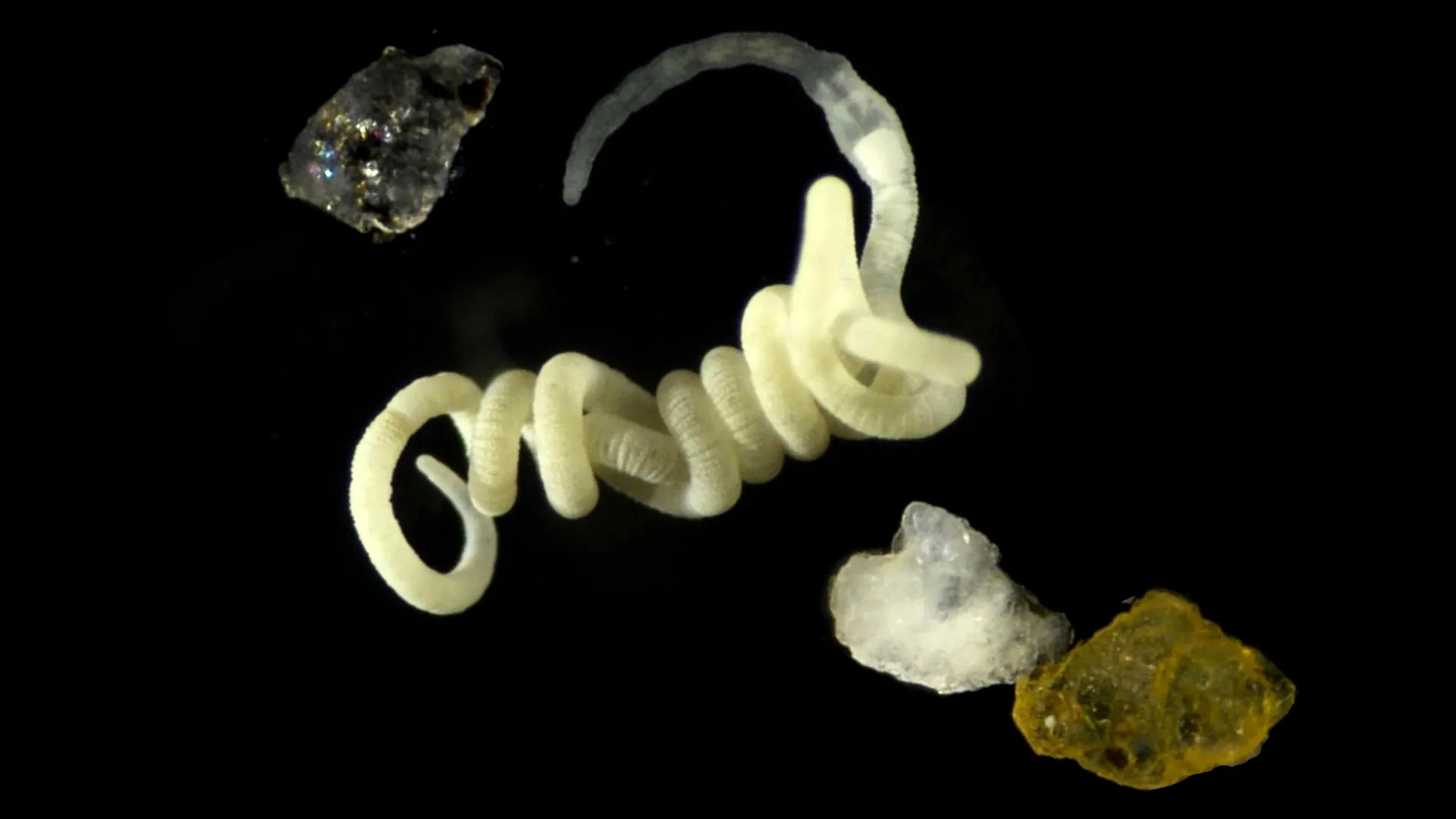
A Gutless Marine Worm Reveals a Hidden Ability The investigation began with an unusual marine worm called Olavius algarvensis. Unlike most animals, it has no mouth or gut. Instead, the worm depends on symbiotic bacteria that live beneath its skin, which it digests as a source of nutrition.
"One of the worm's bacterial symbionts stores enormous amounts of carbon as PHA," says corresponding author Nicole Dubilier, Director at the Max Planck Institute for Marine Microbiology. "We wondered whether the worm had evolved a way to access this rich energy reserve." The answer was: Yes. Researchers identified an enzyme in the worm that can break microbial PHAs into smaller molecules that animals are able to use.
High-resolution imaging also revealed that the enzyme is produced in the same location where the worm digests its bacterial partners. That finding indicates that the worm can tap into the PHA reserves stored inside its symbiotic bacteria. The discovery did not stop with a single marine worm.
When the team examined animal genomes more broadly, they found related enzymes in more than 66 species spanning nine different phyla. Laboratory tests showed that enzymes from very distantly related animals, including a sponge, an earthworm and a springtail, could also degrade microbial PHAs. "This was the real surprise," says first author Caroline Zeidler from the Max Planck Institute for Marine Microbiology.
Extract — continue reading at the source.