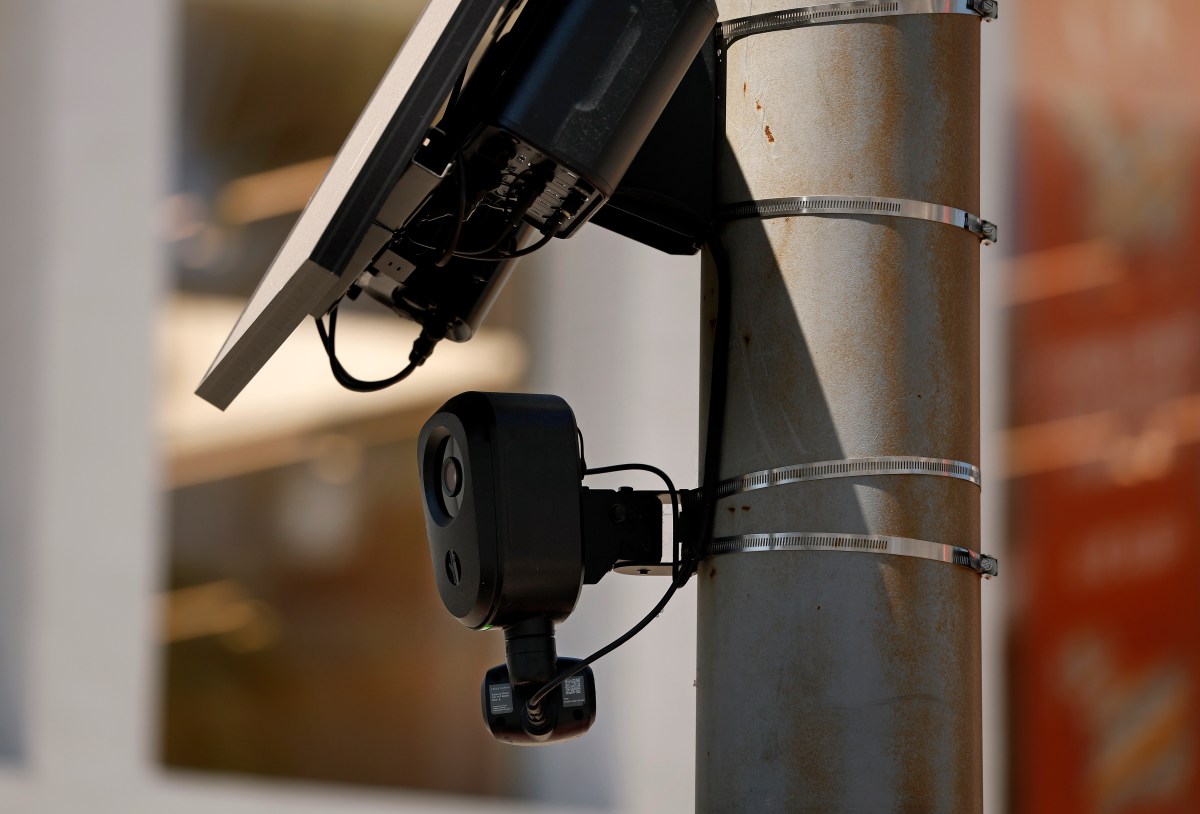
Protests against Flock cameras in the United States surged to a record high in August, according to data released this week. More than 30 protests took place across at least 15 states last month, according to Armed Conflict Location and Event Data (ACLED), an independent monitor of political violence and demonstrations. It was the highest monthly total since the group began tracking opposition to Flock cameras in fall 2025.
Every previous month had recorded fewer than 10 protests. Flock Safety operates a vast network of AI-powered automated license plate readers (ALPRs) that record license plates and other characteristics of passing vehicles in thousands of communities across the U.S. The technology is used by law enforcement agencies in 49 states, allowing officers to search and share data across jurisdictions.
Police say the cameras—over 120,000 nationwide—are an invaluable crime-fighting tool, but critics argue the pervasiveness of the cameras amounts to warrantless and unconstitutional mass surveillance and creates opportunities for police misuse. The backlash against Flock cameras intensified this year as awareness has increased about the sweeping reach of the surveillance technology company’s network and how its data is used, amid several allegations of police officers misusing the technology. At least 149 cities have deactivated, rejected or canceled Flock contracts, or banned ALPRs outright, since the beginning of the year.
A spokesperson for Flock Safety said in a recent statement to Newsweek that it supports "thoughtful legislation and strong privacy, transparency, and accountability guardrails that ensure technology is used responsibly while preserving law enforcement’s ability to use effective tools to keep people safe." Newsweek has contacted Flock Safety for further comment via an email sent outside regular business hours. The protests are being driven by the public’s fears about surveillance and privacy sparked by the growing network of Flock cameras, according to ACLED’s North America research manager Kieran Doyle. Across the country, police officers have been arrested, placed under investigation and fired for looking up other people’s vehicles to stalk them.” Doyle noted that in some cases, people have gone beyond protests and turned to vandalizing Flock cameras.
At least 250 cameras have been destroyed across the country, according to FlockStats, which is not affiliated with Flock Safety. He said the backlash over Flock cameras could also have an impact of November’s midterm elections. Flock cameras essentially take pictures of every passing car, logging its license plate, make, model, color, time, and direction.
They are high-definition, being able to spot details such as bumper stickers or toolboxes in a truck bed. According to its website, 49 states are connected through Flock’s agency-controlled network. Police and other supporters say the system helps solve crimes and locate missing people.
Extract — continue reading at the source.