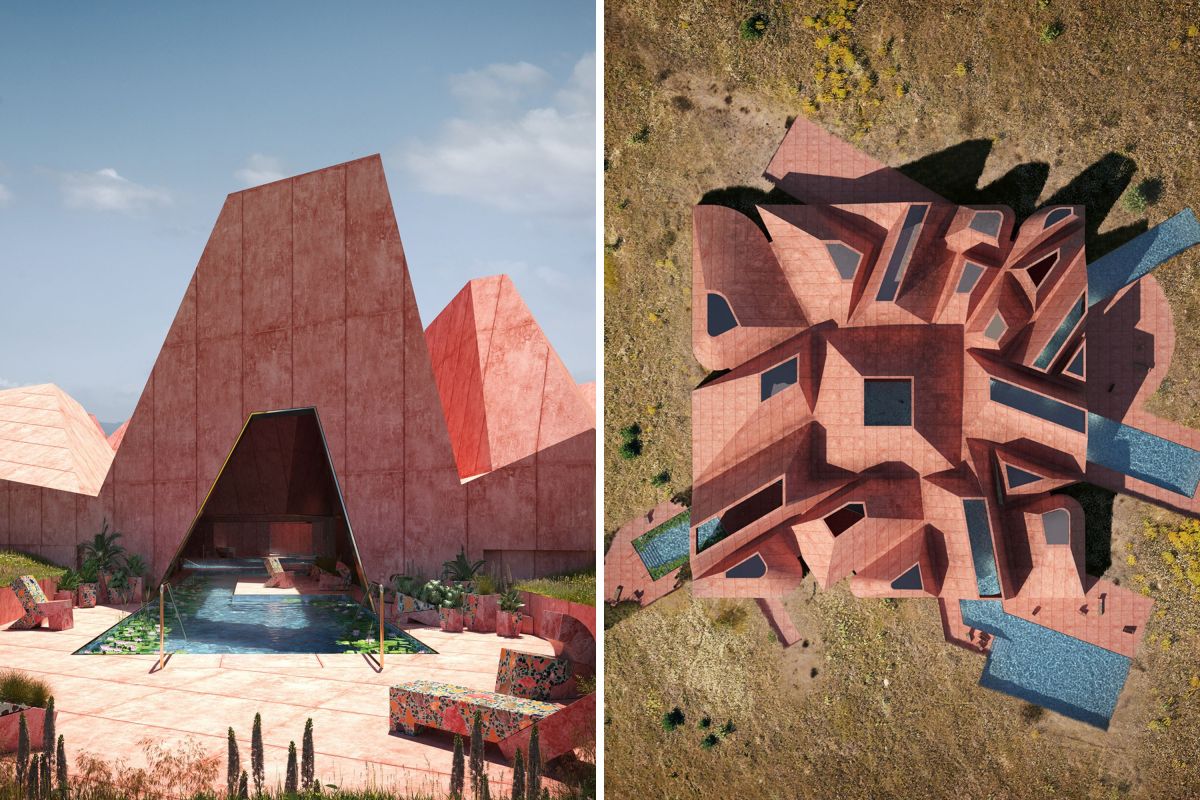
As artificial intelligence (AI) fuels a global boom in data center construction, one architectural firm is proposing a new hybrid building design that reimagines how energy-hungry data centers can better serve the communities that host them. Designed by U.S.-based architecture firm FORMA, the "Pink Thermal Baths" concept combines a public bathhouse with a data center, using heat generated by computer servers to warm its pools and bathing facilities. The project's website describes it as a new building type that pairs "the leisure activities of a bathhouse with the utilitarian functions of a data center," while keeping the data center itself "fully subterranean and hidden from sight." Miroslava Brooks, founder partner at FORMA, told Newsweek that waste-heat recovery from data centers already exists, and this project imagines “pushing this logic further architecturally” by combining a data center with compatible public uses such as thermal baths and swimming pools.
According to the project’s website, the excess heat from the servers is distributed to the pools, “providing a hot spring-like experience," while the cone-shaped rooms help regulate interior temperatures and create a sense of monumentality. The project is envisioned as “a kind of new hybrid building type,” Brooks said, “one where energy exchange, infrastructure, building, and landscape are one integrated project that serves the public on multiple fronts, rather than several separate systems.” The project was conceived “well before the ubiquity of data centers, as a speculative proposal. However, the underlying premise is entirely realistic," Brooks told Newsweek.
The concept emerged from research undertaken during an international bathhouse design competition years before today's explosion in AI-driven data center development. "At the time, we worked on an international competition entry for public baths. We did not win, but we channeled our research and creative energies into a self-generated proposal for a new kind of a bathhouse, one where the leisurely activities of relaxation, enjoyment and self-care are combined with the utilitarian function of a data center," Brooks said.
While conceived as a speculative project, Brooks said the proposal raises broader questions about how infrastructure can benefit the public rather than operating as an isolated system hidden from view. The idea grew from a simple observation—data centers produce enormous quantities of heat, while bathhouses need a lot of heat. "We already knew that data centers generate large amounts of heat and that bathhouses require large amounts of heat," Brooks noted.
"So, there was this obvious question—why should that heat be treated purely as waste? Why not turn this infrastructural by-product into a public resource?" Brooks said the project argues that infrastructure does not have to remain invisible. Instead, it can be designed to participate in civic life and provide tangible benefits to local communities.
Large pools and bathhouses are particularly interesting because they require relatively steady thermal energy throughout most of the year, she noted. Brooks said: “In principle, a significant portion of the wasted heat from the servers can be captured, the question is how usefully it can be recovered so the heat waste becomes a public good.” As scrutiny of data centers grows, technology companies are experimenting with ways to reduce their environmental footprint. Companies, including Google, Microsoft and Meta, have expanded their use of renewable energy and long-term clean power agreements to help lower carbon emissions.
Extract — continue reading at the source.