Known as the "Gateway to the Arctic," the Finnish city of Rovaniemi sits directly on the Arctic Circle. Its forests are glowing in autumn colors as European leaders gather here at the invitation of Finnish Prime Minister Petteri Orpo to discuss a new EU strategy for the Arctic. Climate change and Russia’s war against Ukraine have thrust the High North into the center of European attention.
"There is a high demand for concrete EU action in the Arctic," Orpo said. "Our security environment has changed fundamentally. The Arctic has emerged as a central arena of great power competition." The prime minister added that the Arctic's critical natural resources are also "attracting interest." The changing security environment was a central theme throughout the summit.
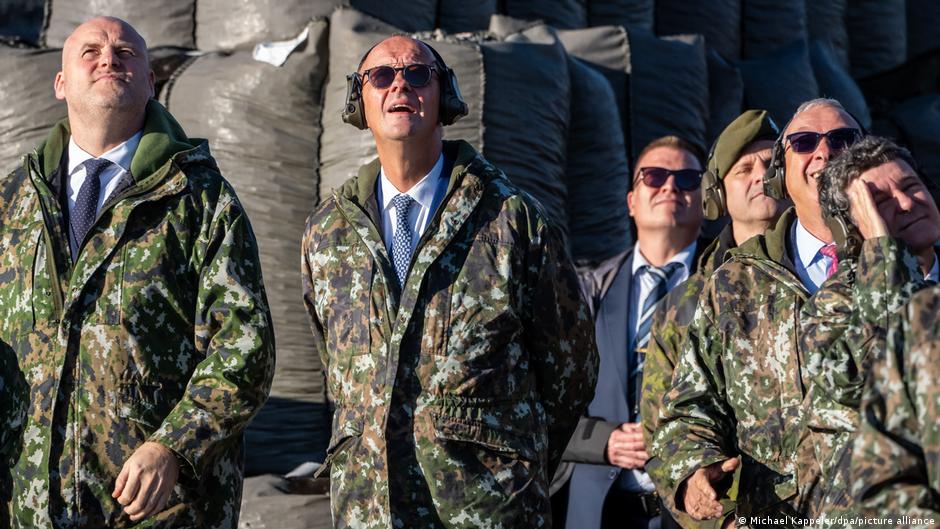
EU foreign policy chief Kaja Kallas warned that Russia is reopening former Soviet military bases in the region and conducting missile exercises in the High North. "We also see that China is increasingly more interested in the region, so we have to remain vigilant," Kallas said. The leaders gathered at Finland's northernmost air force base, looking up into a cloudless blue sky as Finnish fighter jets took to the air for a demonstration.
Security has been placed at the heart of the discussions by Prime Minister Orpo. From Rovaniemi, Finland's Air Force monitors the skies along Europe's Arctic border with Russia ― 24/7. German Chancellor Friedrich Merz, who attended despite facing significant political pressure at home, described the region as increasingly important to Europe's security: "This region has become a geopolitical hotspot.
Russia is building up its military capabilities here and… uses its presence for hybrid activities every day." Merz added that the Arctic is not only a security issue, but also offers major economic opportunities, particularly when it comes to critical raw materials. "From the Putin era onwards, Russia has been developing its military capacities everywhere, but also in the Arctic," said Timo Koivurova of the Arctic Centre at the University of Lapland. For years Western countries still continued cooperating with Moscow on scientific research and climate issues.
Russia's full-scale invasion of Ukraine brought that era to an end. Finland and Sweden joined NATO as a direct consequence of the war. Finland's 1,340-kilometer border with Russia is now also a NATO border, fundamentally changing the security landscape in northern Europe.
Extract — continue reading at the source.