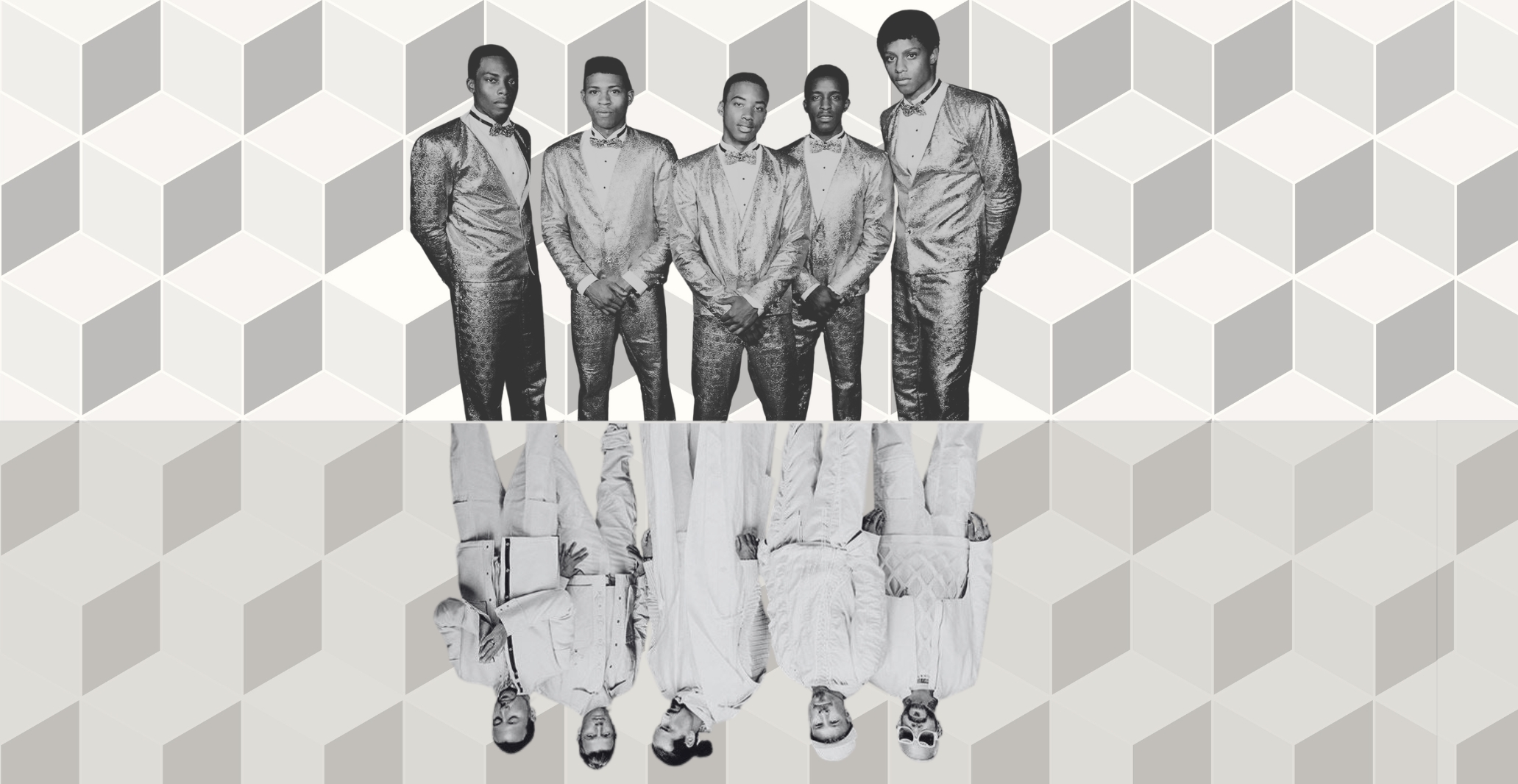
One of the most formative moments in my adventures in rock ‘n roll occurred when I was around fourteen. I went to a brick and mortar record store at the mall and read the liner notes to Good Charlotte’s self-titled 1999 full-length debut. The band is famously helmed by twin brothers, vocalist Joel Madden and guitarist/backing vocalist Benji Madden.
Each member of their band had a section of the “thank yous” listed in the back of the CD booklet. Benji specifically thanked “the egg for splitting, so I didn’t have to become the lead singer.” I had been fascinated with twins even prior to that, but Benji’s gratitude for a chance in utero event kicked my curiosity about twins into overdrive. I fantasized about moving through the world with a duplicate.
Of course this egg’s split had been a winning lotto ticket from Benji’s perspective: he won a live-in songwriting partner, a genetically engineered vocal complement, and a co-conspirator in the lunatic dream of becoming a global alternative music icon. At that age, I was beginning to think about how to start and maintain a rock band, and I’d recently begun my earliest forays into puppy love. The two forms of relationship building commingled in my mind.
I’ve probably never separated them as neatly as the Madden brothers’ egg in the time since. Later, I would encounter the rock musical Hedwig and the Angry Inch. It features the song “The Origin of Love,” which posits that when human beings threatened the gods, the gods weakened the mortals by breaking them into two parts.
That rift became our motivation to find love. Where the Madden’s bisection was fortuitous, the gods’ strike against humans set us off on an interminable search for restoration to a former wholeness. Both of these takes on the sundered self resonate in my experience of the heart space and the art space alike.
The two forms of rupture and reunion informed the year and a half I spent working on 99 Problems Finding the 1, a literary nonfiction book driven by an inquiry into how to be more lovable and loving. One of my main findings is that like politics, social behavior has an Overton window—a range of ideas that are seen as acceptable and normal. The fear of being cringe, corny or overly sentimental shapes our social Overton window, and we live in a more emotionally sterile culture as a result.
Extract — continue reading at the source.