If humans want to have a future on Mars, we’re going to have to overcome a few hurdles first. Most of them are technological, some are logistical, but the most stubborn ones might be psychological and physiological. As it stands now, any voyage to the red planet and back will take over a year, and our muscles tend to atrophy once free from the bonds of gravity.
That means our hearts are especially vulnerable to space travel. But a new study published in the journal Circulation finds this particular hurdle might not be so stubborn after all. Humans returning to Earth after even minimal periods in space tend to experience some adverse side effects once their feet are back on firm ground.
Dizzy spells caused in part by a sudden drop in blood pressure are particularly common. Of course, going to Mars is another story. There, our intrepid astronauts will be under conditions no other space traveler has experienced before: prolonged weightlessness followed by microgravity.
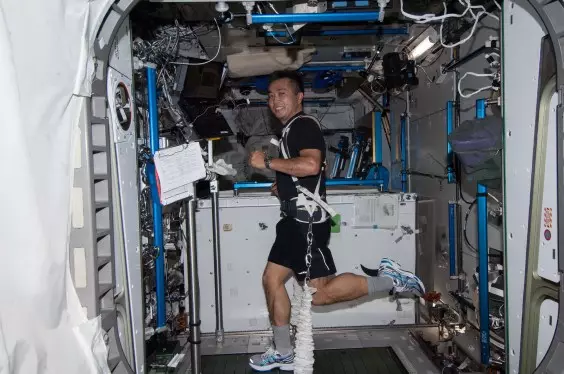
Read more: “The Most Curious Cloud on Mars Relies on Some Bizarre Physics” “You lose muscle mass and cardiac mass when you’re in a weightless environment because you are working less up there,” study author James Thomas of Northwestern University explained in a statement. During that time, the astronauts participated in a NASA workout called Exercise Countermeasures. The calisthenics program involved working out for up to two hours a day and included both endurance and resistance training.
During the study period, astronauts conducted ultrasounds of each others’ hearts under supervision from the research team. In their first two weeks in space, the echocardiograms showed less blood filling the heart, less blood being pumped out, and a reduction in other measures related to cardiac health. But as they continued working out, these metrics improved and even approached preflight levels.
When they finally returned to Earth, the astronauts were tilted on a table at a 22-degree angle to simulate gravity on Mars. Remarkably, their hearts handled the simulated Martian environment well. That’s one hurdle down, several more to go.
Extract — continue reading at the source.