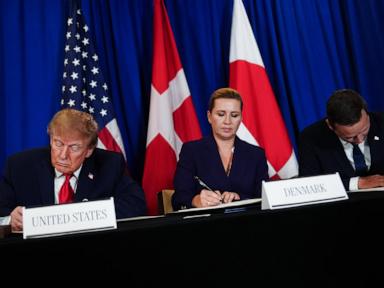
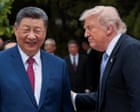
As industry leaders urge a global slowdown in artificial intelligence development for the sake of humanity, the two superpowers driving the technology’s rapid advancement have given no indication they intend to hit the brakes. The United States and China, which are locked in a fierce strategic rivalry, have each rebutted calls to slow the pace of AI development, even as industry executives and researchers stress the need for international cooperation to avoid exposing humans to catastrophic – or even existential – risks. As US President Donald Trump and Chinese President Xi Jinping prepare to meet on Wednesday in Washington, DC, for the third time this year, expectations for cooperation on AI safety are modest.
Observers anticipated measures that, at best, would fall far short of the coordinated slowdown that many experts said is needed. Hampering the prospects for US-China cooperation, analysts said, are mutual mistrust and divergent perceptions of the primary risks involved. Trump has dismissed fears about AI as a “conspiracy” and suggested guardrails are not needed under his leadership, stressing the need for the US to stay ahead of China in the frontier technology.
Trump, who has cast AI dominance as crucial to the US maintaining its position as the top global power, on Tuesday again poured cold water on hopes for international cooperation, telling the United Nations General Assembly that Washington would oppose any “globalist scheme” to control AI. China has taken a more hands-on approach to AI regulation – releasing the third iteration of its security framework this month – but has similarly rebuffed calls for a slowdown, dismissing fears of existential risks aired in Silicon Valley as “fearmongering”. While Chinese officials have raised concerns about the dangers of AI, they have related it to more prosaic concerns, including cybersecurity and the authority of the ruling Communist Party.
In a rare essay this month, Chinese Minister of State Security Chen Yixin warned of “hostile forces” using AI to “fabricate political rumours” and “incite antagonistic sentiments”, threatening “political security, institutional security and ideological security”. So far, the only proposals publicly floated by either side have been a US-China dialogue and a notification mechanism for reporting national security threats. While those measures would be positive first steps, the US and China would still need to reach an agreement on the AI capabilities or uses that should be off-limits to avert the greatest threats, experts said.
There is no consensus within the AI sector about how the technology should be regulated – or even whether government-led supervision is needed at all. While AI leaders such as Anthropic CEO Dario Amodei and OpenAI CEO Sam Altman have called for a slowdown and greater regulation, some experts argued that such calls do not go far enough and development should be paused outright. We need more than safeguards,” said David Krueger, an assistant professor at the University of Montreal who specialises in AI safety.
Among those most alarmed at the rapid pace of AI development, recursive self-improvement, which describes when AI models learn to improve themselves, is often identified as a critical tipping point. In an essay this month urging the AI sector to “pace the frontier”, Amodei said the US and China should discuss an agreement to “substantially limit” the rate of AI development while acknowledging that any deal is unlikely given the potential for a rule-breaking party to shift the global balance of power. Most crucially, AI must never get powerful enough for recursive self-improvement,” said Otto Barten, director of the Netherlands-based Existential Risk Observatory.
Extract — continue reading at the source.