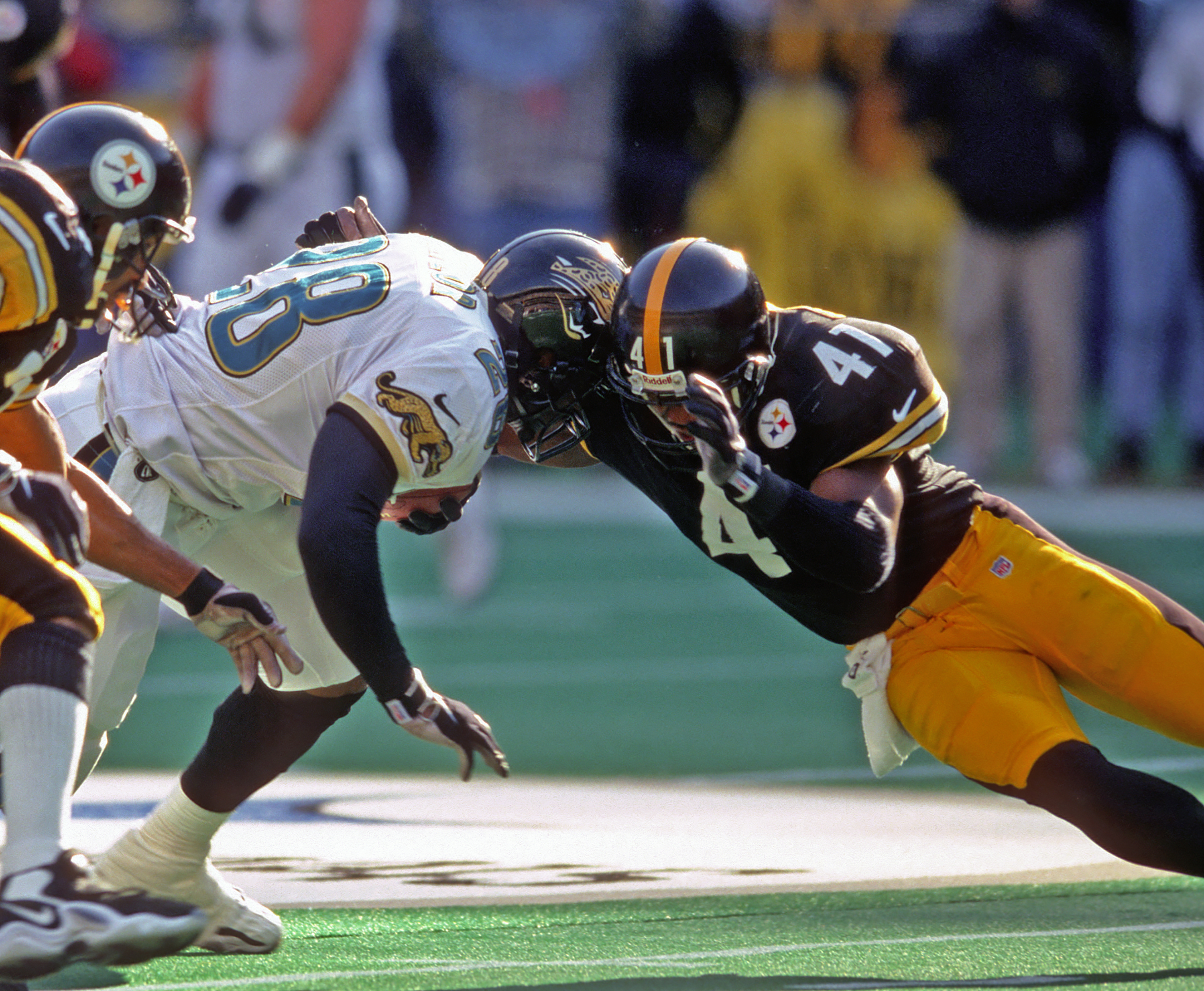
An alarming number of professional football players in the U.S. may someday have chronic traumatic encephalopathy (CTE), the neurodegenerative disease associated with repeated concussions and sub-concussive hits to the head, a new study suggests. The research, published in the BMJ, studied the brains of NFL players who died from 2016 to 2021 and found that one in four had CTE—a figure that is almost certainly an undercount, the researchers say. Depending on how they crunched the numbers, the CTE incidence rose as high as 91%.
Daniel Daneshvar, chair of the department of physical medicine and rehabilitation at Mass General Brigham and associate professor at Harvard Medical School. It was not until 2002 that the disease was first diagnosed in an NFL player, when neuropathologist Bennet I. Omalu examined the brain of Mike Webster, a former player for the Pittsburgh Steelers, and found the buildup of tau proteins around blood vessels, thinning of tissue, and overall brain atrophy that characterize the disease.
CTE is only firmly diagnosable by autopsy, but the range of symptoms that point to the disease—including memory loss, confusion, aggression, depression, apathy, tremors, and slurred speech—can be pronounced during a person’s life. These are not just microscopic changes that we happen to find when someone dies. We are talking about a disease that can profoundly affect people’s ability to think, work, maintain relationships, and live independently.” In the new study, Daneshvar and his colleagues examined the brains of 235 former NFL players who had donated their brains to science. (A total of 878 players died in that 2016-2021 window.) Of the brains studied, 215 were found to have CTE—or 91%.
The researchers arrived at their much lower one-in-four figure by making the exceedingly cautious assumption that none of the remaining 643 brains would have shown signs of the disease—an assumption that Daneshvar believes would not stand up if the brains had been examined. That certainly does not mean they had CTE, but it illustrates how unrealistic it is to assume that every non-donor was disease-free.” Another part of the study looked at a larger time window—from 2008 to 2021—during which 1,712 former NFL players died. Of those, 338, including the 235 already analyzed, donated their brains to research, and of that group, 315 had CTE.
That makes for a possible CTE prevalence of as high as 93.2%, though if the researchers once again made the conservative—if unrealistic—estimate that all of the unexamined brains were disease-free, the figure would drop to 18.4%. What makes CTE particularly insidious is that it is a cumulative disease, one that builds up over a career’s-worth of hits that don’t begin when a player is tapped for the NFL, but can stretch back into college, high school, and even childhood play. In 2011, the NFL, mindful of the growing incidence of CTE, established its concussion protocol, sidelining players who take a hit and exhibit any signs of possible concussion, such as confusion, amnesia, ataxia—a lack of muscle control—or any loss of consciousness.
That’s a big improvement over the days when concussed players were simply described as having had their “bell rung,” and then sent back out onto the field to continue the game. But concussions are only the most extreme symptoms of brain trauma; there’s a lot of damage that’s done invisibly, with no signs at all. According to one 2012 study in the Annals of Biomedical Engineering, a college football player may sustain up to 1,000 subconcussive hits to the head over the course of a single season of play.
Extract — continue reading at the source.