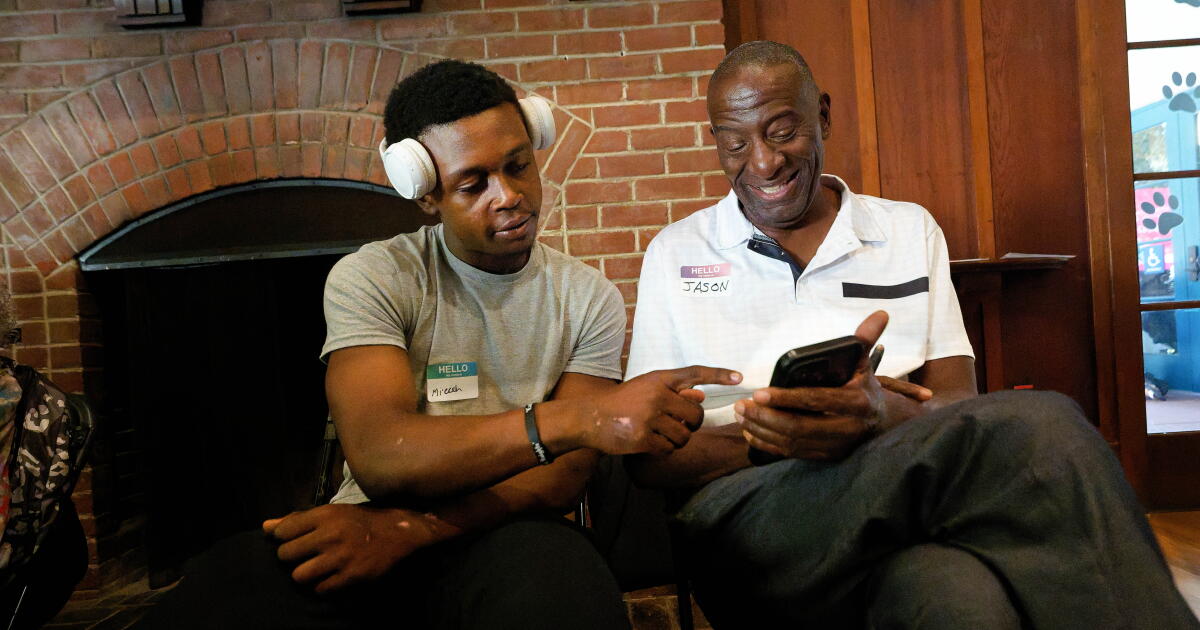
San Francisco Bay Area residents, living in the beating heart of the artificial intelligence boom, are just as conflicted about the technology as the rest of the country. As OpenAI showed off its latest AI assistants in San Francisco last week, protesters outside — some dressed as killer robots —demanded it keep AI away from the military. Thirteen miles away in Oakland the following day, some senior citizens sat down with a group of students to address AI angst at a grassroots tech event.
Even as the clash between tech titans and anxious activists intensifies, the debate about AI is increasingly permeating community events, with the young and old grappling with the changes AI is bringing to their cities and the world. Oakland resident Assata Olugbala, 81, asked for help removing Google’s AI bot Gemini from her devices after it started offering help she hadn’t requested. The citywide annual event aims to bring technology to everyday consumers and constituents, and AI was one of its biggest concerns.
The event, which ended Saturday, featured panels and workshops titled “How to build Socially Responsive AI,” “AI in the workplace,” “Can AI Heal Us?” and “Master the Machine.” Companies based around the San Francisco Bay Area, including OpenAI and Meta, have promoted AI assistants as friendly, cute helpers for tackling tedious tasks. But tech workers, activists and politicians fear that humans could lose control of the technology they’re advancing. Anxiety about AI’s potential dangers surged last month after Anthropic researcher Jacob Coxon resigned, posting on social media that AI companies, including OpenAI, are “gambling with our lives.” Executives and AI companies have called for a slowdown in the technology’s development, and policymakers have been scrambling to add more guardrails.
Early last week, President Trump and tech executives from Anthropic, Google, Meta, OpenAI, Nvidia and others signed a voluntary accord to “self-police” AI development. Gavin Newsom has signed several bills to make AI safer for children and workers. He also issued an executive order to speed up the development of safeguards, including a “kill switch” in case humans lose control of AI.
At the OpenAI developers’ conference, held at a former military base in San Francisco, the company’s chief executive, Sam Altman, expressed hope. Put people over profit,” protesters chanted. Berkeley resident Matt Nichols came to the protest dressed up as a killer robot holding a chainsaw.
Lucas Lu walked by the protest, guiding two black-and-white humanoid robots. His employer rents out the robots for events such as OpenAI’s conference. He led them away from the vocal crowd.
Extract — continue reading at the source.


