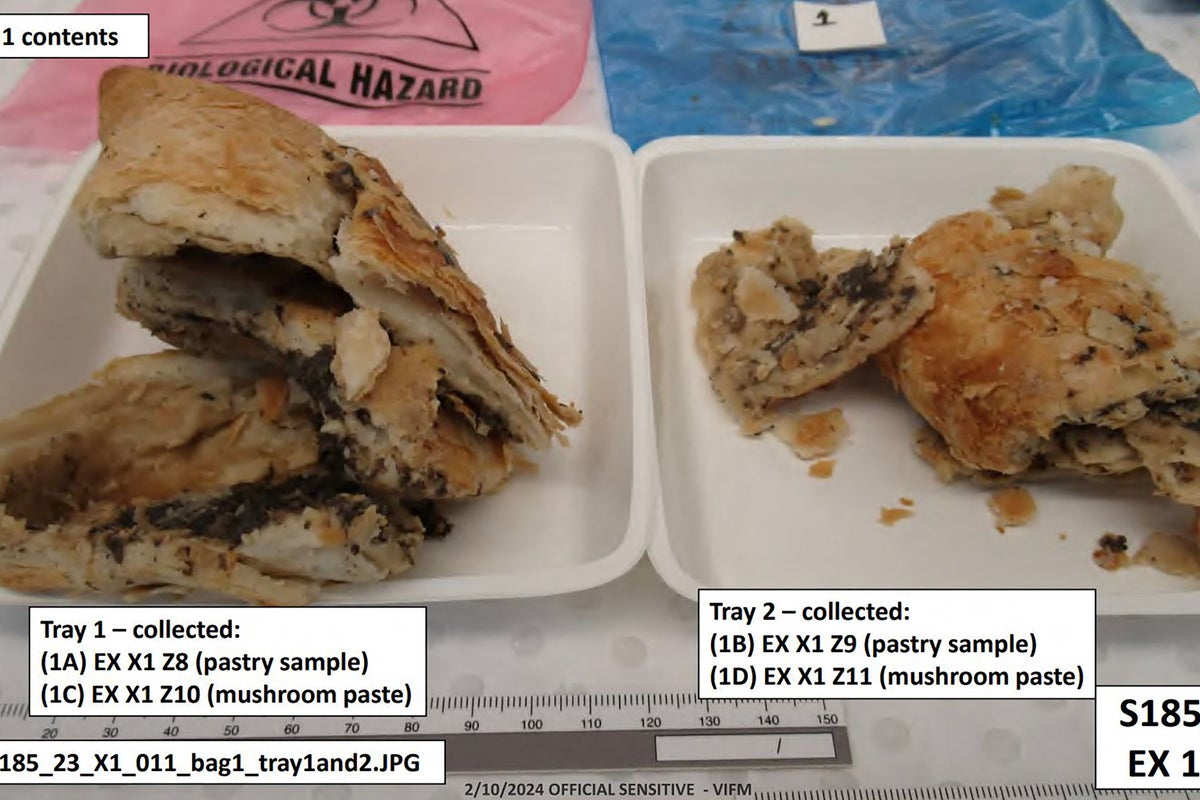
Australian mushroom killer Erin Patterson should never be freed from prison because the “nature of the offending” demanded so, prosecutors told Victoria’s appeals court on Thursday. Patterson, 51, was sentenced to life in prison with a non-parole period of 33 years for murdering three elderly relatives of her estranged husband by serving them Beef Wellington laced with toxic death-cap mushrooms in July 2023, in a case that shocked Australia. She maintained her innocence throughout the trial, saying the deaths were accidental.
On Wednesday, she launched an appeal against her conviction on three counts of murder and one of attempted murder arising from the fatal lunch at her rural home in Leongatha, Victoria. Brendan Kissane KC, Victoria’s top prosecutor, challenged the 33-year minimum term, which would make her eligible for parole in her 80s. He told a three-judge bench of the Court of Appeal on Thursday that the non-parole period was “manifestly inadequate” and argued that Patterson should never be considered for release.
If the judges did not agree, he said, they should at least impose a non-parole period longer than 33 years. When sentencing her last September, trial judge Christopher Bale said there was a “substantial chance” Patterson could be held in “solitary confinement for years to come”. Mr Kissane argued the trial judge’s conclusion was not supported by the evidence and said Patterson’s prison conditions were reviewed every month.
She had access to the prison library, leisure equipment, and a chaplain, he claimed. However, Patterson’s lawyer, Richard Edney, said she was being held in solitary confinement as defined by the UN, meaning confinement for 22 hours or more a day without meaningful human contact. Patterson is separately appealing her murder conviction, arguing that she suffered a substantial miscarriage of justice.
One of the grounds of appeal is that she was forced to give evidence at trial after the judge excluded photographs of mushrooms. Crown prosecutor Jeremy McWilliams rejected the claim on Thursday saying there was no evidence during the trial of any “innocent interest in foraging for wild mushrooms”. At Patterson’s trial last year, the prosecution relied on pictures found on an SD card at her home and a photo she had posted on a poisons page on Facebook to prove she had an enduring interest in poisons.
In pretrial arguments, the judge had ruled the evidence was inadmissible in the form the prosecution sought to present it. However, during the trial, Patterson’s defence team introduced the pictures in an attempt to support their argument that she had an innocent interest in foraging for wild mushrooms. Mr McWilliams told the court there was evidence that Patterson had posted one of the pictures on a Facebook poisons page and said, “Help, my cat has eaten one of the mushrooms and become very sick, are they poisonous?” “The applicant did not own a cat or have a cat at the time,” he added.
Extract — continue reading at the source.