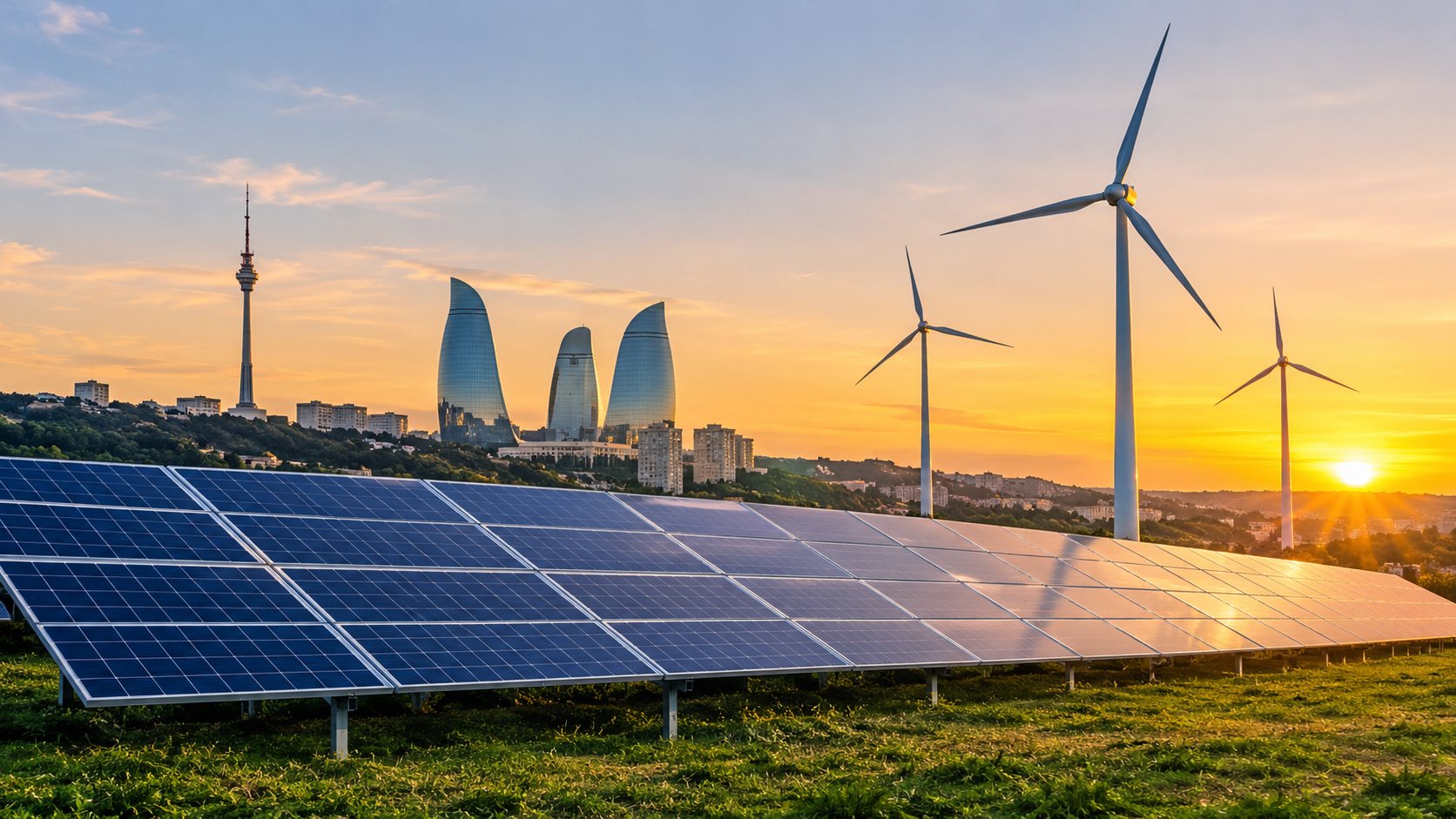
For most of modern history, Azerbaijan's economic and political influence has been closely tied to oil and gas. The country built its reputation as an energy producer long before the current debate about energy diversification and the green transition became a global priority. Its pipelines connected the Caspian basin with international markets, while natural gas exports gradually strengthened Baku's position as a partner in Europe's energy security.
But the global energy landscape is changing, and Azerbaijan has little reason to stand aside. A prime example of this progress is the approximately 840 million cubic metres of natural gas that Azerbaijan saved in the first nine months of the year thanks to the growing number of renewable energy power plants. Less gas burned means lower emissions, and this figure offers a tangible indication of the direction the country is heading in.
This reflects a wider point made by Hikmet Hajiyev, assistant to the President of Azerbaijan and head of the foreign policy department of the Presidential Administration, in an interview with the well-known American economist and Columbia University professor Jeffrey Sachs. Hajiyev recalled that the strategic value of the country's oil fields once made Azerbaijan one of the most important targets for Nazi Germany, which sought to seize control of the resources of the Caucasus. Yet that oil heritage, he argued, does not stand in the way of the country's push into renewables.
"We understand perfectly well that green energy is the new reality. That is exactly why Azerbaijan is actively investing in the development of this field," he said. Hajiyev drew particular attention to the wind potential of Baku and the Caspian Sea.
"We in Azerbaijan used to complain constantly about the strong winds in Baku. They caused people a lot of discomfort, and we almost saw them as a curse. Today, though, we are starting to understand that the Baku winds are, on the contrary, a real blessing, especially given the potential of the Caspian Sea," he added.
In his assessment, the Caspian can compete in wind energy potential with the North Sea and other promising regions of the world, though realising those opportunities will require investment and consistent state policy. The broad use of renewable energy sources has become one of the priorities of the energy policy pursued under the leadership of President Ilham Aliyev. Presidential Order No. 1209 of 29 May 2019 on accelerating reforms in the energy sector laid the legal groundwork for liberalisation, greater competition and the transition to green energy in the market.
Extract — continue reading at the source.