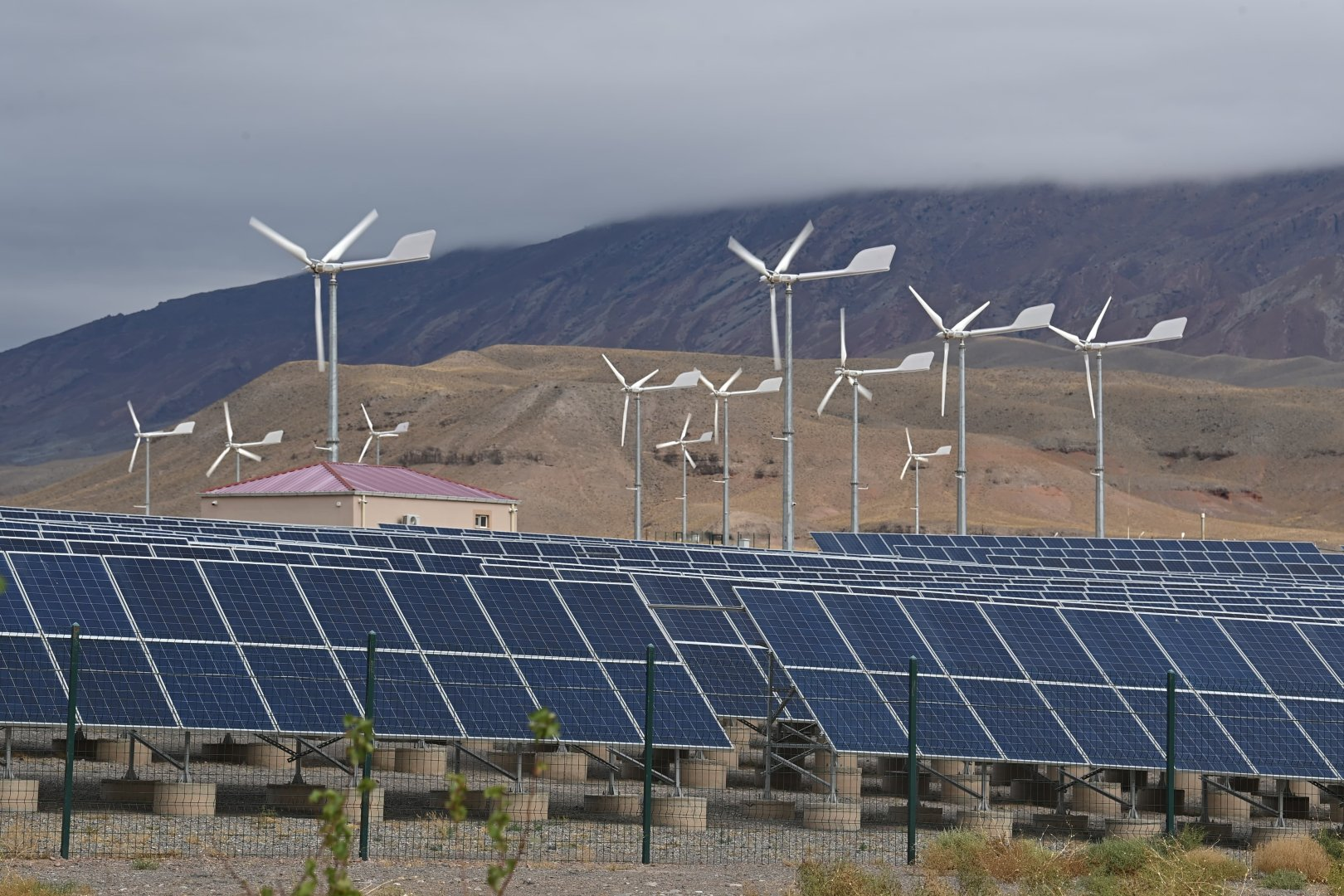
Azerbaijan has made significant progress in developing its renewable energy sector and is actively attracting international project developers to implement large-scale initiatives, according to the EU Business Climate Report Azerbaijan 2025/26. The eighth edition of the report, funded by the European Union and prepared by the VM Europe consortium, highlights the sector’s long-term growth potential and the opportunities it creates in engineering, infrastructure, logistics and consulting. However, only a limited number of European companies currently operate in Azerbaijan’s renewable energy sector.
Despite the expanding pipeline of green energy projects, European firms primarily participate as second- or third-tier subcontractors. As implementation of existing projects is already underway, the number of new large-scale projects in the preparation phase is expected to decline over the next two to three years. Business representatives recommend that Azerbaijan pay greater attention to small-scale local initiatives developed through a bottom-up approach, alongside its focus on large industrial projects.
The report notes that Azerbaijan is seeking to reduce its dependence on hydrocarbons, strengthen climate resilience and diversify its economy. Renewable energy is identified as one of the most important areas for developing green businesses in the country. Azerbaijan has committed to reducing greenhouse gas emissions by 40% by 2035 compared with 1990 levels.
It also aims to increase the share of renewable energy sources in the installed capacity of power generation facilities to 30% by 2030. The country’s technical renewable energy potential is estimated at 135 gigawatts (GW) onshore and 157 GW offshore, while its economic potential stands at approximately 27 GW. Solar energy accounts for the largest share of this economically viable potential, followed by wind power.
Azerbaijan is actively pursuing plans to develop 8 GW of renewable energy generation capacity by 2032. The integration of 2 GW of capacity into the national power system is scheduled for completion in 2027, according to the report. Azerbaijan is implementing large-scale renewable energy projects in partnership with BP, Masdar, ACWA Power, China Gezhouba Group Overseas Investment and SOCAR Green.
Investments in battery energy storage systems and electricity grid modernization are also central to the country’s strategy. These initiatives include the AZURE project, the Navoi substation and new 500-kilovolt transmission lines. According to the report, these investments are designed to improve the flexibility of the power system and reduce the costs associated with integrating renewable energy sources.
Extract — continue reading at the source.