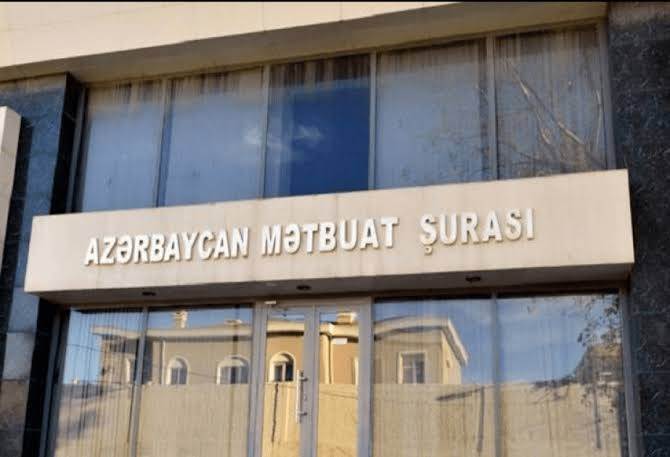
The Azerbaijan Press Council has expressed serious concern over what it describes as biased reporting, distorted information and campaigns aimed at manipulating public opinion about Azerbaijan across certain Turkish media outlets and social media platforms. In an official statement, the Council said that recent developments in Azerbaijan had been presented out of context, while discussions concerning the country's domestic affairs had been deliberately politicised and unverified allegations circulated as established facts. According to the Council, such practices contradict the fundamental principles of professional journalism.
The statement emphasised that journalism's primary responsibility is not to create divisions between societies, but to establish the truth, provide accurate information and promote mutual understanding. However, the Council expressed regret that some Turkish media outlets had recently demonstrated what it described as the opposite approach. Particular concern was raised over coverage of Azerbaijan's regulations concerning school uniforms in secondary educational institutions.
The Council stated that the introduction of a standard school uniform had been misrepresented by certain media organisations, which had circulated what it called completely unfounded allegations about an alleged ban on the hijab and restrictions on Islamic values in Azerbaijan. According to the statement, an issue concerning domestic educational regulations had been artificially transformed into a religious and ideological confrontation, creating a misleading negative image of Azerbaijan. The Council also criticised the distortion of matters relating to religious freedoms, educational policy and the country's social and cultural life.
It alleged that outdated or fabricated photographs and videos unrelated to the issue had been used to mislead audiences. Furthermore, the Council expressed concern that the radical opinions of certain marginal individuals were being presented as representative of Turkish society as a whole. Such practices, it argued, were inconsistent with both the principles of objective journalism and the spirit of the strategic relationship between Azerbaijan and Türkiye.
The statement further noted that the alleged misinformation campaign was not confined to social media but had also appeared in certain traditional Turkish media outlets. According to the Council, some publications had gone beyond the boundaries of legitimate criticism and freedom of expression, while certain social media accounts had provided platforms for calls advocating the forcible alteration of Azerbaijan's constitutional order and the unlawful seizure of state power. The Council stressed that relations between Azerbaijan and Türkiye are founded on shared history, language, culture, moral values and mutual trust.
It underlined that the principle of "one nation, two states" reflects the equal partnership and brotherhood of two independent countries. However, the Council maintained that this principle must not be used to justify interference in either country's domestic or foreign affairs, encourage ideological confrontation or promote unfounded accusations. The Azerbaijan Press Council called on Turkish media organisations, journalists, editorial offices and individuals with influence on digital platforms to verify information concerning Azerbaijan through reliable sources before publication.
Extract — continue reading at the source.