Oil and gas continue to hold a dominant position in Azerbaijan’s exports, but changes in the country’s export structure in recent years show that the economy is gradually relying on a broader range of sectors. The figures for the first eight months of 2026 once again highlight the growing role of the non-oil sector, particularly agriculture and agro-industry, in this process. According to a report by the State Customs Committee, Azerbaijan exported $21.8 billion worth of products in the first eight months of 2026, of which $6.28 billion, or 28.78%, came from the non-oil and gas sector.
The change becomes more visible when compared with the same period of last year, when non-oil and gas products accounted for 14.06% of total exports. A more detailed breakdown of non-oil exports is provided in the latest report by the Center for Analysis of Economic Reforms and Communication. According to the report, Azerbaijan’s non-oil exports, excluding non-monetary gold, increased by 17.6% in January-August 2026 to $2.81 billion.
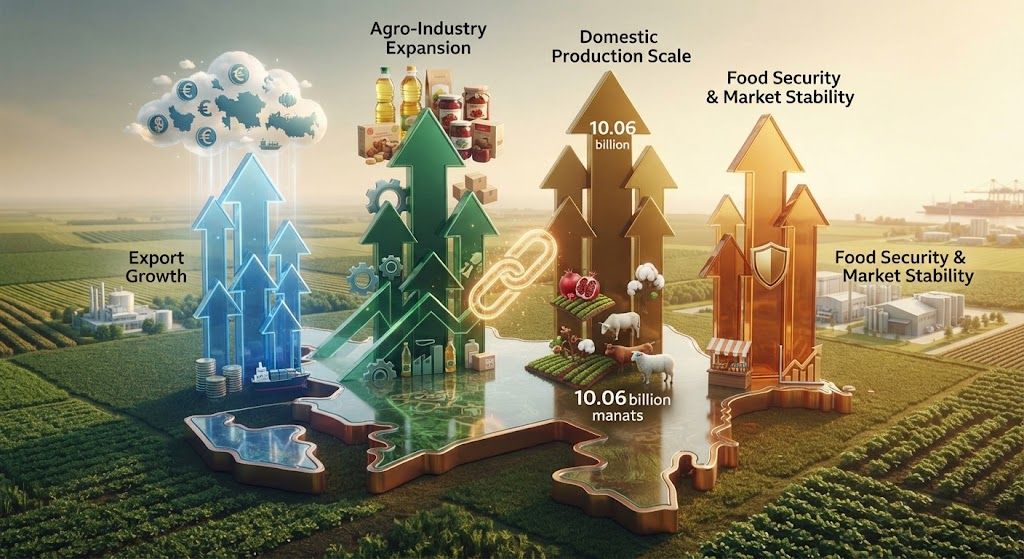
A number of non-oil products recorded significant increases during the period. Agriculture occupies a particularly important place within this picture. Agricultural exports increased by 19.2% in January-August to $732 million, while exports of agro-industrial products rose by 22.1% to $255.8 million.
Combined exports of agricultural and agro-industrial products increased by 19.9% to $987.8 million, bringing them close to the $1 billion threshold. Yet the importance of these figures goes far beyond the export revenues they generate. The development of agriculture and agro-industry is a strategic issue for virtually every country because it is directly linked to national food security.
Unlike many other sectors of the economy, agriculture produces goods that are essential for the daily lives of the population. A country that has a strong domestic agricultural base is better positioned to maintain a stable food supply and reduce its exposure to disruptions in international markets, external price shocks and supply-chain problems. For Azerbaijan, this issue is particularly relevant because agriculture can simultaneously contribute to export diversification and strengthen domestic food security.
Increasing agricultural production means that a larger share of domestic demand can potentially be met by local producers, while the development of agro-industry allows agricultural raw materials to be processed domestically instead of being exported with limited added value. This is where the structure of the latest export figures becomes particularly important. Agro-industrial exports grew by 22.1%, faster than agricultural exports, which increased by 19.2%.
Extract — continue reading at the source.