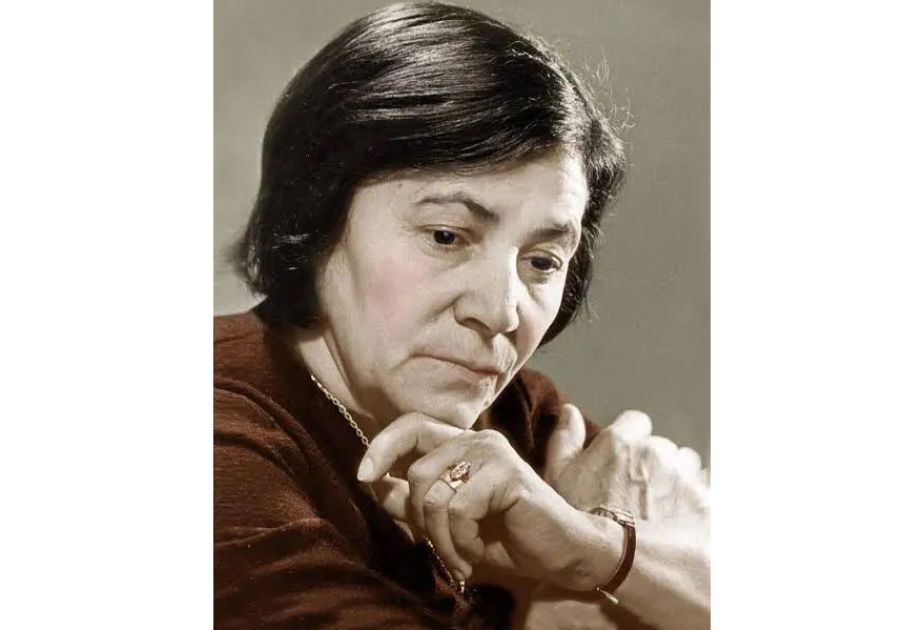
Mirvarid Dilbazi was one of the most beloved and enduring voices of Azerbaijani poetry, a poet whose work combined tenderness with strength and personal emotion with a deep sense of homeland. Her verses spoke of love, nature, motherhood, women's lives and the beauty of her native land, while also giving voice to the grief, hopes and struggles of the Azerbaijani people. With a literary career spanning more than seven decades, she became one of the most respected women in the country's literary history.
This year marks the 114th anniversary of Dilbazi's birth. Born on August 19, 1912, in Gazakh, she grew up in the historic Dilbazi family at a time when Azerbaijan was passing through some of the most difficult periods of its modern history. The collapse of the Azerbaijan Democratic Republic, the Soviet occupation, repression, deportations and other upheavals left deep marks on her generation and later found their way into her poetry.
Dilbazi began writing at an early age. Her first poem, "Qadınların hürriyyəti" (Women's Freedom), was published in 1927. Her first collection, "Bizim səsimiz" (Our Voice), followed in 1934 and marked the beginning of a long and productive literary journey.
Over the years, she published numerous poetry collections, including "İlk bahar," "Məhəbbət bizimlə qoşa doğulur," "Həyat lövhələri," "Xatirələr aləmində," "Bənövşələr üşüyəndə," "Ana qanadı," "Yasəmən fəsli," "Dağ çiçəyi," "Qar çiçəkləri" and "Durnalar ötüşəndə." She also devoted a considerable part of her work to children, writing books such as "Nağıllar," "Kiçik dostlarıma," "Gülbahar," "Yaz gəlir," "Lalənin ağacları" and "Abşeron bağlarında." Her literary legacy was broad. Alongside lyrical and socially themed poems, she wrote such works as "Məhsəti," "Əlcəzairli qız," "Partizan Aliyə" and "Avey dağla söhbət." She also wrote plays and was an accomplished translator, bringing works by Khagani Shirvani, Nizami Ganjavi, Alisher Navoi, Alexander Pushkin, Taras Shevchenko, Nikolai Tikhonov and Samuil Marshak into Azerbaijani. Dilbazi's words also became part of the country’s musical heritage.
Composer Aghabaji Rzayeva composed songs based on a number of her poems, including "Çoban Qara," "Evimizə gəlin gəlir," "Anam yadıma düşdü," "Laylay" and "Azərbaycan elləri." Through these songs, her poetry reached generations of listeners and became familiar far beyond the literary world. The poet's later work carried the pain of another difficult period in Azerbaijan's history. The January 1990 tragedy and the Karabakh conflict deeply affected her.
She wrote with particular feeling about those who had been forced from their homes and about the losses suffered by the country. Poems such as "Ağla, kamanım, ağla," "Qoymayın ağlayım məni," "Öpün bu qanlı torpağı" and "Şəhidlər qəbiristanında" became powerful expressions of grief and remembrance. Dilbazi's contribution to Azerbaijani literature received official recognition in 1979, when she became the first woman in Azerbaijan to be awarded the honorary title of People's Poet.
Extract — continue reading at the source.