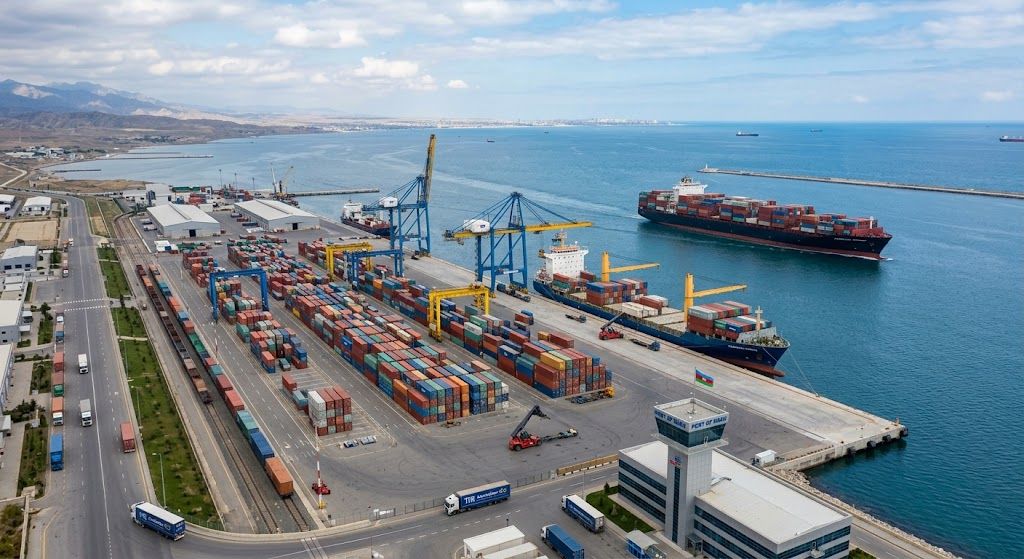
The global economic architecture in 2026 continues to present a complex web of logistical rewiring and volatile commodity flows. In Azerbaijan’s case, a pivotal energy and transit nexus bridging Eurasia, the primary trade indicators for the January-July period offer a fascinating lens into how small, strategic economies adapt to macro-level disruption. Azerbaijan’s total foreign trade turnover reached $29.22 billion over the first seven months of the year, registering a modest 1.3% growth year-over-year.
Italy remains the anchor tenant - a quarter of everything Azerbaijan trades still runs through the Trieste terminal and the gas pipeline that ends in Puglia. But Italy's mild contraction, set against a British quadrupling, tells us that the centre of gravity is shifting in ways that have little to do with volumes pumped. The Russian number is the one that deserves another look.
A 31.3% decline to $2.1 billion is the sharpest fall among Azerbaijan's major partners, and it comes at a moment when the country's Southeastern European trade - Romania up 38.1%, Bulgaria up 21.5%, Georgia up 43.8% - is expanding briskly. Some experts call this diversification or drift, the vector is unmistakable. Thus, goods and money are moving west and south along the Middle Corridor while the northern route thins.
Baku's European trade is not growing as a bloc. It is growing along the pipeline-and-corridor axis and shrinking where the relationship rests on machinery imports and industrial capital goods. Beyond the major economic powerhouses, looking closer at the EU shows some interesting activity in smaller markets.
Deliveries to several European countries saw a noticeable jump over the same period: The European Union is Azerbaijan’s largest trading partner, playing a central role in the country’s external economic relations. It is also Azerbaijan’s primary export destination and one of its most significant sources of imports. This trade structure is largely driven by energy exports, particularly oil and gas, which constitute a major share of Azerbaijan’s export revenues.
The EU’s role as a key economic partner has also contributed to Azerbaijan’s efforts to diversify its economy, attract foreign investment, and develop non-oil sectors. European companies have been actively involved in infrastructure, transport, and energy projects within Azerbaijan. Earlier this year, European Council President António Costa said that the European Union considers Azerbaijan a key partner, particularly when it comes to energy security.
Extract — continue reading at the source.