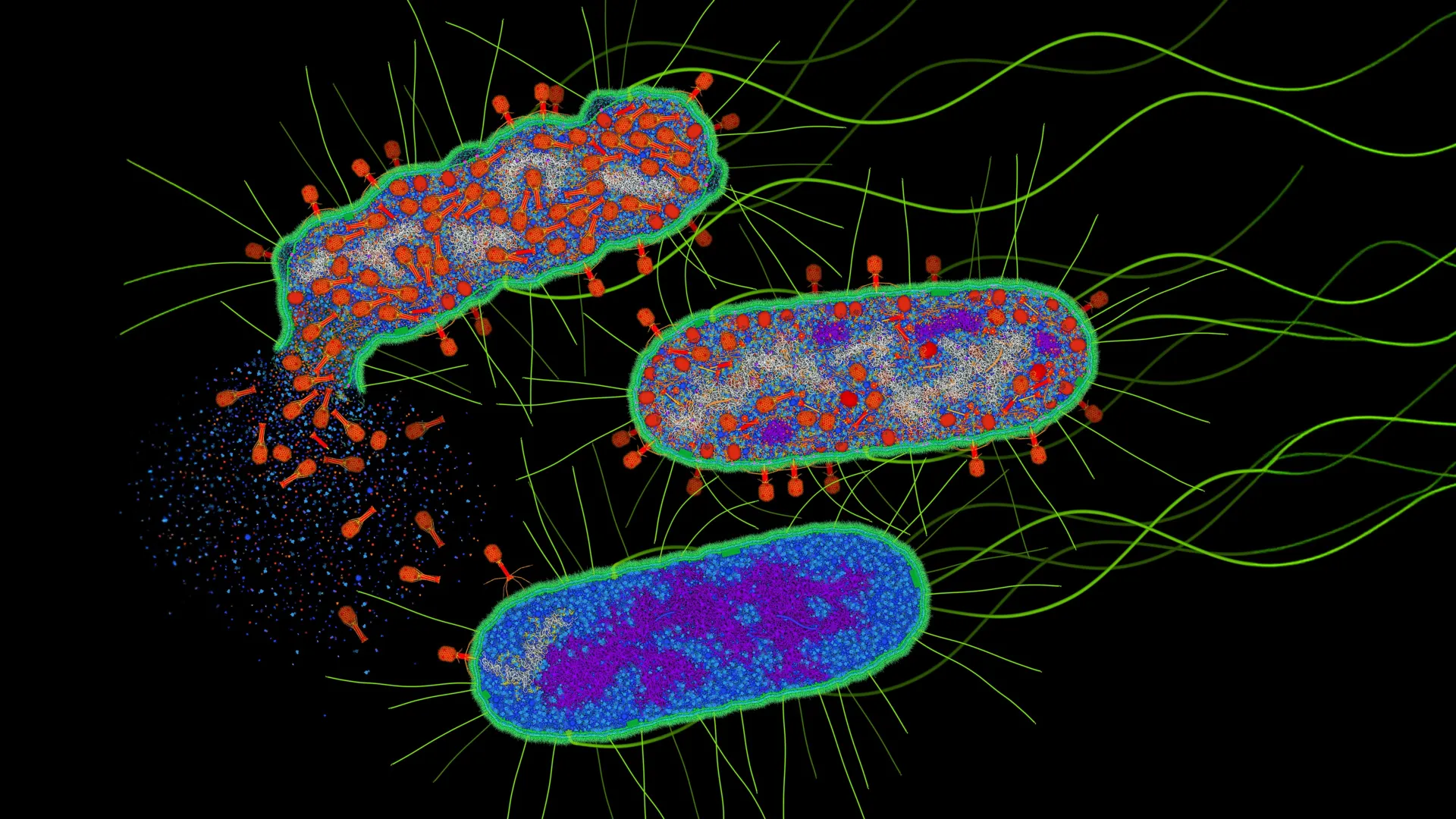
Scientists searching for new ways to treat bacterial infections are increasingly turning to viruses known as bacteriophages (phages). These viruses specifically target bacteria, allowing them to kill harmful microbes without damaging human cells. They can also attack bacteria that have developed resistance to antibiotics.
Phage therapy, however, faces a major obstacle. Bacteria are not defenseless against viruses. They have evolved their own immune systems, and understanding those defenses could help scientists develop therapeutic phages that are better able to overcome them.
New research has now identified an important way bacteria recognize a viral attack. Scientists found that a viral enzyme cuts a crucial sensor molecule inside the bacterial cell. That damage serves as an alarm, activating an immune response.
The discovery could ultimately help researchers develop more effective phage therapies capable of avoiding bacterial immune defenses. "This is one of the most common forms of bacterial immunity, so when we finally figured it out, it was a total eureka moment," says Sam Hobbs, PhD, assistant professor of biochemistry at University of Utah Health and the first author on a paper describing the research. The study focused on a bacterial immune system called CBASS.
When activated, CBASS can trigger an extreme "last resort" response in which an infected bacterium kills itself before the invading virus has a chance to spread to nearby cells. Because activating this defense is fatal to the bacterium, the system must be able to recognize a genuine viral threat with great precision. Hobbs and his colleagues found that this detection process relies on something the virus itself needs.
Certain phages produce an enzyme that becomes the signal that alerts the bacterium to the attack. "Certain kinds of phages have a protein called a protease, which degrades other proteins," he explains. "We found that the protease from the phage actually acts directly on the host protein, and that is the signal that turns on the whole signaling pathway." This form of virus detection is notably different from related antiviral immune systems.
Extract — continue reading at the source.


