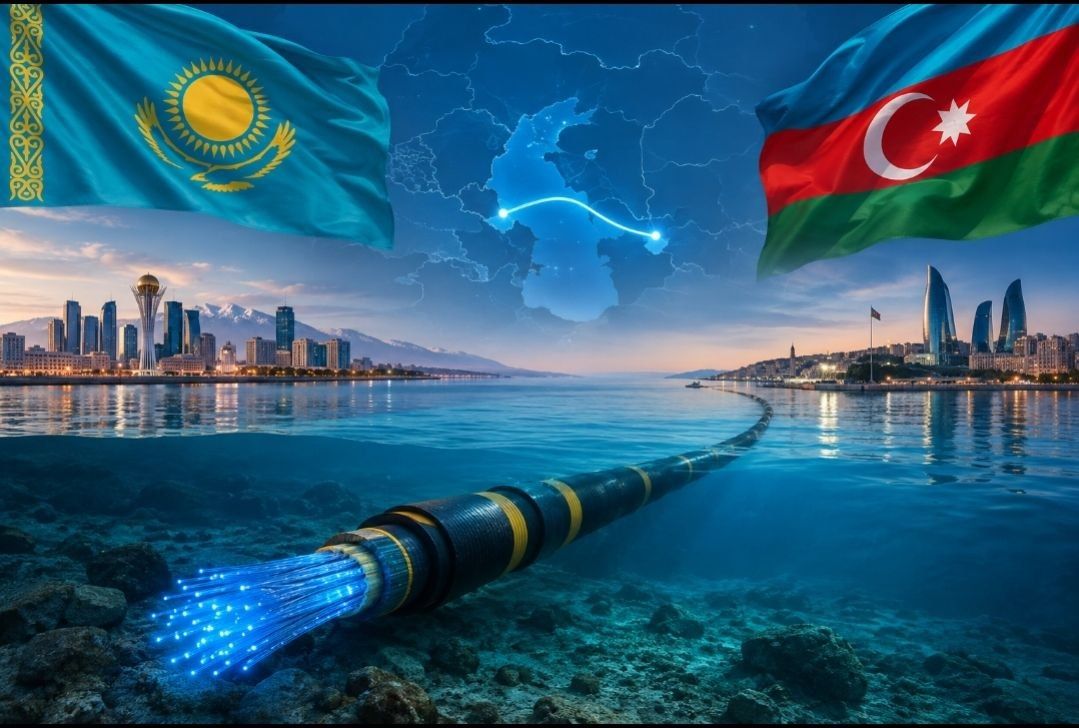
In October, a new fibre-optic communication line is set to launch, connecting Kazakhstan and Azerbaijan along the Aktau-Sumgayit route. The project marks a strategic step that could fundamentally reshape the landscape of international digital communications and strengthen the two countries' role as key transport and information hubs of Eurasia. Over the past years, the role of Kazakhstan and Azerbaijan as geographic and economic links between Asia and Europe has become increasingly visible.
The Aktau-Sumgayit fibre-optic line opens a new chapter in the development of their digital infrastructure, turning the two countries from simple participants in international data exchange into active builders and keepers of hubs within the global network. This matters all the more at a time of growing demand for reliable, fast, and secure channels for moving information. This is because the route will allow Kazakhstan and Azerbaijan to offer a direct, high-speed path for data between the two continents, bypassing the traditional routes that are so often overloaded and vulnerable.
One of the project's key advantages is that it creates an alternative path for data. At a time when so many critical services and infrastructures depend on the uninterrupted work of the internet, having backup, independent channels becomes a vital factor. The Sumgayit-Aktau project forms the digital component of the Middle Corridor, with Kazakhstan and Azerbaijan seeking to take up the same intermediary position in the digital sphere that they are already shaping in freight transport and energy.
On top of that, high-speed digital connectivity, combined with a reliable energy base and a growing potential in renewables, could help attract investment into data centres, high-performance computing, and artificial-intelligence infrastructure. It would be wrong not to mention that in the past, much of the overland internet traffic between China and Europe traditionally passed through Russia. The war in Ukraine, the risks of sanctions, and companies' drive to diversify critical infrastructure have all sharpened interest in routes that do not depend on Russian territory.
Southern directions through Iran, too, run into sanctions and political constraints. Against this backdrop, Kazakhstan and Azerbaijan are trying to claim the same intermediary role in the digital sphere that they are already building in freight and energy. A fibre-optic cable across the Caspian opens new opportunities to promote digital services and raise the quality of communications both in the region and beyond.
It reduces the risk of outages that can arise from problems on the "traditional" routes, improving the overall stability and security of information exchange. Today, the growth of digital networks moves in step with the growth of transport and energy corridors, becoming an inseparable part of national strategy and international cooperation. This project fits neatly into the idea of integrating different layers of infrastructure, ensuring the comprehensive development of the Eurasian space.
Extract — continue reading at the source.