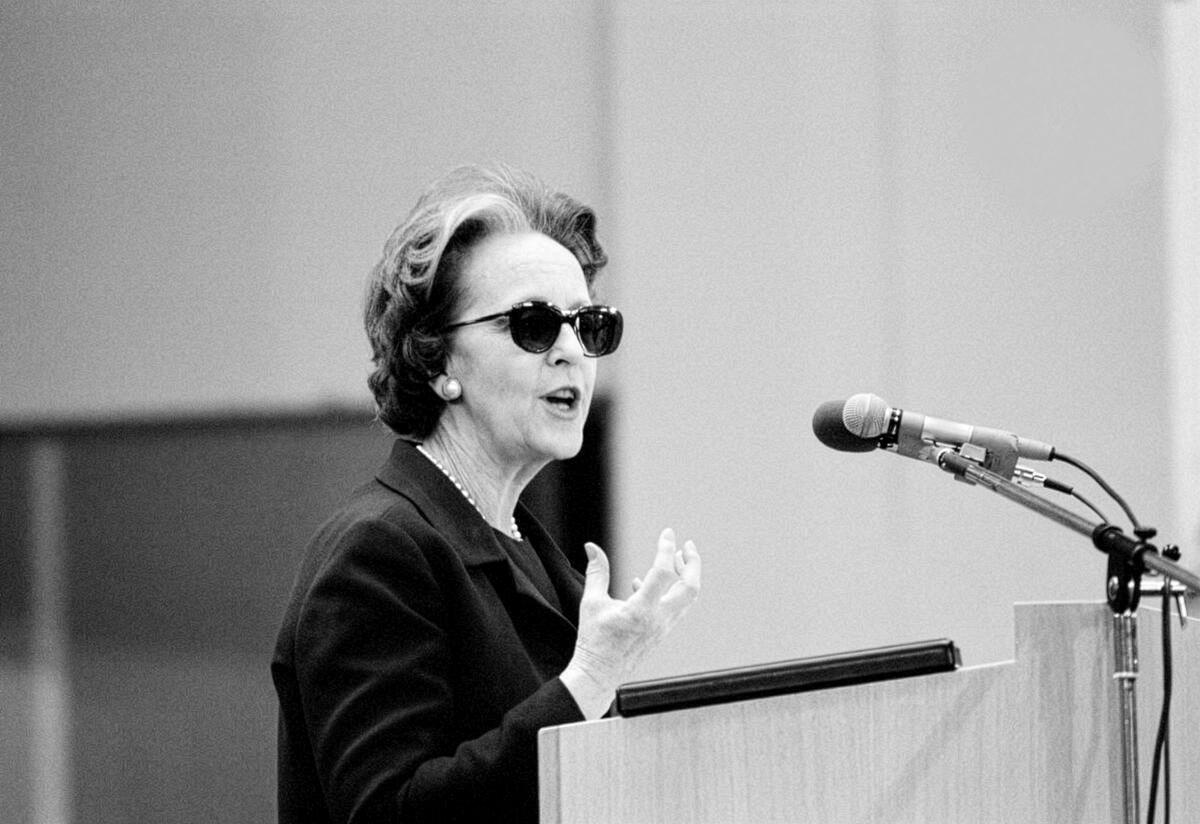
Barbara Ward at the UN Conference on the Human Environment in Stockholm, Sweden, in 1972. Courtesy UN Photo In 1957, the economist and journalist Barbara Ward gave the first of the Aggrey-Fraser-Guggisberg Memorial Lectures at the University College of Ghana. Shortly after Kwame Nkrumah led the British colony of the Gold Coast towards self-government, he invited Ward to address the independent country’s first cohort of students.
Ward was well acquainted with the local political landscape because she had spent the previous four years living in the Gold Coast, witnessing its political transformation. As the world’s eyes were set on Ghana, the first sub-Saharan colony to achieve independence from European rule, Ward was determined to provide her audience with the knowledge needed to govern their newly founded country. Her lectures, titled Five Ideas that Change the World, developed a world-historical narrative of the supposed human progress from nationalism to colonialism, industrialism, communism, and finally to internationalism, the highest point of political order.
Ghana’s peaceful democratic transition showed that African colonies were ready to govern themselves, weakening European arguments about the need for prolonged imperial guidance. The country soon became a model for new African statehood based on postcolonial sovereignty, inspiring other colonies on the continent to join the decolonisation process, which culminated in the ‘Year of Africa’ in 1960. The charismatic Nkrumah, who ruled Ghana from 1957 to 1966, became an international player in Cold War diplomacy by promoting pan-Africanist visions of post-imperial unity.
He wanted to show the world that Africans were no longer imperial subjects but important and influential members of the global political community. While Nkrumah was a vociferous opponent of colonialism, Ward uncritically appreciated the civilisational and technical legacies of empire. Yet in her lectures, she supported Nkrumah’s international political aspirations by suggesting that economic development, international cooperation, and even world peace were interrelated problems that warranted a planetary solution.
Barbara Ward was a remarkable thinker, a visionary who imagined a ‘planetary’ political, economic and environmental justice based on both material and spiritual principles. She was an unusual figure in the Cold War political sphere, a charismatic public intellectual who advised world leaders and the United Nations at a time when women’s voices were often marginalised. She was among the first thinkers to argue that human prosperity, environmental sustainability and global justice were inseparable political questions.
Her distinctive vision of planetary politics, grounded in ecological interdependence, moral responsibility and global cooperation, still offers insights into some of the most pressing challenges of the 21st century. Ward’s diagnosis of Ghana’s predicament emerged from an intellectual trajectory that predated decolonisation itself. She was born in 1914 to a British Quaker-Catholic family that put a strong emphasis on education, encouraging her to attend a French lycée in Paris and later Somerville College, Oxford, where she was among the first women to graduate in politics, philosophy and economics in 1935.
Extract — continue reading at the source.