By the time Flight PTN27B started its descent into El Prat a bit before 8pm on Monday evening, a small crowd had gathered by the terminal doors, waiting for it to land. A few people stood and watched the sky, cameras out to capture its arrival. A lot more watched on their phones.
In the two hours it had taken to get there from Manchester, taking off at 5.11pm, 101 minutes behind schedule, the Pilatus PC-24 had become the most tracked plane on the planet. Everyone knew that Rodrigo Hernández was on board. Unless, of course, he had been sneaked away in a catering cart.
Five days earlier, Rodri had been seen, and recorded, at Barajas airport waiting to get on a flight back to Manchester from Madrid. He wheeled a small RFEF (Spanish football federation) case with his name on, stood alone in the queue, the World Cup-winning captain just a bloke in shorts and T-shirt, and his stay in the UK was supposed to be brief, just long enough to say goodbye. The plane he was boarding was a Ryanair one: that was the detail everyone homed in on, something extraordinary in the ordinariness.
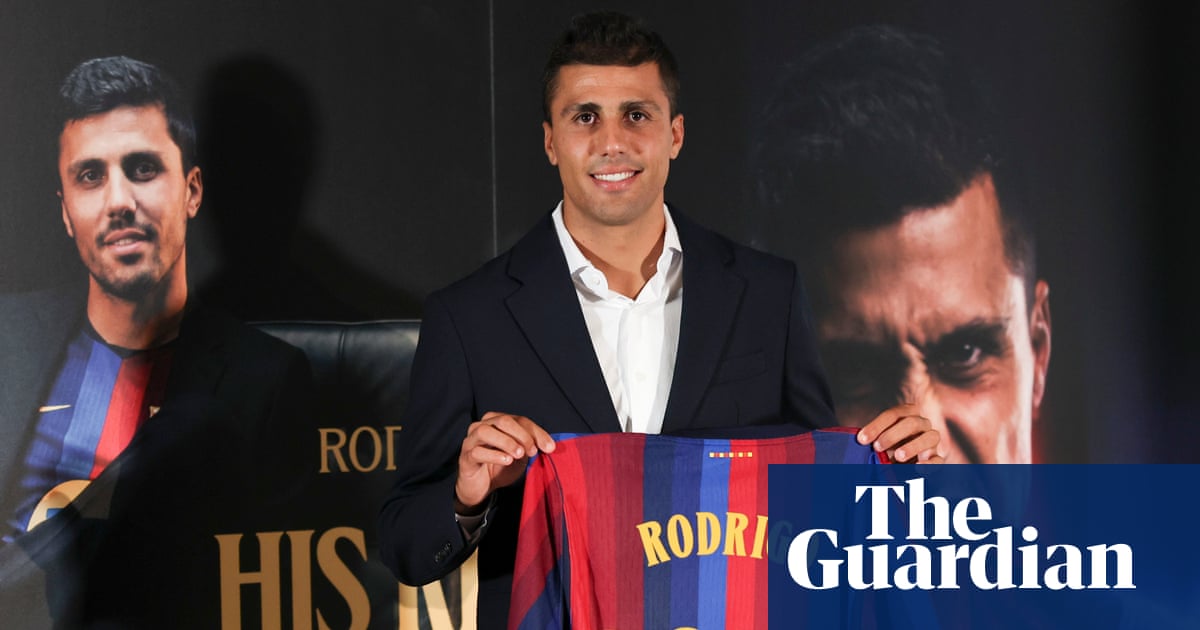
This time, though, he came on a private jet, one way. His family travelled with him. He came to sign for FC Barcelona.
Rodri was late: an agreement between Manchester City and Barcelona had taken a little longer than expected, long enough for concern to creep in, and his flight landed 70 minutes behind schedule. Maybe he is late-late, too: at 30, and three years after the departure of Sergio Busquets – the man to whom he had always been likened and whose natural successor he has always been … this transfer could perhaps have come sooner. Yet it was rarely even contemplated, virtually up until the moment it happened.
In that sense, it had actually been quick. A fortnight ago, few thought of this. Now here he was, heading out in jeans and a white T-shirt.
Extract — continue reading at the source.