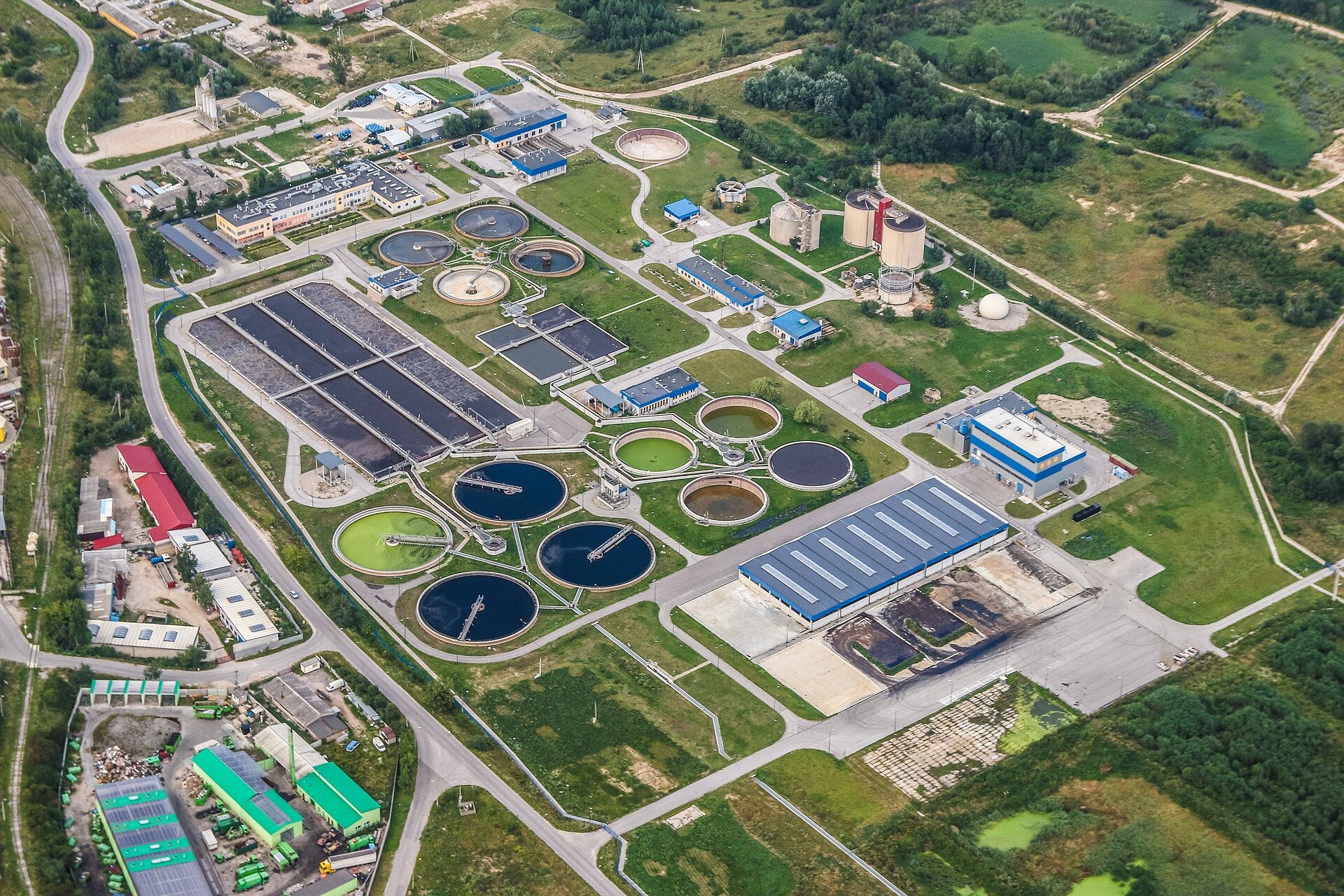
This article has been reviewed according to Science X's editorial process and policies. Editors have highlighted the following attributes while ensuring the content's credibility: Treating polluted water flowing into San Francisco Bay to meet regulatory requirements is going to cost ratepayers money. Exactly how much depends, in large part, on whether the region's wastewater treatment plant operators are willing and able to coordinate infrastructure construction and operation to meet these requirements, according to a Stanford University study published in Nature Water.
The paper features a framework that calculates the most cost-effective way for multiple treatment facilities to jointly plan, build and operate infrastructure to remove excess nitrogen from wastewater before it is discharged to the bay. Applied to three Bay Area treatment plants within a few miles of each other, the tool found that coordination could cut total capital and operating costs by up to 48%, a savings of $268 million over 30 years compared with the cost of building infrastructure independently. "If you don't coordinate, each facility has to build and finance small infrastructure projects on its own," said study lead author Sinan Abi Farraj, a Ph.D. student in civil and environmental engineering in the Stanford Doerr School of Sustainability and School of Engineering.
"The coordinated solution reduces how much infrastructure gets built and how much that infrastructure costs." In response to algal blooms, fish kills and other damaging impacts of nitrogen pollution, regulators have ordered a 40% reduction in nitrogen discharges into San Francisco Bay by 2035. Meeting those limits the conventional way, with each of the region's 37 plants independently upgrading its own facilities, is projected to cost more than $10 billion and require annual sewer rate increases of roughly $200 per household. Until now, utilities and planners have had no reliable way to calculate how much coordination could actually save them.
Existing tools are designed to optimize upgrades within a single facility, not across multiple plants sharing a watershed. This leaves utilities largely dependent on inconsistent models created by consultants to estimate potential savings from working together. The researchers point out that nitrogen removal doesn't have to happen at each plant individually.
Construction costs don't scale proportionally with capacity. If a larger facility can remove nitrogen more cheaply than a smaller one, it makes economic sense for the larger plant to handle more of the load while the smaller one builds less or nothing at all. "Regional facilities rarely coordinate their decadal capital improvement plans or monthly operations because independent agencies monitor them and issue separate discharge permits," said study senior author Meagan Mauter, a Stanford professor of civil and environmental engineering.
"We have developed a transparent framework that reveals the magnitude of the cost savings that coordinated infrastructure design and operation unlocks for the Bay." The framework models monthly capital and operational decisions over 30 years across multiple facilities simultaneously, identifying the lowest-cost portfolio of upgrades across a watershed rather than within any single plant's fence line. The researchers found that a staged scenario in which plants delay construction until it's needed, rather than building in advance of permit deadlines, generated meaningful savings. However, the largest gains came from staged and full coordination: jointly deciding what to build, where and when across all three plants.
Extract — continue reading at the source.


