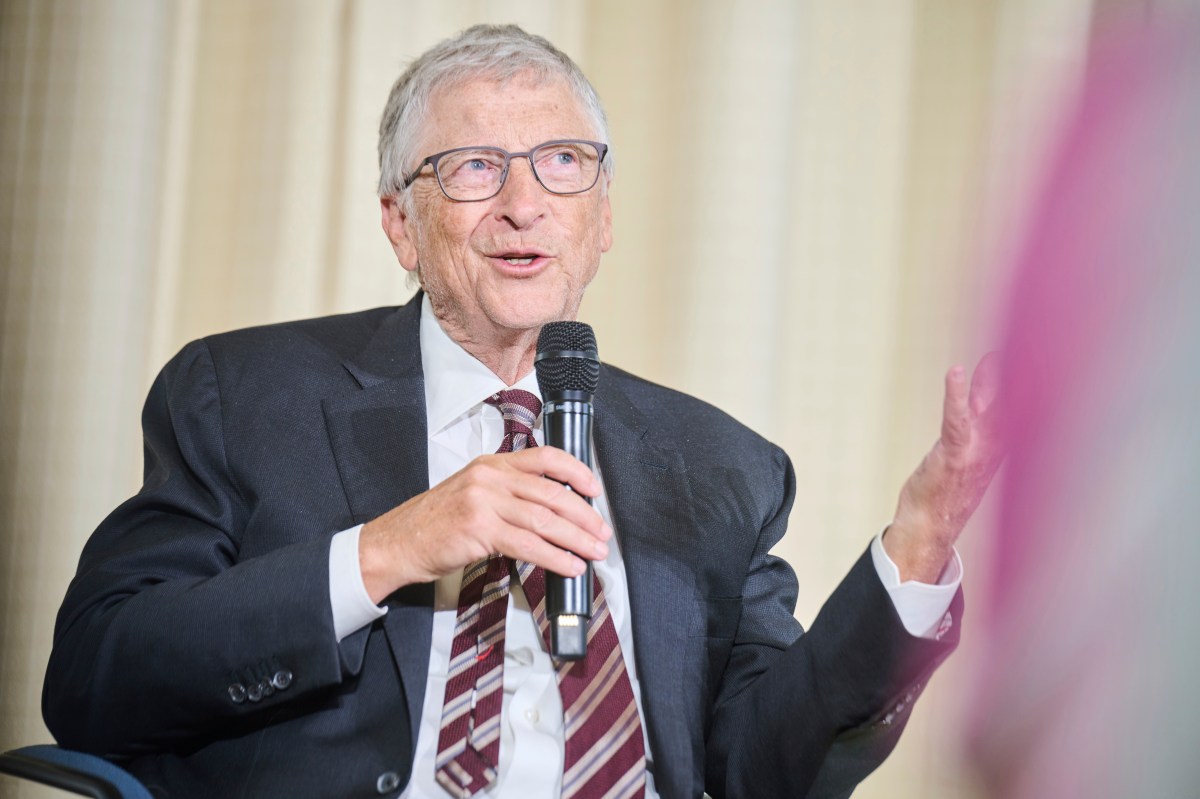
Microsoft co-founder Bill Gates says the rapid advancement of artificial intelligence—and what he sees as a lack of meaningful safeguards—has pushed him to publicly raise the alarm over the technology. He said the technology presents both significant benefits and risks that need to be addressed more openly. He pointed to risks including cyberattacks, bioterrorism and broader psychological and social consequences, saying he was “shocked” that stronger safeguards are not already in place.
Gates also argued that simply restricting data centers would not meaningfully slow AI's development because companies could build them elsewhere. We have to get everybody's voice in this. You know, these are a set of Democratic tradeoffs that have to be made, and you know people think that 'OK, I'll block a data center,' that really isn't going to slow things down.
Those data centers will show up somewhere. We have to take the AI issue, and it's the bads versus the goods on in a very explicit way," Gates also told Cooper. Newsweek reached out to the White House via email on Wednesday night for comment about Gates' concerns on AI.
His comments to Cooper come after Gates published a nearly 6,000-word essay warning that the world is entering a "turbulent" period of AI. He argued that leaders have not adequately prepared for the disruption ahead, particularly as AI begins to take on work in fields including law, customer service, medicine, software and manufacturing. Gates has stopped short of calling for an outright halt to AI development, but he said he would support a credible global agreement to slow its advancement if one were possible.
He acknowledged in his essay, however, that economic and geopolitical competition between countries and technology companies makes such an agreement unlikely. He has also proposed measures including taxing AI or robots in a way similar to payroll taxes and reserving certain types of work for humans. The remarks mark a notable shift in emphasis for Gates, who has also highlighted AI's potential to improve healthcare, scientific research and productivity.
But as the technology develops, Gates is increasingly warning that its benefits will come with serious costs if governments fail to establish guardrails. Gates outlined three major risks from AI, beginning with job displacement. He warned that AI could eliminate jobs across both white- and blue-collar industries, particularly affecting entry- and mid-level workers and young people entering the workforce.
Extract — continue reading at the source.