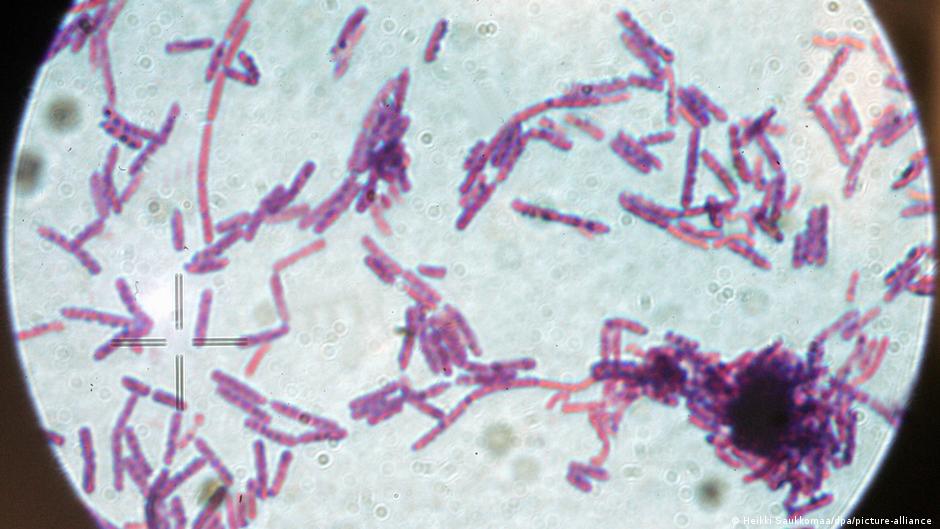
Artificial intelligence could potentially be misused to develop biological weapons. This may sound like science fiction, but scientists, security services, and international organizations are all looking at how to deal with this scenario. Pathogens can be analyzed and altered with ever greater precision thanks to ongoing developments in biotechnology.
Meanwhile, AI is able to evaluate vast quantities of data at astonishing speeds. As a result, experts are warning that, in the long term, modern technologies could also be misused to develop biological weapons. Security services are concerned.
In October 2026, Ken McCallum, head of the British domestic intelligence service MI5, warned that artificial intelligence could increase the risk from existing, or new, biological weapons – including from non-state actors. A report by the American AI company Anthropic in September 2026 highlights the topicality of the debate. Anthropic said it had identified and blocked numerous attempts to use its AI assistant Claude in connection with possible biological weapon research.
The report said these attempts included grant applications for so-called "gain-of-function" research, as well as projects to research avian influenza variants that were potentially the most transmissible to mammals. At the same time, Anthropic stressed that, although it could have a military application, such research could also relate to medical prevention. The difficulty in distinguishing between legitimate science and its possible misuse is one of the biggest problems in terms of the control of modern biotechnologies.
Concerns about biological weapons are by no means new. Many pathogens — bacteria, viruses, fungi, and certain biological toxins — have the potential for weaponization. Familiar diseases include plague, smallpox, and botulinum toxin, but anthrax is one of the most notorious biological agents.
Its resistant spores can survive a long time in the environment, and it has also been the focus of research by state biological weapons programs. To view this video please enable JavaScript, and consider upgrading to a web browser that supports HTML5 video The World Health Organization (WHO) and the United Nations Office for Disarmament Affairs define a biological weapon as the targeted release of such biological substances for the purpose of injuring people, animals, or plants. A biological weapon usually has two components: The biological substance itself, and a system for disseminating it.
Extract — continue reading at the source.