The David Attenborough-narrated series Blue Planet III deliberately includes cloudier, less polished footage to counter AI fakery and assure viewers it is “authentic”, its producers have said. Nearly a decade after Blue Planet II shone a light on plastic pollution, and 25 years since the first Blue Planet aired, the hit BBC series is returning with more animal behaviour and cutting-edge technology, including the world’s first underwater CCTV camera – dubbed “stonefish” cam. Since the first Blue Planet, TVs and cameras have evolved to give viewers sharper, higher definition pictures.
But the combination of the rise in AI and the extraordinary sequences and fantastical creatures captured by BBC Studios’ natural history unit for this series led producers to include what they called more “organic” footage and less polished shots, to show that the animals were not AI-generated. The executive producer, Elizabeth White, said AI, “makes us want to be even more authentic”, adding that the creatures filmed in the deep ocean “are probably more remarkable than AI could imagine and it’s completely real”. She said that in the past “the amount of plankton and things that are in the water in the sequences” would usually mean they might be excluded, and previously, “we might have framed out a boat or a buoy or gone: ‘Oh, actually … the water conditions are not really good enough for this.’” But now such things are being left in as “we’re really leaning into that authenticity … As AI booms we will probably lean more into the more organic”, murkier and less polished footage.
For the first time, the BBC’s specialist factual commissioning head, Jack Bootle, assured journalists at a press screening: “No gen AI was used in this series. It’s all real photography.” Bootle added that as we live in a “golden age of natural history-making … sometimes people feel like they’ve seen it all before [so] this series is bursting with novel behaviour”. That includes never-before-seen action of dolphins using sea sponges to block holes in coral to trap fish, captured using underwater CCTV – developed by the programme’s producer and director, Yoland Bosiger.
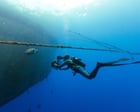
Over the four years of filming across five oceans, BBC Studios “continually innovated”, said the series producer, Lara Bickerton, creating a “mini-dome” camera to follow an octopus, a “deep-sea selfie stick”, camera operators wearing leg-mounted scooters to create immersive TikTok-style diving footage and using lasers to film deep-sea creatures. Other remarkable animal behaviour captured in the programme includes grouper communicating with another species of fish; 200,000 crabs lining up in formation to feed; sea urchins using shells as sun hats; and footage involving penguins that echoes the Planet Earth II, ‘iguana v snakes’ sequence. Threats to the ocean as well as its resilience are addressed in the series.
Episodes show how the climatecrisis is killing off the sea where anemone clown fish live and what they do to try to fix their homes, and the issue of plastics raised in Blue Planet II continues with a story about pollutants [and] forever chemicals, said White. Bosiger said Attenborough, who is 100 years old, was “very much involved” and made changes to scripts. White added: “What’s wonderful is he hasn’t lost his curiosity … he’s still that little boy … who gets excited … when you show him a new piece of footage.” Asked if the BBC’s £500m cost-cutting drive would affect BBC Studios’ renowned natural history reputation, White said she could not comment on that but pointed out that Blue Planet III made savings by using more local crews on location than in previous series.
Blue Planet III starts Sunday 1 November on BBC1 and iPlayer
Extract — continue reading at the source.